Post-JCPOA board of governors meeting: U.S. and European Troika accused of politicization with anti-Iran draft resolution
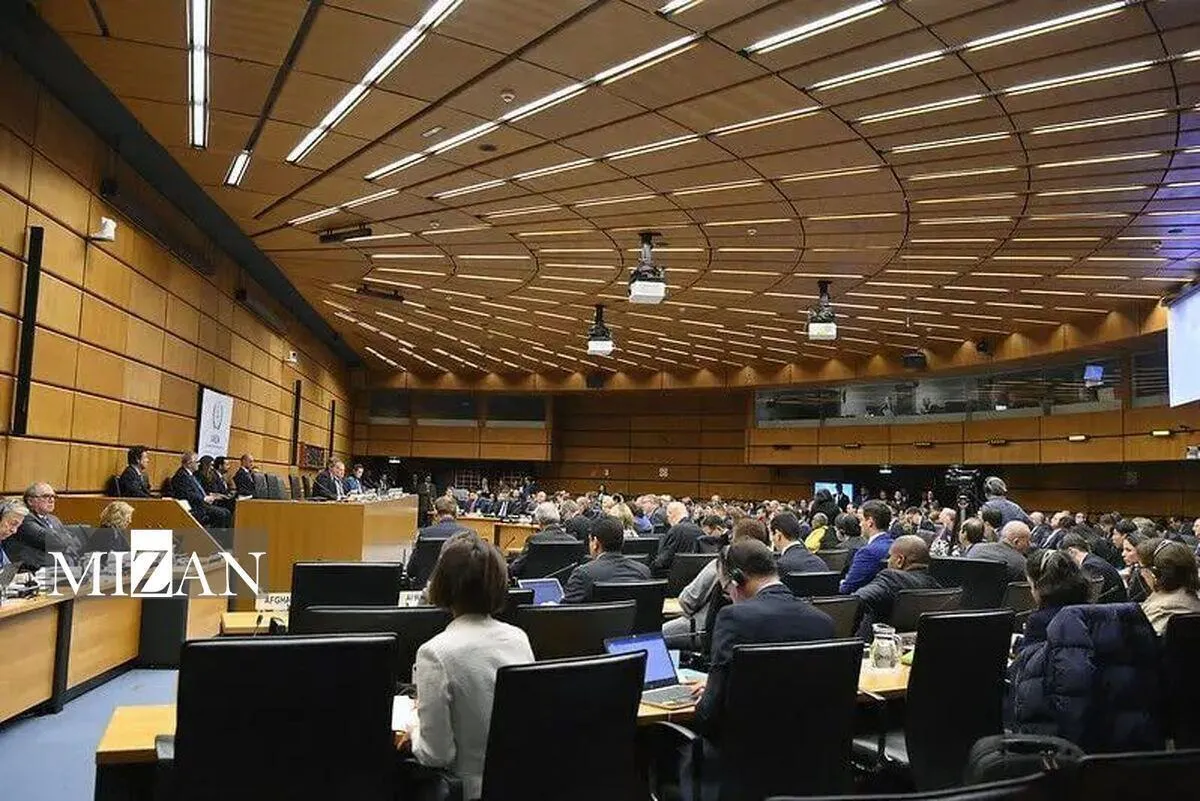
The U.S. and the European Troika (France, the United Kingdom, and Germany), in line with their politicized handling of Iran’s nuclear file and after their failed attempt to trigger the snapback mechanism, presented the draft resolution to the IAEA Board of Governors.
This comes despite the fact that ten years after the adoption of UN Security Council Resolution 2231, the issues related to that resolution and Iran’s JCPOA commitments—following the expiration of the resolution—are no longer on the Board’s meeting agenda. Iran now appears only under the item related to safeguards agreements.
According to the IAEA Secretariat, the Board of Governors meeting will be held from 19 to 21 November 2025 in Vienna to discuss issues including membership applications, technical cooperation reports, nuclear safety and transport of radioactive material, verification status in North Korea and Syria, and nuclear propulsion programs in Australia and Brazil.
Details of the draft resolution by the U.S. and European Troika
According to Western media reports, the draft resolution on Iran’s nuclear program contains eight clauses and will be introduced at the November 2025 Board of Governors meeting. The draft calls on Iran to halt enrichment, reprocessing, and heavy water projects.
Reuters, claiming to have seen the draft, reported that the resolution demands immediate access for the IAEA to Iranian nuclear sites targeted during recent U.S. and Israeli military strikes, as well as a comprehensive report on enriched uranium stockpiles.
The draft further calls on Iran to fully implement the Additional Protocol and provide the agency with extensive nuclear information, enabling broad and unannounced inspections at what are described as "undeclared facilities."
It also alleges that Iran is not complying with its safeguards commitments and that the IAEA has lacked access to Iranian nuclear sites and enriched uranium for the past five months.
According to Reuters, Western diplomats claim that the resolution is expected to be adopted on Wednesday.
Iran’s response to the U.S.–European Troika draft resolution
The U.S. and the European Troika are attempting to portray the resolution—based on repetitive and unfounded accusations against Iran—as a technical measure. However, a review of the published draft shows that it relies on baseless allegations and seeks to blame Tehran for the state of interactions with the Agency, using the language of pressure and threat.
Kazem Gharibabadi, Deputy Foreign Minister for Legal and International Affairs, reacting to the news of the resolution, said:
“The three European countries, with what they have done, have removed themselves from diplomacy with Iran. They have failed and now seek to compensate for their failure in Vienna. Iran demonstrated goodwill by reaching an agreement with the Agency in Cairo—what are they after now?”
He added that the Western parties are now pursuing pressure: “They are not interested in Iran’s cooperation. Naturally, the situation after a Board resolution will be different. Iran will conduct a fundamental reassessment of its relations with the Agency. If adopted, Iran will undertake a major review of its interactions.”
Meanwhile, Iran’s ambassador to the United Nations, Amir Saeid Iravani, described the resolution as part of the “disinformation efforts of the Zionist regime.”
Mohammad Eslami, Vice President and head of the Atomic Energy Organization of Iran, stated: “We hope that Western countries realize the consequences of such approaches and double standards for the Non-Proliferation Treaty. The Agency is an international institution and must not be further misused and discredited—otherwise the law of the jungle will prevail.”
Reza Najafi, Iran’s Permanent Representative to the IAEA, said that the U.S. and the three European countries continue to misuse international mechanisms to impose irrational and coercive positions against the Iranian nation:
“They are now attempting to use their numerical majority in the Board of Governors to achieve in Vienna what they failed to accomplish in New York. Forcing reporting requirements on the Director General on the basis of expired Security Council resolutions is illegal and unjustified, and will only increase complexity and deal another blow to diplomacy.”
He stressed that the illegal move by the U.S. and the three European states will not change the current status of safeguards implementation in Iran, which is the result of criminal aggression by the U.S. and Israel and the complicity of the European trio. Iran reserves the right to respond appropriately to any illegal or unjustified action by these countries.
Russia has also expressed concern, calling the move a threat to relations with Iran. According to Russia’s representative to the Agency, the resolution could destabilize the November Board session and destroy technical progress made with Iran.
A historic crossroads
Adoption of the proposed resolution at the November 2025 Board of Governors meeting could push Iran’s nuclear issue—already removed from a purely technical and diplomatic track due to Western actions and more politicized than ever—into an even more complex stage and escalate existing tensions.
On the other hand, rejecting the resolution would open space for diplomacy, something Iran and several rational actors, including Russia and China, are working to preserve.
The time has come for all member states of the Board of Governors to oppose the destructive unilateralism of the United States and the three European countries regarding Iran’s nuclear issue.