Order of the Head of the Judiciary regarding the pursuit of the United States’ crime in its aggression against Iran during the 12-day war
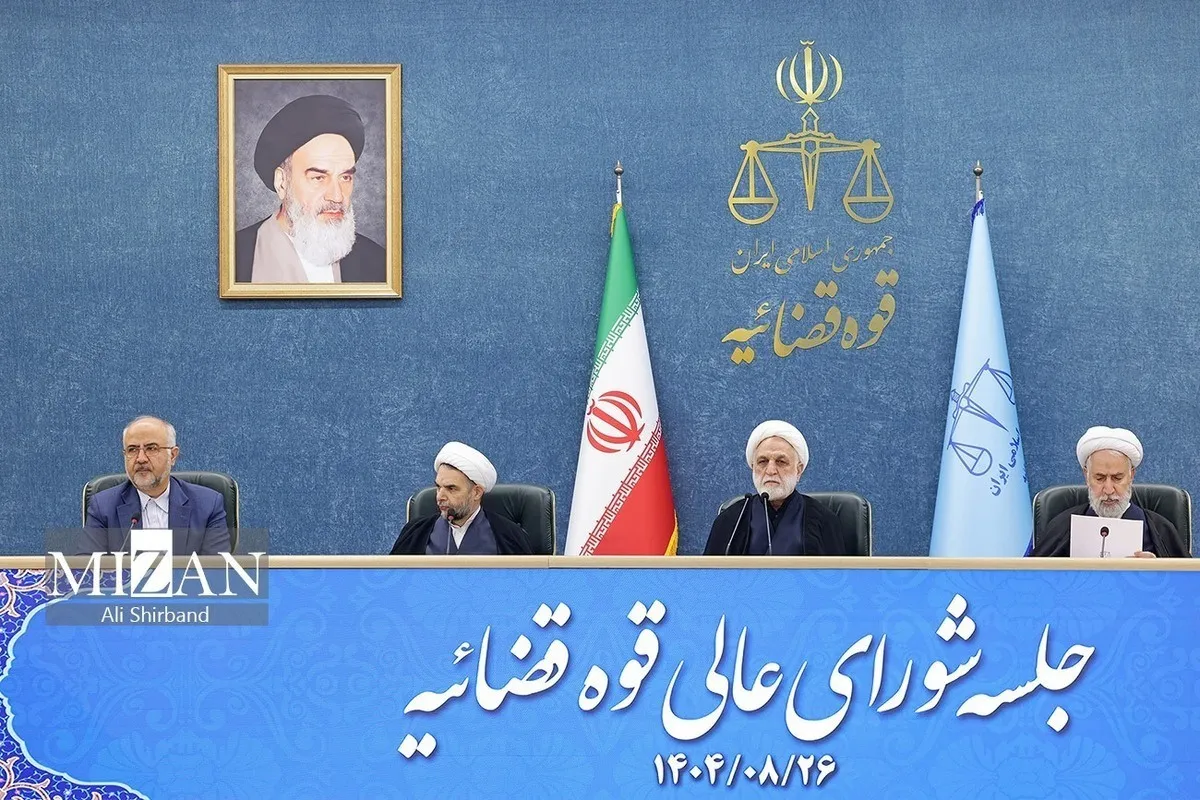
According to the Judiciary’s Media Center, Mohseni Eje’i, speaking on Monday (November 17) at a meeting of the High Council of the Judiciary, expressed gratitude for the efforts of the Attorney General and other prosecutors in pursuing legal and decisive measures against social disorders.
He said: “In recent days, we have once again issued directives to legally and decisively confront organized currents promoting social irregularities and their manifestations—essentially a reiteration of the April 2023 circular. In this regard, the Attorney General and other prosecutors in Tehran and across the country have corresponded and coordinated with intelligence and security agencies. While I appreciate these efforts, I stress that this approach must be accelerated and pursued with planning, coordination, and guidance. Furthermore, if any correspondence or actions taken in this area are appropriate for public disclosure, they should certainly be communicated through the media so that the public is aware and reassured that measures are underway to strengthen their psychological security.”
The Head of the Judiciary then referred to the resolutions from the recent visit of the high-ranking judicial delegation to Qom Province. He stated: “During this latest visit, it became clear that some of the issues identified during the previous trip have been completely resolved, while others are in the process of being resolved. One of these long-standing issues concerned land-title documents for the residents of Jafarabad in Qom Province, as well as problems faced by farmers and herders in the region—a matter that had persisted for nearly 40 years. But thanks to God, and through the cooperation of the authorities—especially as affirmed by the Governor of Qom—and the efforts of judicial officials, this issue is now being addressed. Two representatives of the residents, who were present in the relevant meeting, expressed great satisfaction and gratitude. Naturally, resolving the land-title issues of Jafarabad and other regions facing similar problems is our responsibility, and we are indebted to the people.”
He continued: “We have repeatedly emphasized that on-the-ground presence by officials has significant benefits. One of these benefits is that an official becomes directly acquainted with the people’s problems. When an official is present in the field and senses the people’s difficulties firsthand, it is very different from sitting in an office and merely reading reports. Therefore, I once again strongly emphasize that judicial officials must prioritize field visits within their areas of responsibility, value listening to the people’s grievances, and dedicate themselves to addressing their problems. Hearing the guidance and criticisms of the public is extremely valuable to us; we can increasingly draw on their capacities to advance our work and welcome their intellectual and practical contributions.”
Regarding the explicit acknowledgment by the U.S. President of direct involvement in the aggression against Iran during the 12-day war, he added: “The President of the United States has once again openly admitted to committing crimes against Iran and Iranians, stating that he personally and directly intervened in the aggression against Iran during the 12-day war. This explicit and manifest admission carries legal and criminal consequences under established international law. Therefore, the Attorney General and the Deputy for International Affairs of the Judiciary must take the necessary steps to pursue this crime in both international and domestic courts. It must be noted that confession is one of the most reliable forms of evidence for establishing guilt.”
At the conclusion of today’s meeting, the Head of the Judiciary remarked: “People are facing livelihood and economic difficulties. I once again strongly emphasize that judicial officials—both in terms of their inherent duties and their responsibility to assist the government—must be committed to addressing the people’s economic problems. These difficulties only increase our responsibilities. Nevertheless, our people, despite these hardships, will continue to stand firm against the hostile and greedy enemy and will remain steadfast.”