Gaza’s struggle to survive: Genocide, ecocide, and the collapse of life
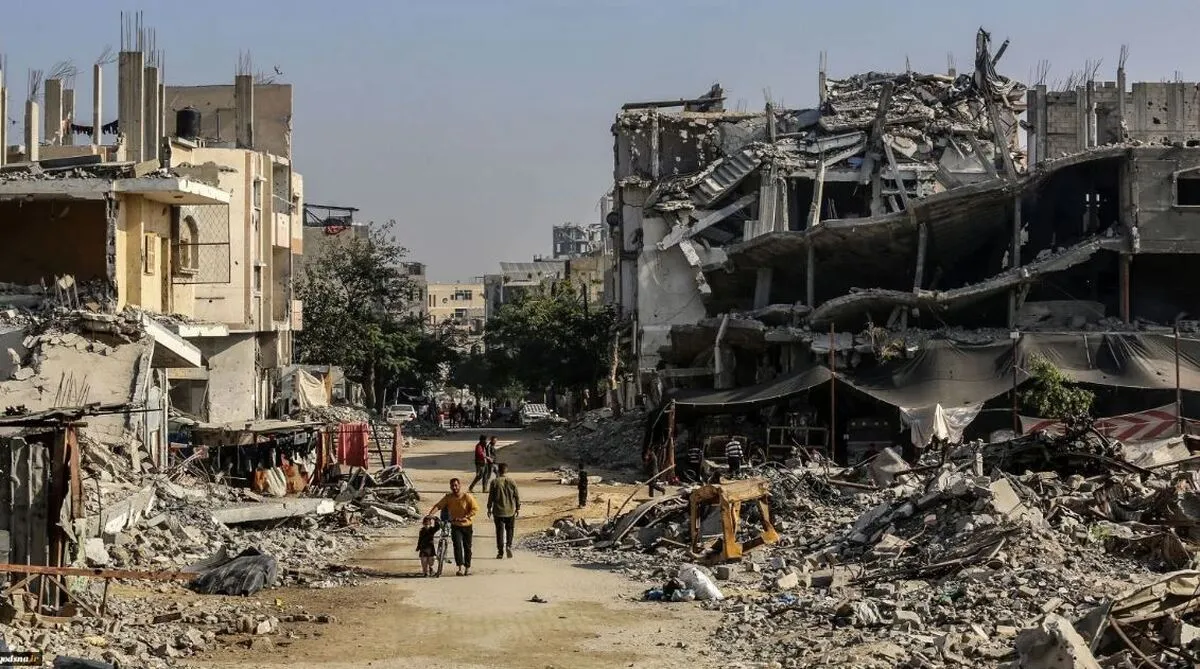
Few concepts in international law carry the weight of genocide. One of the only terms that stands beside it is ecocide. While genocide refers to the destruction of a people, ecocide focuses on the destruction of the conditions that sustain life.
Gaza now stands at the intersection of both. Together, these terms describe two interconnected crises—one threatening human survival, the other environmental survival—each one intensifying the other.
According to the Middle East Monitor, the Genocide Convention defines genocide through five acts:
1. Killing members of a targeted group;
2. Causing serious bodily or mental harm;
3. Deliberately inflicting conditions of life calculated to bring about physical destruction;
4. Preventing births; and
5. Forcibly transferring children.
Since 7 October 2023, when Israel’s assault on Gaza began, several credible organizations have concluded that Israel’s actions meet this definition.
B’Tselem, Physicians for Human Rights, and Amnesty International have all stated that Israel is committing genocide. The UN Independent International Commission of Inquiry reached the same conclusion. The International Association of Genocide Scholars also believes genocide is taking place.
These institutions hold long-standing reputations in human rights and international law.
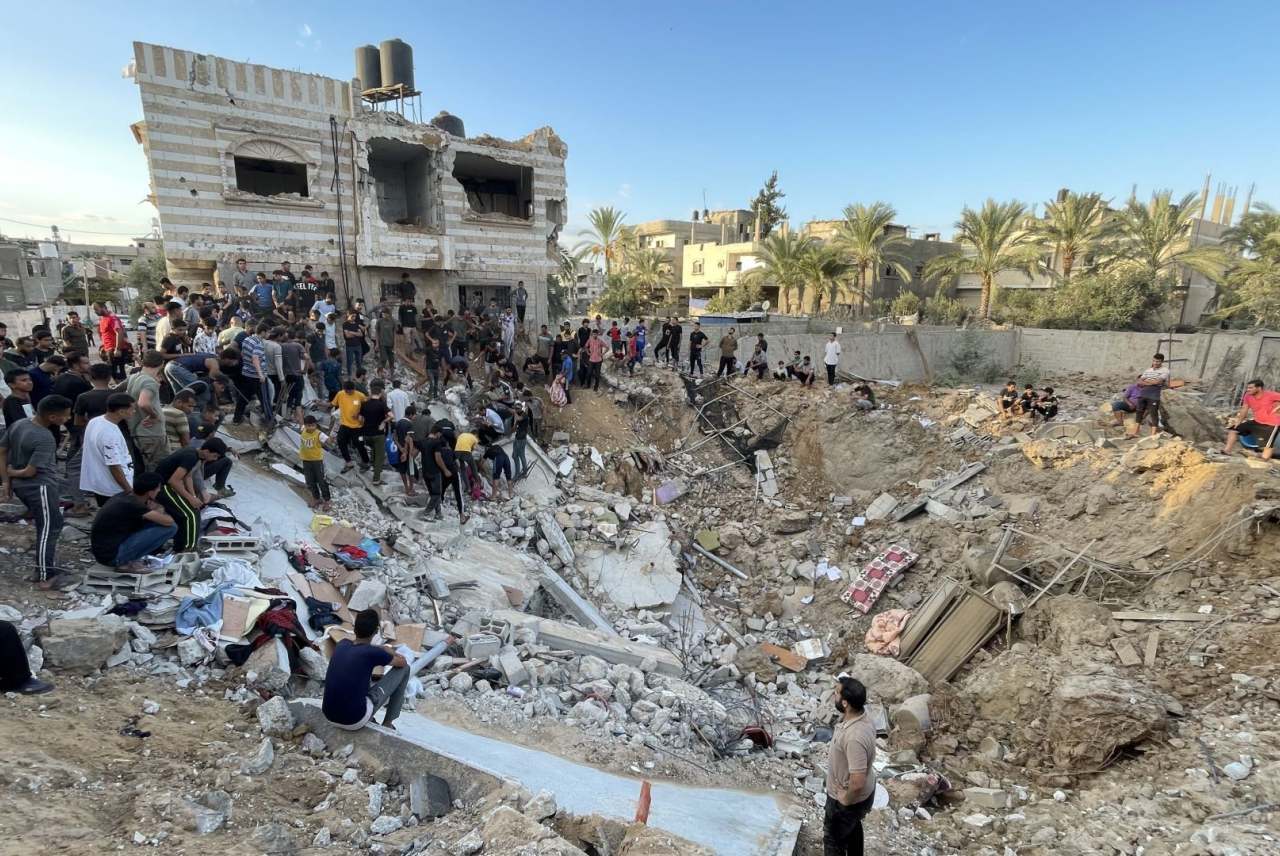
Yet the catastrophe in Gaza goes beyond genocide. It also involves the destruction of nature, food systems, water infrastructure, and agricultural foundations. This is where the concept of ecocide becomes essential.
The European Institute of Law defines ecocide as the “destruction and devastation of the environment at any cost.” The Rome Statute includes provisions for the protection of the environment during war.
Systematic environmental destruction in Gaza
In Gaza, environmental destruction is neither limited nor accidental—it is widespread and deliberate.
A joint report by the Food and Agriculture Organization (FAO) and UNOSAT, published in July 2025, emphasized this reality. It found that only 8.6% of Gaza’s agricultural land is currently accessible, and just 1.5% is both accessible and undamaged.
More than 86% of agricultural land has been damaged by Israeli attacks, while another 12.4% remains undamaged but inaccessible due to the presence of Israeli forces.
These figures indicate a near-total collapse of food production, suggesting that recovery will be extraordinarily difficult.
Gaza’s environmental destruction has been systematic: farms, orchards, and vegetable fields that once fed families have been crushed by tanks, bombings, and bulldozers; greenhouses are destroyed; soil has turned to rubble.
The destruction of farmland has increasingly become not a byproduct of war, but a tactic. It undermines long-term survival and prevents recovery.
Water infrastructure follows the same pattern. Gaza’s water is now contaminated. Sewage systems have collapsed. Waste ponds are overflowing.
A municipal official described Gaza City: “There is no doubt that the impact on citizens is severe—foul odors, insects, mosquitoes. The level of polluted water has risen above six meters, with no protection, and barriers have collapsed.”
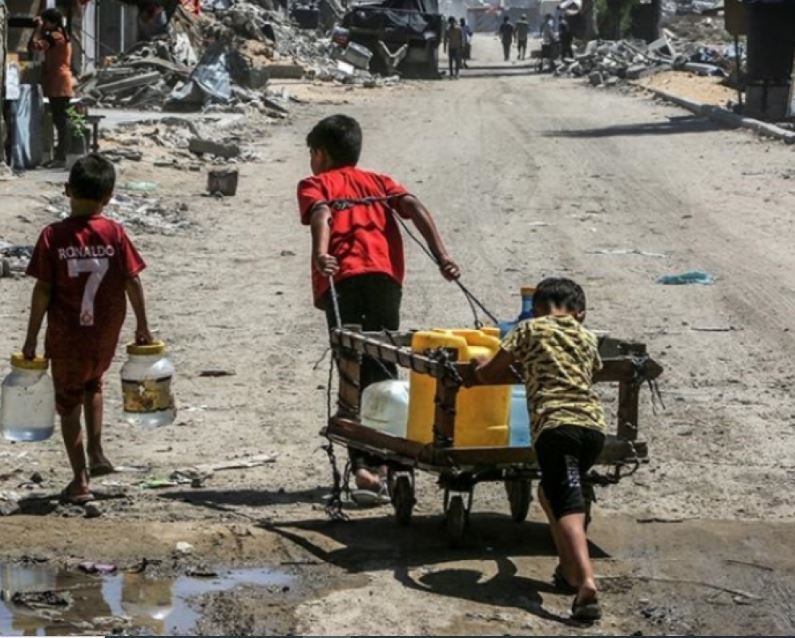
An Al Jazeera correspondent reported that families know the water they receive from wells, containers, or tankers is contaminated, but they have no choice.
The UN Environment Programme confirmed that Gaza’s freshwater resources are extremely limited, and most of what remains is contaminated. It warned that sewage network collapse, pipeline destruction, and heavy reliance on cesspits have likely worsened contamination of the aquifer—Gaza’s main source of drinking water. The consequences will last for years.
At COP30 in Brazil, the Palestinian ambassador placed Gaza’s environmental collapse within a broader framework of destruction. He told global leaders:
“There is no doubt Gaza is suffering from genocide that Israel continues to commit—a war that has left nearly a quarter of a million victims and produced more than 61 million tons of rubble, some of it contaminated with hazardous and toxic materials.”
He added that the destruction of sewage and water systems has contaminated groundwater and coastal waters, creating severe public health risks. Farmlands have been obliterated, causing famine—food is being used as a weapon.
These statements align with findings from UN agencies, aid organizations, and environmental researchers.
A growing movement for the recognition of ecocide seeks to establish legal tools proportionate to the scale of environmental harm seen in Gaza. Environmental lawyers, human rights groups, and impacted communities argue that environmental destruction must be treated as an independent crime, not merely a subsidiary element of other crimes.
To grasp the extent of Gaza’s environmental collapse, one must compare the pre-war landscape with today.
Before the war, Gaza had thousands of greenhouses producing vegetables, fruits, and livelihoods. It had citrus groves, olive orchards, and fertile fields.
Now, most of them are gone.
Arable land has shrunk. Soil has been compacted by heavy machinery. Wells and irrigation systems are destroyed. Water sources are contaminated with waste, sewage, and chemicals. Entire ecosystems have been disrupted: soil fertility, groundwater quality, pollinator populations, and coastal fisheries have all suffered.
Some critics argue that “environmental destruction” is a political term. Yet destruction of the environment has long been political.
When centuries-old olive trees—cultural symbols and anchors of identity—are cut or burned, that is political. When orchards are destroyed and farms are razed, that is political.
Palestinian orchards and farms are not neutral spaces—they embody memory, culture, and belonging. Their destruction affects far more than food security. It severs connections to place and can act as a form of cleansing—physical and cultural. No explicit declaration of intent is needed to create such an effect.
A new face of ethnic cleansing: From siege to demographic engineering
Environmental destruction is a distinct form of harm. It persists beyond ceasefires and shapes the future. Therefore, it must be addressed directly.
A just response to Gaza’s crisis must begin with meticulous documentation. It should include urgent humanitarian interventions: clean water, decontamination, safe waste management, and emergency repairs to sewage networks.
It must also provide legal pathways for accountability and reparations—pathways that recognize environmental destruction as a harm to health, livelihoods, and cultural life.
Yet challenges remain. Reconstruction efforts often focus on buildings and roads, while environmental recovery is slower.
Trees must regrow. Soil must heal. Water must be purified. Fisheries must recover. Without environmental planning, reconstruction becomes superficial—risking the entrenchment of new forms of control instead of promoting recovery.
The chapters of Gaza’s devastation show that war destroys not only lives and buildings, but the very foundations of life itself. Gaza’s environmental destruction is not accidental—it is fundamental.
This demands a legal, political, and moral response equally comprehensive.
If international law is to keep pace with reality, it must name what is happening: genocide, ecocide, annihilation—and then act through accountability, repair, and the rebuilding of Gaza.