Eslami: The Attack on Iran’s nuclear facilities undermined the Agency’s credibility
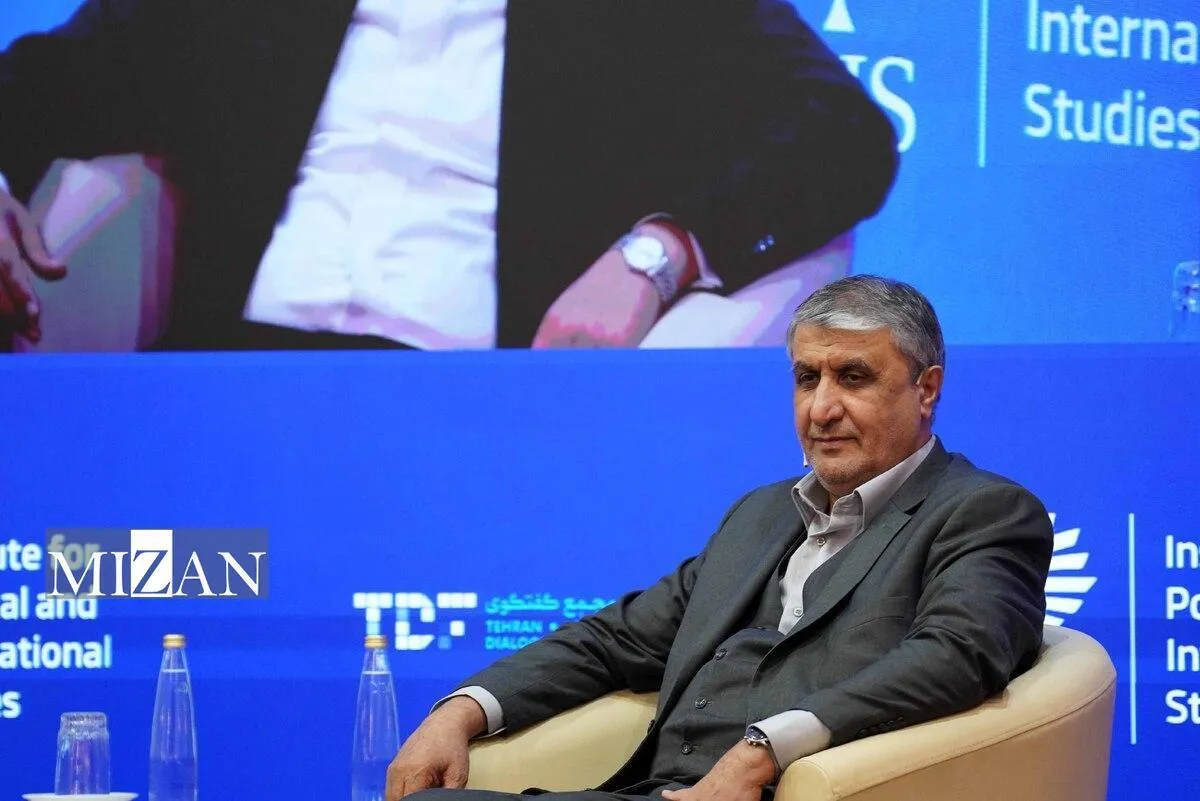
Mohammad Eslami, Vice President and head of the Atomic Energy Organization of Iran, took part in one of the panels at the International Conference on International Law under Assault, Aggression, and Defense.
Regarding the Israeli regime’s military action against Iran’s nuclear centers—as the first such attack on Iran following similar strikes on other countries such as Iraq and Syria—Eslami said: “This is an important issue. By looking at the past, you will find that the actions and conduct of the United States and the Israeli regime were previously based on ambiguous accusations. The result of this path was 20 years of negotiations that led to the JCPOA and Resolution 2231.”
He added: “With the proper implementation of that agreement, it was accepted that these alleged issues would be closed under the PMD framework. The file was closed, and within that framework, Iran agreed to a more extensive voluntary inspection regime in exchange for the lifting of sanctions. The key difference between that process and the past was that previously there had been no negotiations leading to an agreement. Iran fully implemented—and as confirmed by IAEA reports—all its JCPOA commitments. Yet the other side complied only for a short period.”
Eslami stated: “We were working within a confidence-building framework accepted by the UN Security Council, yet we came under attack. IAEA reports regularly confirmed the peaceful nature of Iran’s nuclear activities.”
He added that the recent developments proved that negotiations, agreements, and signatures had no effect on lifting accusations against Iran. “Previous Israeli attacks on nuclear facilities in other countries occurred when those sites were not under IAEA safeguards, but our facilities—while under IAEA oversight—were targeted. This was unprecedented in history.”
The head of the Atomic Energy Organization continued: “Neither the IAEA, nor the UN Security Council, nor the Board of Governors were willing to condemn this action, which is a clear sign of disregard for international law. At the time of the attack on Iran, a small number of IAEA inspectors were in the country, and they were scheduled to begin inspections at 8 a.m. on the first day of the assault.”
He added: “During the 2025 Board of Governors Conference, we proposed a resolution condemning attacks on nuclear facilities under Agency safeguards, but Western countries rejected it. We have been and continue to be under constant threat. If they claim they have destroyed our nuclear industry, then why do these threats persist? Their concern is not about nuclear weapons but about destroying our nuclear capabilities. Because of these active threats, we had taken serious measures to protect our experts, sites, and achievements. We tried, through these measures, to shield our nuclear industry and our people from these dangers.”
Eslami said: “Our nuclear sites were under IAEA supervision, the Agency had information about them, and yet these same sites were attacked. This has cast doubt on the Agency’s credibility. The international legal system has also been assaulted by this attack. No country has experienced safeguards inspections as extensively as we have. Eighty percent of the IAEA’s monitoring resources, in terms of personnel, are deployed in Iran. Although our nuclear capacity registered with the Agency accounts for just 3 percent of global nuclear facilities, 25 percent of all inspections and 80 percent of the cost and effort of IAEA safeguards are devoted to Iran.”
He stated that Article 68 of the IAEA statute deals with natural disasters and includes relevant provisions, “but the statute is silent on military attacks. We ask the Agency: what procedures exist for this situation? There are none—because an attack against safeguarded sites had never occurred before. If the Agency does not recognize such attacks, why did it not condemn the strike on Iran’s facilities? And if it does recognize them, why has it not addressed the issue in its legal framework?”
Eslami added: “We face daily threats of attack. The Agency must define its position under these conditions and, before establishing a modality for military attacks on safeguarded nuclear sites, it must conduct an internal review. Under the current circumstances, with the threats we face after the military assault, international law has become meaningless.”
Concerning Iran’s relationship with the IAEA, he said: “Our relationship consists of two parts—safeguards and the NPT, and separately the JCPOA. With the end of the JCPOA, the Agency’s mandate under that agreement has ended. The Agency’s quarterly reports under the JCPOA were issued to assess compliance or non-compliance. This mechanism was based on reciprocal obligations. When the Western side failed to fulfill its commitments, the agreement lost its meaning. Iran was wronged in this process. We must define our relationship with the Agency under the conditions of a de facto conflict and active threats, and the Agency must accept the modality proposed by Iran.”
On the upcoming Board of Governors meeting and the political maneuvering by European countries and the United States, he said: “We hope the Western side understands the consequences of such approaches and double standards for the non-proliferation regime. We must recognize that the Agency is an international institution that must not be further misused or discredited. Without such institutions, the law of the jungle would prevail.”
Regarding pharmaceutical production, Eslami added: “Two million people benefit from our medicines annually, and exports continue. Patients should not worry about their medications, and our activities in pharmaceutical production will continue”.