The freefall of the so-called Fact-Finding Committee into a whirlpool of accusations against Iran
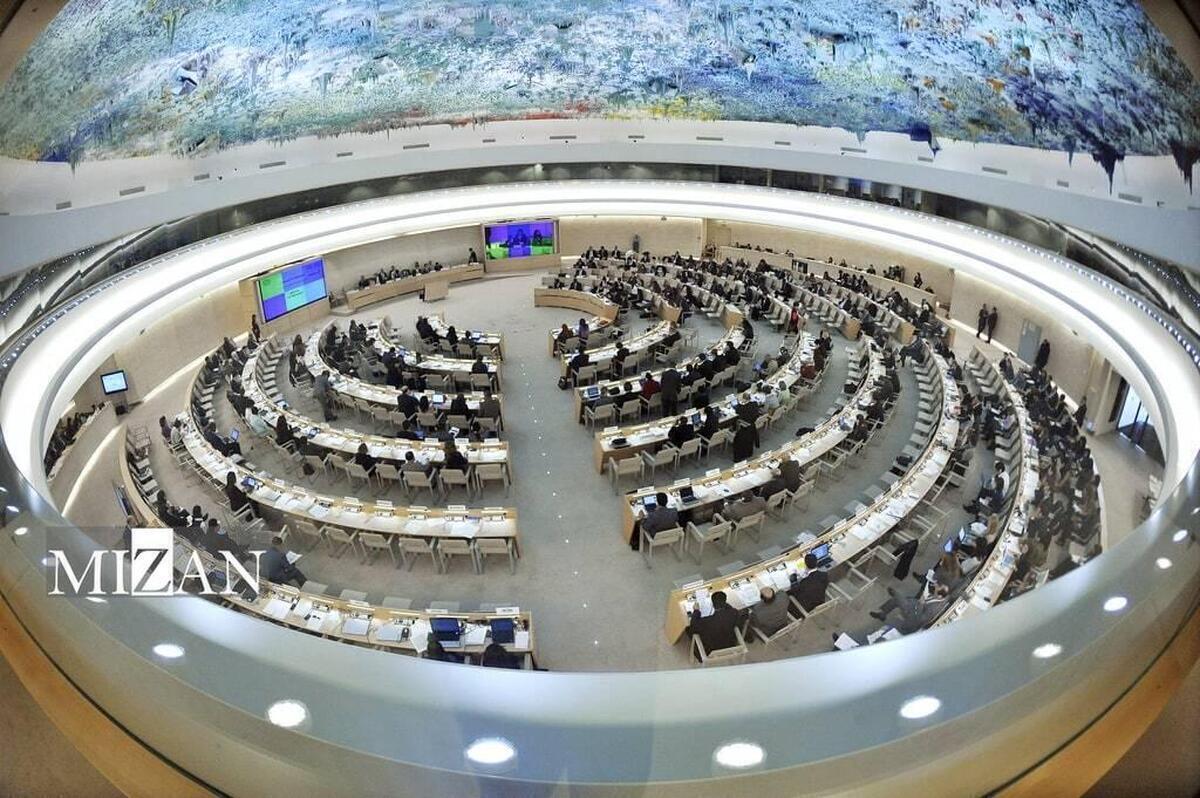
In its first appearance before the Third Committee of the UN General Assembly, the so-called Fact-Finding Committee presented a report on what it described as its findings regarding the human-rights situation in Iran.
This committee is the product of Western human-rights claimants who exploited the unrest in Iran in 2022; their lobbying in the Human Rights Council—motivated by delusional political aims—was accompanied by fabricated documentation created by anti-Iranian figures and media outlets.
Acting as a contractor promoting misinformation and disinformation on behalf of well-known hostile actors toward the Iranian people and the Iranian state, the so-called Fact-Finding Committee owes its continued existence to the same political sponsors who secured its platform in international forums.
In practice, the committee’s work has amounted to nothing more than reading baseless outputs produced by separatists, regime-change advocates, terrorists, and self-styled human-rights activists from high-visibility podiums.
Throughout its tenure, the so-called Fact-Finding Committee has demonstrated that—within the framework of its sponsors’ hostility toward Iran—it moves step by step along a path of engineering accusations and claims, and that its central mission is to promote a pre-determined, imposed outcome.
The underlying pattern of issuing unfounded and biased reports has now become the defining feature of this mechanism. The lack of credibility of its claims has left the committee begging for attention at every meeting in order to satisfy its political employers.
At the end of the committee’s presentation to the Third Committee of the UN General Assembly—during which Chair Sara Hossain deliberately ignored the consequences of Israel’s and the United States’ blatant aggression against Iran while pointing an accusatory finger at Tehran—she responded to objections from several delegations by accusing them of “double standards.”
She claimed that these countries had formed their views even before hearing her committee’s report—a statement she knows better than anyone is misleading.
During these years of operation—funded by its sponsors despite the broader UN budget cuts—the so-called Fact-Finding Committee has never taken any steps to assess the impact of unlawful sanctions on the ability of the Iranian people to access and enjoy their human rights.
Likewise, neither Sara Hossain nor her committee made any mention of the human-rights violations suffered by the 1,100 Iranians killed during the joint U.S.–Israeli attack on Iran; instead, she attempted in her latest report to obscure the consequences of this blatant crime through manipulative language.
In her recent report, Sara Hossain used the phrase “Israeli attacks on Iran’s military nuclear facilities,” thereby attempting to promote decades-old claims of her Israeli sponsors regarding Iran’s nuclear program. This is despite the International Atomic Energy Agency’s repeated confirmations that Iran’s nuclear program is peaceful, and the absence of any evidence to the contrary.
Following a response by the High Council for Human Rights of the Islamic Republic of Iran pointing out this manipulation, the so-called Fact-Finding Committee was forced—after a long delay—to issue a correction, claiming that the missing conjunction “and” between “nuclear” and “military” was unintentional.
In reaction to the committee’s latest report, the High Council for Human Rights of Iran expressed regret over the negative impact of this mechanism’s performance on the credibility of the United Nations, and condemned the unfounded accusations made by Sara Hossain at the Third Committee.
Denouncing the unfounded, biased, and politicized positions, reports, and statements of the so-called Fact-Finding Committee—positions that openly contradict professional standards, ethical principles, and the UN code of conduct for rapporteurs—the High Council for Human Rights warned that continuing this committee’s activities in such a manner will only further weaken and delegitimize international human-rights institutions, particularly the Human Rights Council.
Sara Hossain’s accusations against various countries—after failing to push through her committee’s baseless claims—reveal an important truth: the old tactic of selective, double-standard-based accusations no longer carries any weight.
This tactic has appeared in other forms before: accusing Iran of non-cooperation (even though Iran has deemed the committee illegal from its inception), admitting that the committee’s sources are unreliable and baseless, and most recently, revising a misleading phrase in its report.
These developments also show that Iran’s actions, engagement, reporting, and cooperation in international forums—especially human-rights mechanisms—have succeeded in dispelling much of the politically motivated disinformation driven by anti-Iranian groups.
As this fog of disinformation clears, the structural crisis of instrumentalizing human rights—and the crisis facing international human-rights bodies, especially the United Nations—has become more visible than ever.