When tents become traps; Gaza’s displaced battle cold, mud, and fear
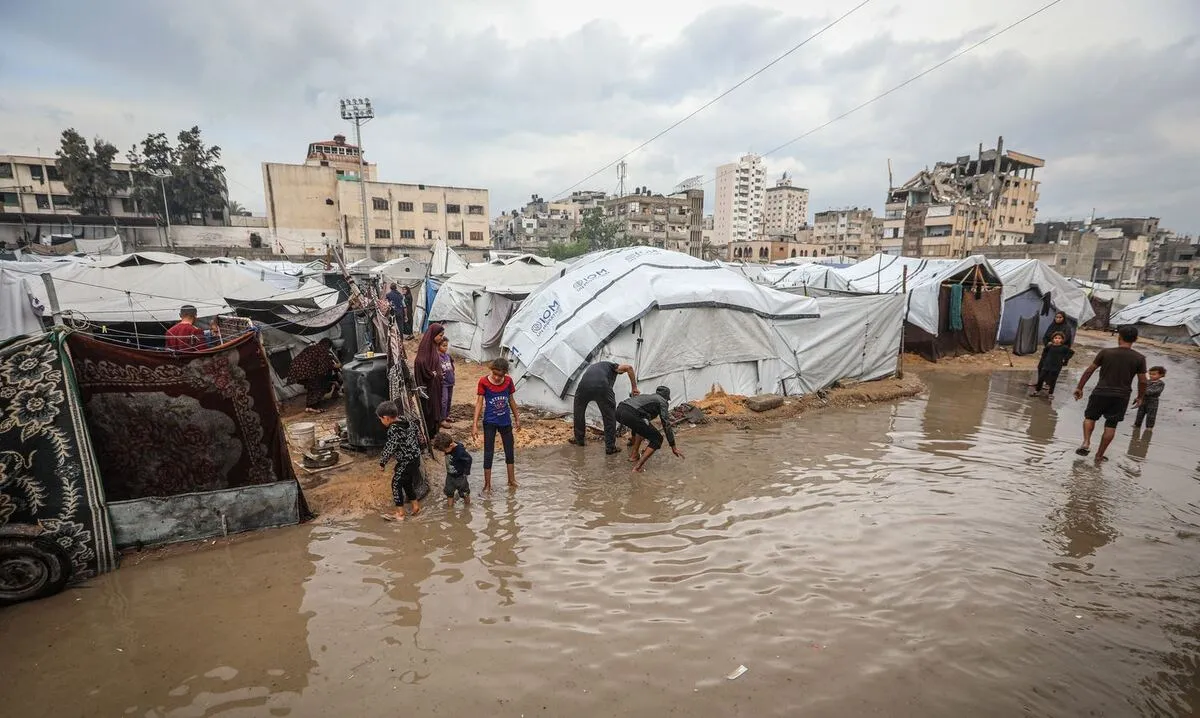
While rain around the world is often a symbol of hope, blessing, and prosperity, for the third consecutive year the people of Gaza must face it with pain and suffering. Instead of bringing good news, the rainfall has become yet another heavy burden in the midst of the countless humanitarian crises forced upon them by the occupation since the start of the war.
Local sources in Gaza report that within just a few hours, the rain has turned refugee camps and makeshift tents into pools of mud, with families spending entire nights trying to protect their children from drowning.
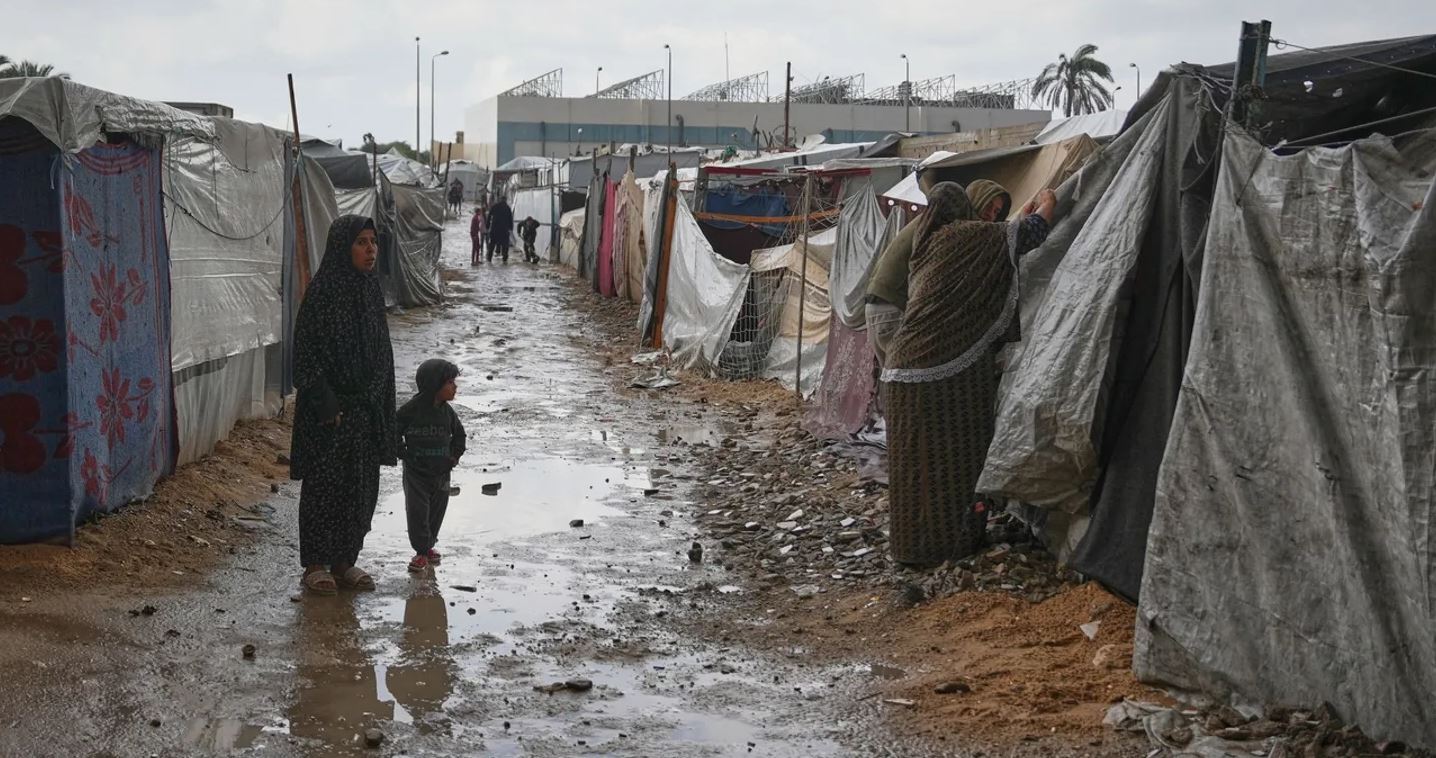
Images coming from Gaza City show displaced families as their tents collapse over their heads, sinking in mud, with women and children standing in the cold rain without any shelter. Blankets and mattresses are completely soaked, and there is no heating or insulation.
Displaced residents in Gaza say the rain has caused severe flooding across all areas, including the roads, making movement impossible. They stressed that Thursday night, November 13, was one of their hardest nights; heavy rain poured down, children shivered from the cold, and families devoted all their efforts to preventing their tents from being submerged.
In other parts of Gaza, including Khan Younis in the south, conditions are no better. Images from Khan Younis show children trembling from the cold, the floors of tents overflowing with mud and water, and the surroundings—roads and camp areas—turned into muddy streams.
A disaster for the displaced in the cold
The Gaza Civil Defense Director-General announced in a statement that they had received numerous emergency aid requests from displaced families in camps and tents across the Strip.

The Civil Defense emphasized that these calls came after heavy rain caused significant damage, sinking many tents in water. The worst flooding was reported in the northern and central areas of Gaza, and the international community—especially the countries backing and guaranteeing the ceasefire—must fulfill their responsibilities.
The government body added that nearly half a million displaced families in Gaza are suffering tremendous hardships, and the international community must be held accountable. They urged for the urgent entry of mobile homes and tents, especially as the winter season approaches and the humanitarian crisis worsens.
Mahmoud Basal, spokesperson for the Civil Defense, warned that the damaged homes across the Strip pose a threat to thousands of people and that genuine reconstruction is the only real solution.
He noted that several buildings in northern Gaza have collapsed in recent weeks. The lack of safe shelters and the severe shortage of mobile homes and standard tents have undermined all relief efforts, leaving everything on the brink of collapse.
He stressed that Gaza needs at least 450,000 standard tents to protect the displaced against the cold and heavy rainfall.
Basal warned that this winter will be extremely dangerous, and that the massive destruction of homes, infrastructure, and public services will turn any rainfall—especially heavy storms—into a deadly catastrophe.
Meanwhile, the sewage system in Gaza has collapsed, turning many streets into rivers of mud. With every storm, rainwater mixes with sewage, and with each pit forming near the tents, diseases spread. Even schools that have been converted into shelters sometimes flood, turning classrooms into pools of water.
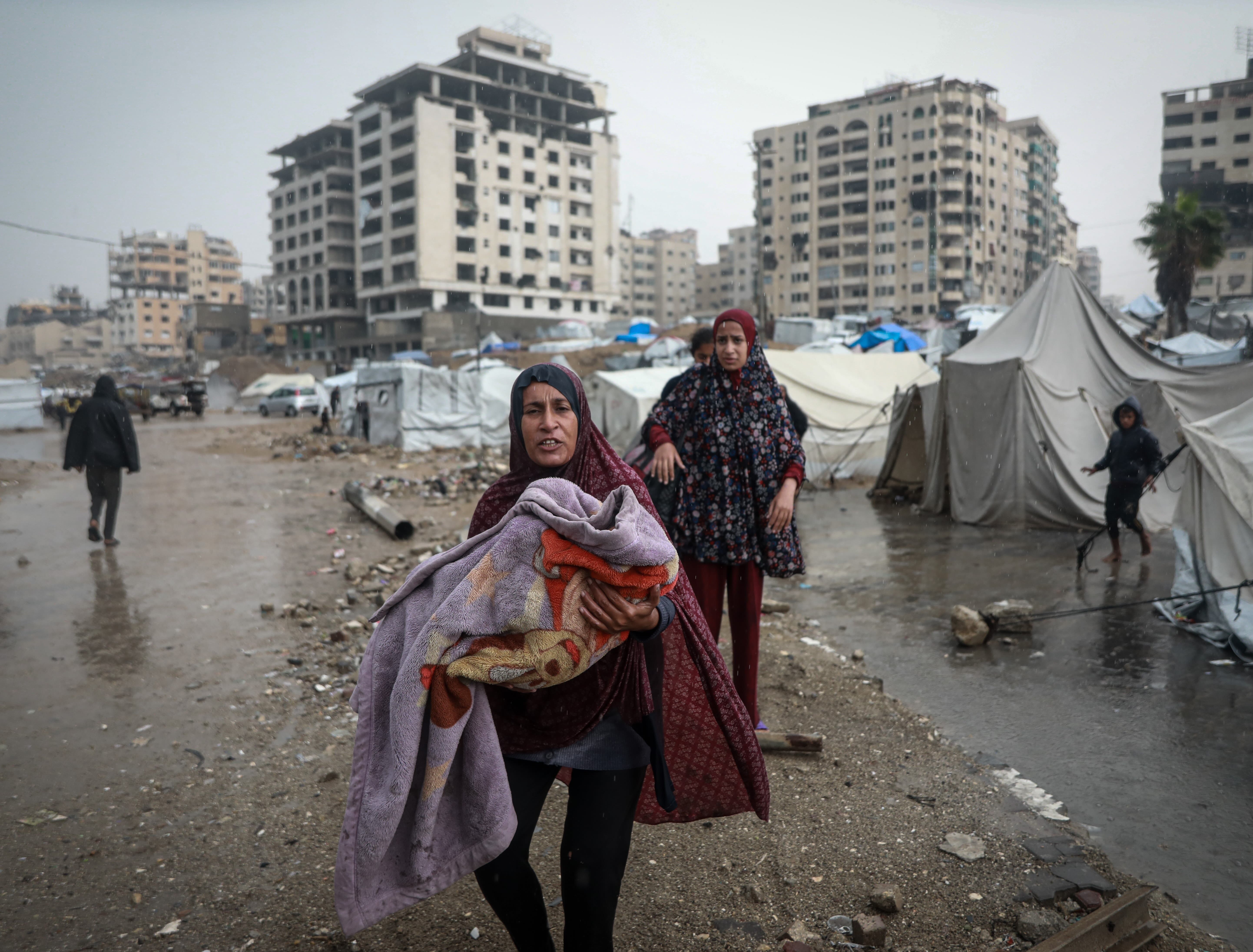
The Gaza Municipality also warned of the worsening humanitarian crisis as winter and rain begin, stressing that all vital infrastructure has been destroyed during the war.
In a statement, the municipality said Gaza is experiencing a major disaster due to the destruction of infrastructure and mass displacement, a crisis that could worsen as winter approaches. As the rainy season nears, fear among Gaza’s residents grows due to the scale of destruction across the city.
The municipality added that its teams are working with all available resources—despite harsh conditions and limited equipment—to mitigate the effects of the rain and protect residents as much as possible.
UN expresses concern over the winter conditions facing Gaza’s displaced
UN spokesperson Stéphane Dujarric expressed deep concern last night over the worsening humanitarian crisis in Gaza with the arrival of winter, stating that heavy rains have flooded hundreds of tents and shelters, placing thousands of families in extremely harsh conditions.
He noted that hundreds of tents and temporary shelters across Gaza have been submerged after the recent downpours, leaving thousands exposed to severe weather.
He sharply criticized Israel for violating the ceasefire by rejecting 23 UN requests to allow nearly 4,000 essential items, including tents, into Gaza.
The Gaza Government Media Office also reported that with the arrival of winter, the humanitarian crisis facing nearly 1.5 million displaced people living in worn-out tents is becoming even more severe.