Race for power in Baghdad: How Iraq’s election winners will form the next government
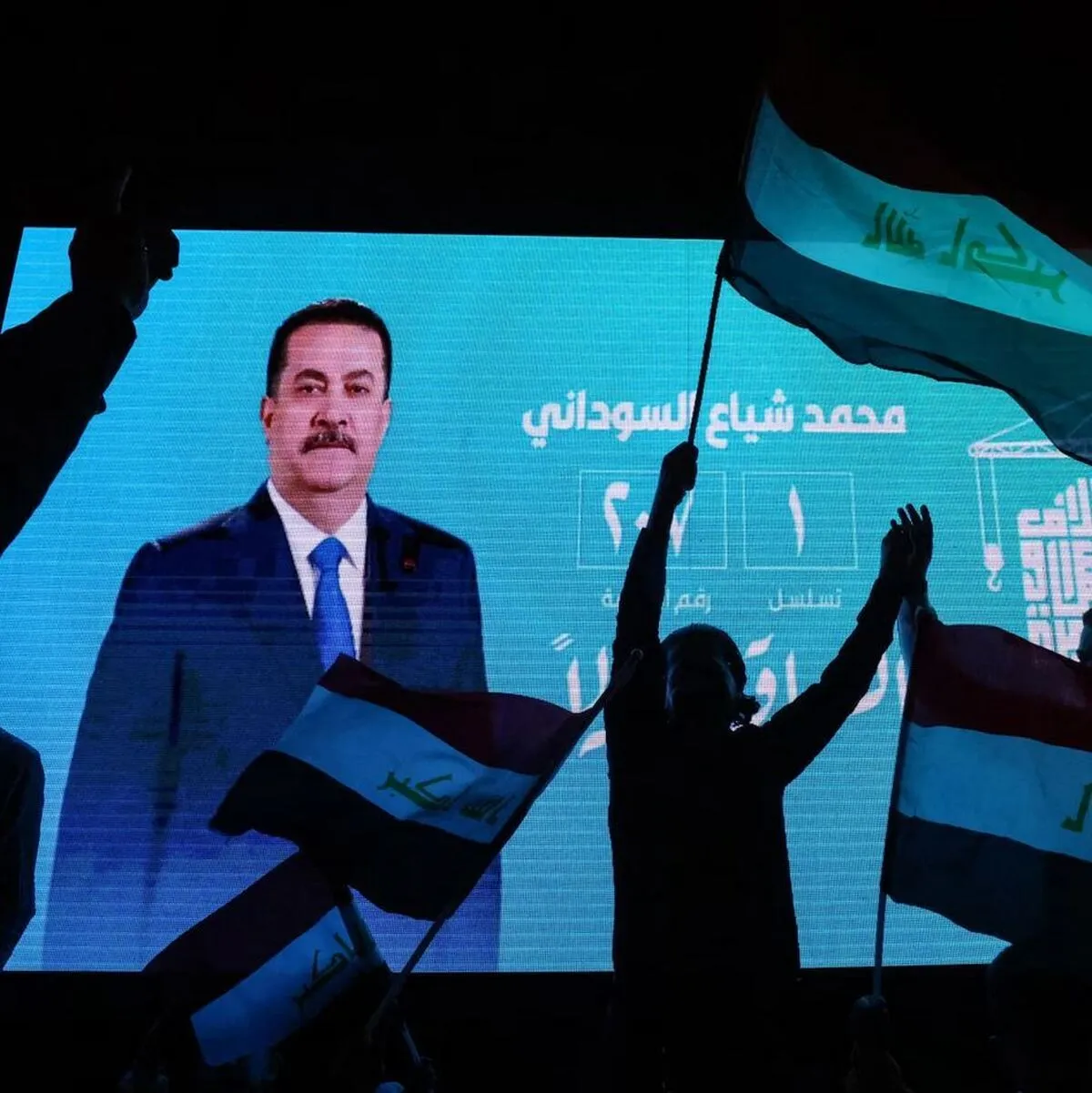
Prime Minister Mohammed Shia’ al-Sudani’s coalition has appeared as the winner of Iraq’s parliamentary elections, placing his bloc in a strong position to begin talks on forming a new government.
Initial results show that al-Sudani’s Construction and Development Coalition secured 1,317,000 votes, followed by the Kurdistan Democratic Party (KDP), led by Masoud Barzani, with around 1,099,000 votes.
The Sunni Progress Party, led by former parliament speaker Mohammed al-Halbousi, came in third with more than 900,000 votes, while the State of Law Coalition led by former Prime Minister Nouri al-Maliki ranked fourth with over 700,000 votes.
Iraq’s Independent High Electoral Commission announced that voter turnout reached 56%.
Commission spokesperson Jumana al-Ghalai stated that final results would be announced next week, although no exact date was given.
Preliminary figures show that only two political forces—the Construction and Development Coalition and the KDP—surpassed the one-million-vote threshold nationwide.
Projected seat distribution in Iraq’s 329-member parliament
Early projections estimate the following seat allocation:
- 45 seats – Al-Sudani’s Construction and Development Coalition
- 30 seats – Maliki’s State of Law Coalition
- 27 seats – Barzani’s Kurdistan Democratic Party
- 27 seats – Halbousi’s Progress Party
- 26 seats – The Sadiqun Bloc, led by Qais al-Khazali
- 19 seats – The Badr Organization, led by Hadi al-Ameri
- 18 seats – The National Forces Coalition, led by Ammar al-Hakim
These numbers are approximate and subject to change.
Highest and lowest voter turnout
Official data shows that Duhok Province recorded the highest turnout at 77.47%, followed by Erbil at 71.65%, and Salahuddin at 66.98%.
The lowest turnout was recorded in Baghdad’s Rusafa district at 41.55%, and in Maysan Province in southeastern Iraq at 42.15%.
What comes next in Iraq’s electoral process?
Based on the preliminary results, al-Sudani—whose coalition holds the largest number of seats—is expected to begin coalition negotiations to form a government.
Following the release of results, he announced that he is ready for dialogue and negotiations with all parties.
The Iraqi Prime Minister can form a government through a coalition that includes Shiite, Sunni, and Kurdish parties.
Under Iraq’s post-2003 political system, the president is required to call the newly elected parliament to convene within 15 days of ratifying the election results.
The session is chaired by the oldest member and includes the election of the parliament speaker and two deputies.
After that, the process of electing Iraq’s president begins. The president must be elected within 30 days of the first parliamentary session.
Once sworn in, the president has 15 days to assign a candidate from the largest parliamentary bloc to form a cabinet, which must be presented to parliament within 30 days.
If the nominee fails, the president appoints another candidate.
Talks on forming Iraq’s new government
Ammar al-Hakim, leader of the Hikma Movement and head of the National Forces Coalition, met with Faleh al-Fayyadh (head of the Popular Mobilization Forces), First Deputy Speaker Mohsen al-Mandlawi, and Shibl al-Zaidi (leader of the Services Coalition).
A statement from Hakim’s office said the meetings emphasized the importance of dialogue among political forces to expedite government formation and turn electoral promises into practical programs that serve citizens.
According to the statement, Hakim stressed the need to preserve and strengthen stability, especially since the election results support this direction.
Al-Sudani: High voter turnout was unprecedented and unexpected
Prime Minister al-Sudani, head of the Construction and Development Coalition, confirmed that the high voter turnout in the recent parliamentary elections was unprecedented and unexpected.
In a statement, he said: “We met with several winning candidates from the coalition, in the presence of former Prime Minister Iyad Allawi, Labor Minister Ahmed al-Asadi, and several prominent figures and supporters.”
The Prime Minister expressed gratitude to all officials and components of the coalition’s electoral structure for their efforts, which contributed to achieving notable results.