Clearer than a fact, beyond a principle
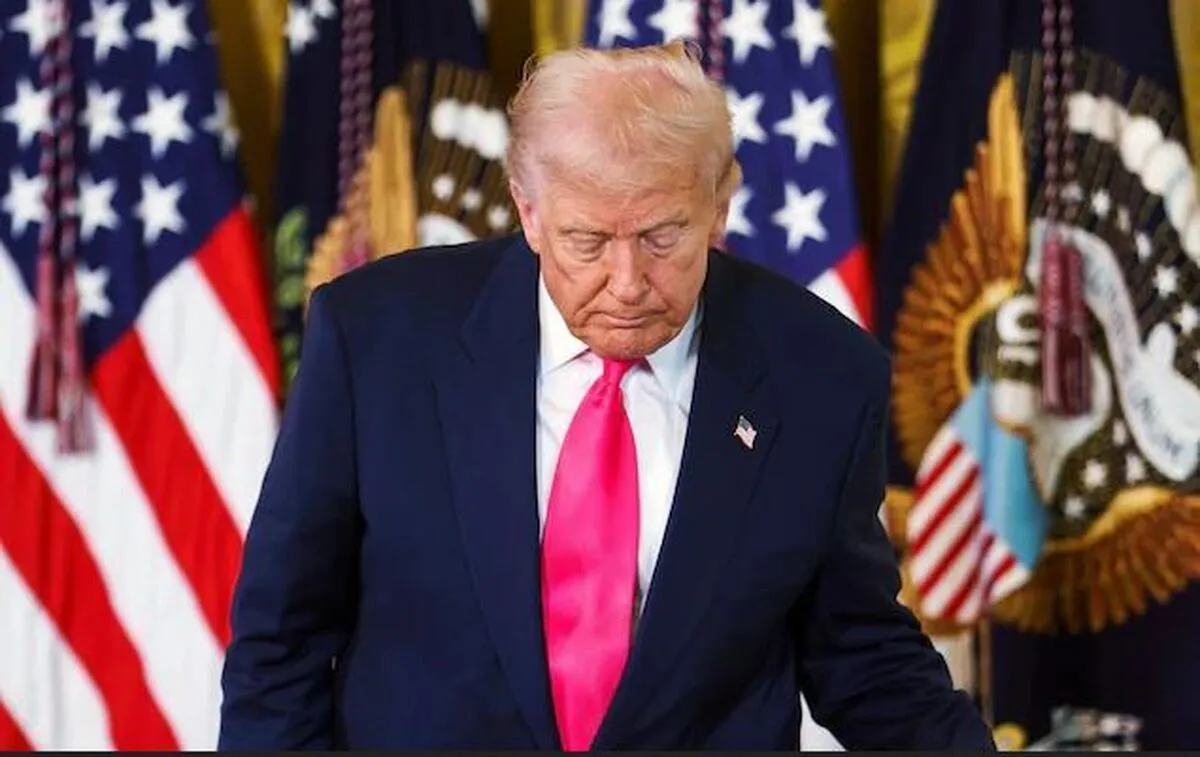
Donald Trump’s recent explicit admission — the widely despised U.S. president — that the White House managed and directed the recent 12-day war, serves as a revealing indicator of the inherent hostility and deep-rooted confrontation between the United States and the Iranian nation. Trump’s remarks, beyond their legal and strategic implications, also carry significant cognitive repercussions. In this regard, two essential points must be emphasized:
First, the U.S. president, right in the midst of nuclear negotiations with Iran, was simultaneously coordinating the pieces of a war scenario against our country in partnership with the Zionist regime. This is not an unintended contradiction; it is the embodiment of a deliberate strategy. This strategy is founded upon the goal of Iran’s complete destruction, and its components have long been institutionalized within U.S. foreign policy.
Under such circumstances, speaking of trust in the United States is not merely an act of naivety — it amounts to a blatant betrayal of our national interests and the essential security needs of our country. The reality is that Trump’s admission reflects the core nature of Washington’s outlook toward Tehran, and must not be reduced to a mere “comment” or “propaganda stunt.” From the heart of this brazen stance, dozens — if not hundreds — of principles rooted in America’s inherent enmity toward Iran can be clearly concluded.
The second point concerns the realistic and wise perspective of the Supreme Leader of the Islamic Revolution regarding relations with the United States. This prudent and farsighted approach has been articulated throughout the blessed life of the Islamic Revolution, yet in the current context it has become more evident and meaningful than ever before.
Today, the Iranian people can palpably sense the evidence and validity of this thoughtful and realistic outlook. The essence of this logical perspective is reflected in the recent statements of Imam Khamenei (may his shadow endure). In a meeting held on the anniversary of the 13th of Aban with thousands of students, university students, and families of the martyrs of the 12-day imposed war, he described the 13th of Aban 1979 as a day of “honor and victory” and a day that “revealed the true identity of the arrogant American government.” Emphasizing the importance of engraving this day into the national memory, he stated:
“The conflict between the Islamic Republic and the United States is an inherent one — a clash of interests between two opposing currents. Only if the United States completely ends its support for the accursed Zionist regime, removes all its military bases from the region, and stops interfering in its affairs, will the American request for cooperation with Iran become something that could possibly be considered — not in the near future, but much later.”
Ultimately, this truth and principle must be regarded as a strategic and calculative reality in every action, statement, and strategic formulation within our foreign policy — especially in relation to the United States. Only then can we strengthen the position of a “powerful and united Iran” and leave no space for the greed or conspiracies of Iran’s sworn enemies.