Chief Justice’s firm directives to judicial officials to support the government in improving people’s livelihoods
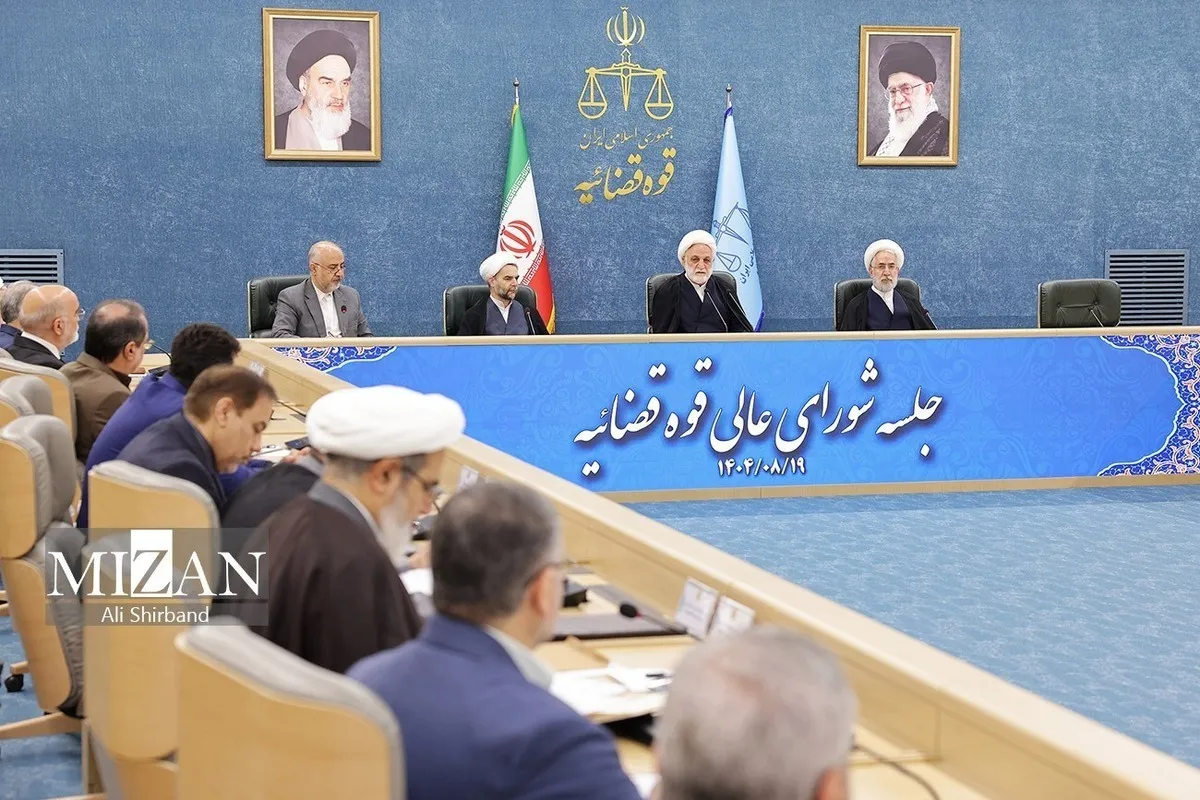
According to the Judiciary’s Media Center, G Mohseni Ejei, in his remarks at the Supreme Judicial Council meeting on Tuesday (November 10), referred to the activities of the task force overseeing the Bank Ayandeh restructuring process. He emphasized that the Attorney General, both in his inherent duties and as a member of the said task force, must pursue and closely monitor the related issues to ensure that the process moves forward swiftly and accurately. “This can serve as an effective and beneficial model for similar cases,” he noted.
The Chief Justice again highlighted the excessive rise in prices of key consumer goods, saying: “As I have previously emphasized, the Attorney General and the Head of the Inspection Organization must engage decisively with the issue of the sharp increase in prices of essential goods such as rice and animal feed. If we fail to take serious measures in this regard, we will face challenges to the people’s food security.”
He added, “In all matters related to people’s livelihoods—including imports, exports, market control, product distribution, and so forth—judicial authorities must act decisively, both in line with their inherent duties and to assist the government. In cases where negligence, violations, or crimes occur in any sector, whether governmental or private, judicial officials must take firm legal action without leniency. Where appropriate, and when it contributes to improving the situation, the results of these actions should be properly communicated to the public.”
Ejei continued, “The government is striving to improve people’s livelihoods. Nevertheless, we ask that these efforts—especially in market regulation and related matters—be intensified. The government should also provide the necessary explanations and clarifications to the public on these issues. The judiciary will certainly assist the government in this matter. In the Supreme Economic Coordination Council meetings, we have granted the necessary authorities to the government, even in cases where legal gaps existed, and we will continue to do so to help alleviate the people’s economic difficulties.”
Referring to the issue of social disorders, the Chief Justice said: “In regard to certain social deviations that occur publicly and visibly, in 2023 we issued a four-point directive. Based on that, I once again strongly instruct the Attorney General to follow up on these matters seriously, in line with that directive, and to ask the police and intelligence agencies to identify organized or foreign-linked networks involved in such social disorders.”
Mohseni Ejei added that “the President and the government have also issued firm instructions to relevant sectors regarding this matter.”
He emphasized that “those responsible for organizing public events and the bodies granting permits for them must ensure that no acts contrary to law and Sharia occur during such events. If such violations take place, not only the perpetrators but also the organizers and licensing bodies will be held legally accountable as accomplices.”
The Chief Justice further noted, “Regarding issues related to restaurants and cafes, the Tehran Prosecutor has adopted a proper approach—summoning and warning owners of establishments where unlawful or un-Islamic activities had taken place. I strongly emphasize that if such violations occur again in these venues, decisive legal action must be taken.”
He reiterated, “In the area of public and visible social deviations, it is evident that in some cases these activities are organized and systematic, and that hostile actors exploit them. Therefore, according to the four-point directive issued in 2023 and communicated to relevant institutions, competent authorities must take firm and lawful measures against them.”
Finally, addressing the issue of drought, Ejei stated: “The government is doing its utmost to manage water consumption and make optimal use of the country’s water resources. Citizens must also take responsibility and make serious efforts to conserve water. The media, including national television and radio, should educate the public on water-saving methods and carry out effective awareness campaigns in this regard.”