Innovative proposal by the Head of the Judiciary on expanding the scope of “Reconciliation” and “Dispute Resolution”
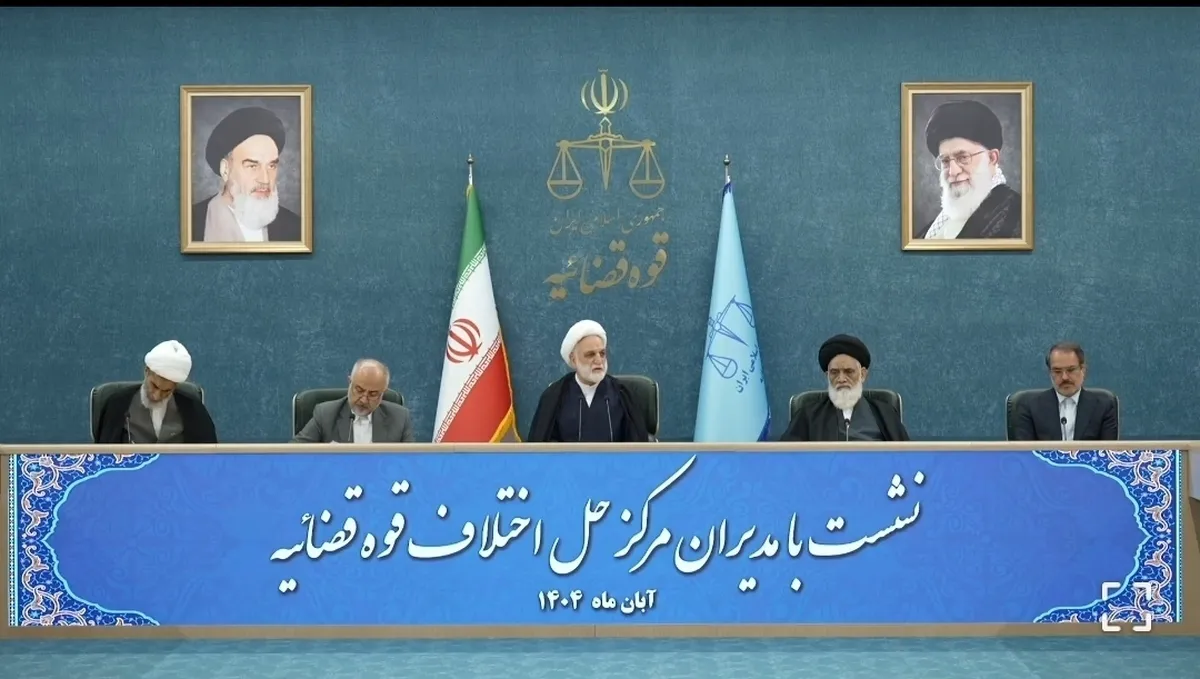
According to the Judiciary’s Media Center, Mohseni Ejei, in a meeting with the officials and staff of the Center for the Development of Dispute Resolution on the anniversary of the establishment of the Dispute Resolution Council, expressed appreciation for the efforts and services of all its members.
He said: “Our perspective on reconciliation is a religious and Islamic one. We do not view it merely as a means to reduce the number of cases entering the judiciary.”
The Judiciary Chief emphasized that reducing the number of legal cases is only one of the results of reconciliation in legal disputes, adding: “Reconciliation has significant social and moral impacts; it helps strengthen social norms and prevents certain social disorders.”
Ejei highlighted the need to make full use of the public’s potential in promoting reconciliation and dispute resolution, stating: “In reconciliation efforts, the maximum use of public capacities must be made, and all sectors of society should participate. Dispute resolution and reconciliation should not be limited to administrative or semi-administrative processes.”
He further noted the possibility of broadening the concept of reconciliation and applying it to security-related issues within legal boundaries, explaining:
“In some security cases, reconciliation can be utilized. For individuals who have carried out propaganda against the system or committed acts against national security that are legally pardonable, reconciliation mechanisms can be implemented. In this regard, we must rely on wise, knowledgeable, and compassionate individuals with strong communication skills.”
The Judiciary Chief added: “Even regarding some individuals who acted against national security during the recent 12-day imposed war, if their actions are legally pardonable, reconciliation approaches can be adopted. Teams can be dispatched to engage with such individuals and offer them guidance.”
Referring to the successful experience of 2022, Ejei said: “In 2022, before the general pardon granted by the Leader of the Revolution—which led to the closure or commutation of nearly 90,000 cases—groups from seminaries and universities visited detention centers to speak with detainees. During these conversations, many admitted their mistakes and expressed remorse. We believe this approach can again be used effectively.”
Ejei also referred to applying reconciliation methods to cyberspace-related cases, stating: “One of our main concerns is cyberspace. We can utilize the capacity of talented and well-intentioned youth active online to address cases involving users who may have acted against national interests.”
Regarding banking disputes, he said: “There are many cases rooted in banking issues. Each year, numerous complaints and lawsuits are filed between banks, customers, and citizens. In this area as well, reconciliation and dispute resolution approaches—drawing on experts from the banking sector—can be used.”
Finally, Ejei agreed with a proposal by the Head of the Center for the Development of Dispute Resolution to launch a campaign titled ‘I Forgive; Iran, the Land of Peace’, expressing his full support for it.
He concluded: “When a person voluntarily forgives out of love for the Ahl al-Bayt (peace be upon them) and relinquishes their rightful claim, the moral and spiritual impact of such an act can surpass dozens of sermons.”