Araghchi: Iran’s diplomacy during the 12-day war succeeded in rallying over 120 countries to its side.
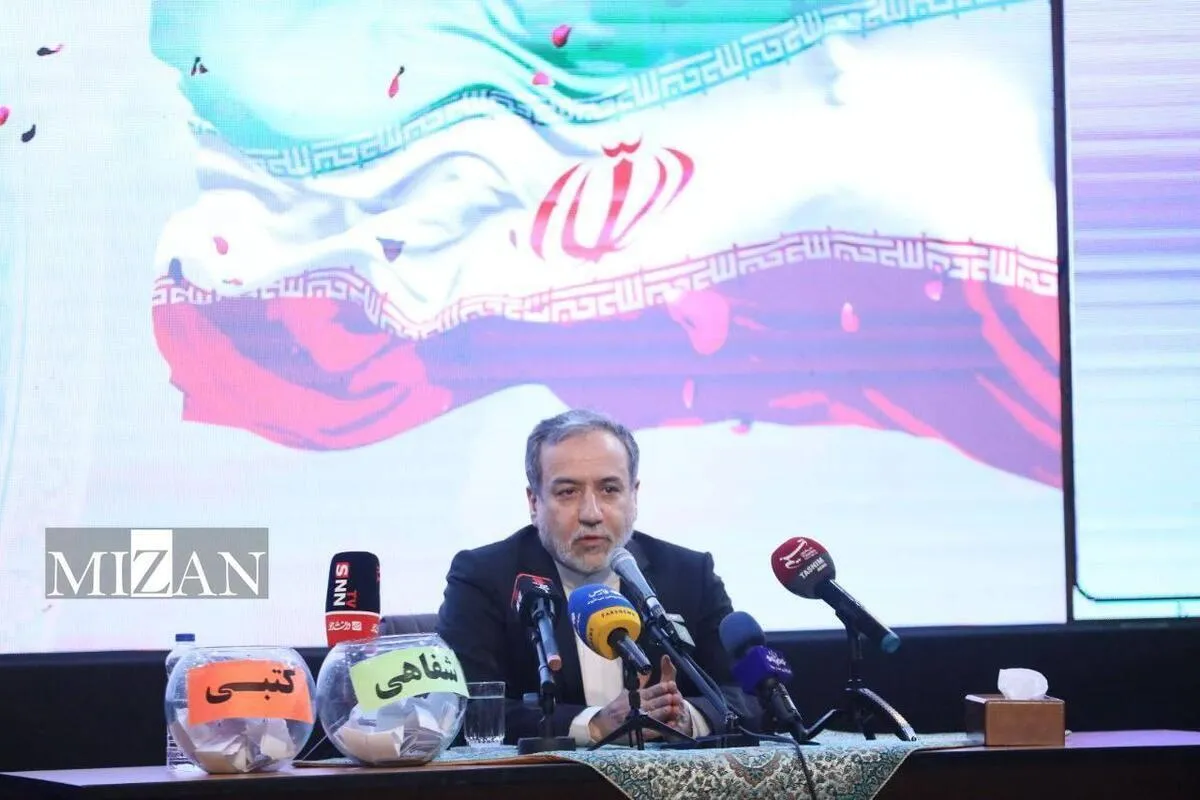
The event was organized by the Student Basij in cooperation with the Islamic Association and the Islamic Community of the university.
Araghchi said: “During the 12-day war, we had no choice but to stand firm and resist — we had to prove that attacking Iran would lead nowhere and that no adversary could gain anything from it.”
He emphasized that deterrence is not limited to the military domain: “Deterrence must also exist in social, economic, and diplomatic dimensions.”
Highlighting the unity of the Iranian people during the conflict, he said: “It’s crucial for a nation to maintain its economic capabilities and resilience throughout a war.”
On diplomatic deterrence, Araghchi explained: “Diplomatic deterrence means being able to rally a large number of countries to your side — what we call international alignment. During the 12-day war, our diplomacy succeeded in winning the support of over 120 countries.”
Referring to the UN “snapback” episode, he said: “You saw how, for the first time, two permanent members of the Security Council openly announced that they would not comply with its resolutions.”
“The Americans themselves admitted that Iran divided the world into two parts — a majority that supported Iran’s stance, and a minority that sided with the U.S. and the West,” he noted.
Araghchi added: “When you can build consensus and legitimacy in your favor on the international stage, you’re moving along the path of deterrence. We defended the country militarily while also securing global legitimacy and consensus in favor of the Islamic Republic.”
He stressed that Iran’s armed forces and diplomatic apparatus are working in full coordination, maintaining close cooperation between “the field and diplomacy” even after the war.
Discussing Iran’s regional policy, Araghchi said: “Our strategy is one of good neighborliness and strengthening ties with regional countries to ultimately achieve regional unity. Despite some differences, you saw that all neighboring countries supported Iran and condemned the attacks during the 12-day war.”
He reiterated that negotiation is one of the essential tools for securing national interests: “There are always two paths to achieving your demands — war or negotiation. Negotiation is always less costly than war, though one must never fear war.”
Araghchi cautioned: “If negotiation implies surrender, then it becomes costlier. The act of negotiating itself is not questionable — what matters are its goals and methods.”
He continued: “We have tested negotiations with the United States in different settings but have not obtained any positive results so far — and that’s simply a fact.”
Referring to the 2015 nuclear deal (JCPOA), he said: “We negotiated the JCPOA in good faith, and it was approved by both Parliament and the Supreme National Security Council, but the U.S. eventually withdrew from it.”
Araghchi also spoke about Iran’s strategic location: “Transport corridors play a key role in our international and economic connectivity. Iran sits on an excellent corridor route, and we must use this advantage wisely.”
On the Zangezur issue, he asserted: “We have repeatedly declared, and we firmly stand by this position, that we will not accept any changes to borders or regional geopolitics. We also will not tolerate the presence of foreign forces in our vicinity. The best path to regional security lies in intra-regional cooperation.”
Clarifying Iran’s foreign policy doctrine, he said: “‘Neither East nor West’ does not mean avoiding relations with them — it means not depending on either. If relations with the East serve our national interests, we’ll pursue them; if relations with the West could serve our interests — though their behavior has proved otherwise — we would not ignore that opportunity either.”
Araghchi concluded: “We place our trust only in our people. We will not rely on either East or West. We will continue to pursue the lifting of sanctions in a dignified and honorable manner. We trust no country, but we have strategic partnerships with some — notably China and Russia — under signed strategic cooperation documents.”
He also mentioned efforts to secure the release of Iranian prisoners in Turkey: “We have several citizens imprisoned in Turkey. I have spoken with Turkish officials, including the foreign minister, multiple times about their situation, and we hope they will be released soon.”