Proxy warfare in Gaza: How Israeli-backed criminal networks exploit chaos
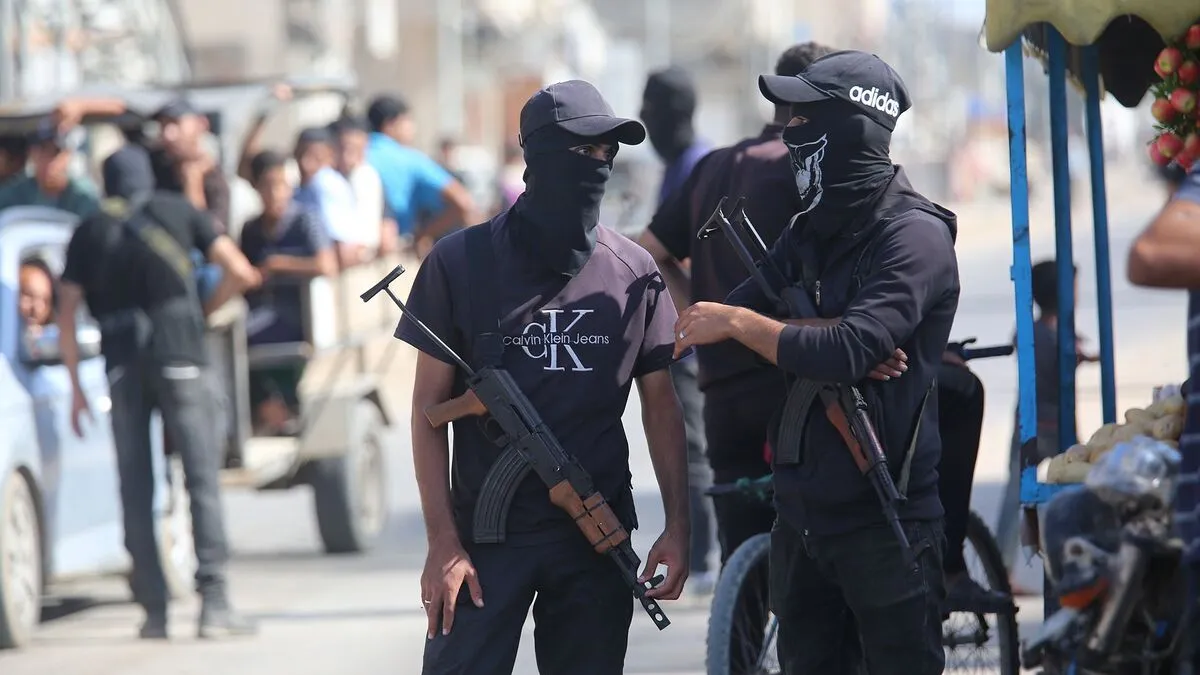
Al-Araby Al-Jadeed reported on Sunday that in recent months, local sources have revealed the activities of groups said to be supported by Israel, operating in lawless areas of Gaza to hunt individuals, gather intelligence, and carry out kidnappings.
The story began with the disappearance of a young nurse. Tasnim Al-Homsi, a nurse from Khan Yunis, was returning home after her shift at a temporary medical center on the evening of October 2, 2025, when a truck carrying household data-x-items suddenly stopped in front of her.
Armed men emerged from the vehicle, and within minutes, the routine scene turned into a kidnapping operation. Tasnim was taken away in the truck. Later, her family discovered that she was being held in Ashkelon prison in Israel. Two months earlier, her father, Dr. Marwan Al-Homsi, director of Gaza’s field hospitals, had been abducted in a similar manner.
According to the Gaza government’s information office, these incidents are only part of a new wave of kidnappings that intensified in the second half of 2025. At least 300 people—including 200 from humanitarian aid distribution centers—have been abducted during this period.
Ismail Al-Thawabteh, head of the Gaza government’s information office, said these figures indicate a “repeated and organized pattern” taking advantage of the collapse of security following Israeli bombings.
Security data indicate that in 2025, the Israeli army recruited and armed six local armed groups. Four remain active: one in eastern Rafah under Yasser Abu Shabab, another in southern Khan Yunis led by Hussam Al-Astal, also known as Abu Sefen, and two smaller groups in eastern and southern Gaza, composed of members from the Mansy, Hales, and Dghamash families.
The latest group, affiliated with the Dghamash family, was dismantled last month after a six-hour battle with Gaza’s special internal security forces, known as Radea. More than 25 members were killed, dozens arrested, and weapon caches, fuel, and communication equipment linked to the Israeli army were seized.
Leaders of these groups often have criminal backgrounds, including smuggling, violent crime, or allegations of intelligence collaboration with Israel. Reports indicate that after escaping prisons at the start of the war, they turned to looting aid trucks and abducting civilians.
One member, Yasser Abu Shabab, had previously been arrested on espionage charges. Hussam Al-Astal, involved in the assassination of Palestinian scientist Fadi Al-Batsh in Malaysia, escaped death sentences and resurfaced in southern Gaza.
In a major case, security sources identified those responsible for Tasnim Al-Homsi’s abduction: a member of Al-Astal’s group reportedly directed by Israeli intelligence. Local sources say these groups often receive air support from Israel, a notable example being the abduction of Dr. Marwan Al-Homsi. Armed men in an unmarked vehicle attacked his resting place in southern Khan Yunis. During a brief clash, journalist Tamer Al-Za’nin was killed, and Dr. Al-Homsi was injured and taken toward the Salah Al-Din area, under Israeli military control.
International legal experts describe these operations as examples of “war by deception.” Lima Bastami, head of legal affairs at the European-Mediterranean Human Rights Observatory, said using civilian disguises to deceive an opponent during military operations is prohibited under Article 37 of the First Additional Protocol to the Geneva Conventions and constitutes a war crime if it results in death or injury.
Similar incidents have been reported. Abdullah Youssef, a resident of western Gaza, recounted how on May 9, a nine-member group dressed as women exited a truck carrying blankets and household goods and attacked the home of a resistance commander in Khan Yunis. After a seven-minute clash and Israeli airstrikes, Ahmed Sarhan was killed, and his wife and son were abducted.
Some kidnappings have occurred at humanitarian aid centers. Saleh Al-Homsi, head nurse at the European Hospital in Gaza and Tasnim’s uncle, said her abduction was “a tool to pressure her father” and called on the WHO and international organizations to intervene for their release.
Mahmoud Omar, a survivor of a similar incident in Rafah, described how armed men with Kalashnikovs detained 25 people during aid distribution and brought them to an interrogation center, where an Israeli intelligence officer checked identities via laptop. Some were released after screening, but five were blindfolded, handcuffed, and taken to an unknown location.
In another incident in the same area, Mohammed Shaer said armed men exited a vehicle while people waited for aid trucks, fired at the crowd, and shouted at them as “Hamas dogs.”
Al-Thawabteh stated these attacks demonstrate how “criminal gangs are using humanitarian aid as a trap to hunt civilians.”
Meanwhile, the resistance has begun counter-operations. Last September, three members of one of these groups were captured in eastern Gaza and executed on the spot. A month later, eight more from the same network were executed after interrogation for involvement in abducting resistance fighters and transferring intelligence on tunnels and Palestinian prisoners to Israel.
As a result of these clashes, many network members have fled to eastern areas under Israeli army control. However, Gaza security forces announced that pursuit and clearance operations will continue until these groups are completely eliminated.