The labyrinth of the U.S.–China economic conflict
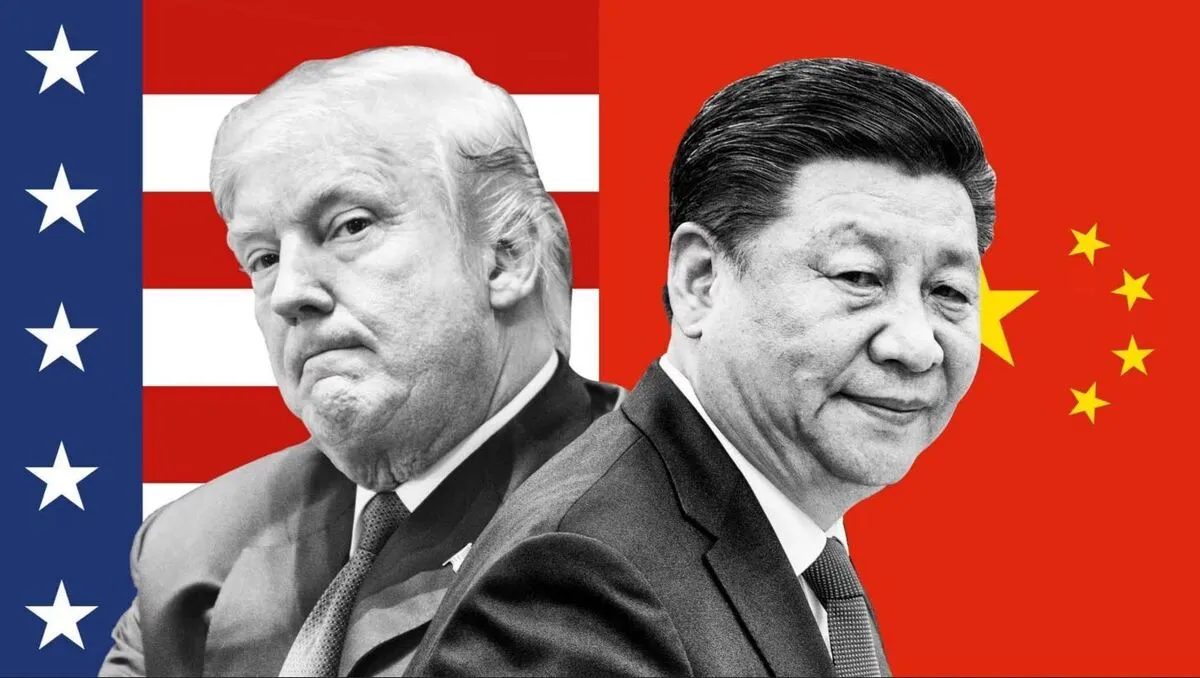
The bilateral trade conflict between Washington and Beijing has evolved far beyond a battle over tariffs — it has become a complex test of strategic learning. Within this labyrinth, the Chinese have skillfully deciphered the behavioral patterns of the Trump administration, and this deep understanding has not only undermined America’s initial objectives but has also left President Trump increasingly exhausted and confused in his pursuit of the trade war against China.
China’s close reading of the U.S. approach revealed that Trump’s tariff strategy rested on a single fundamental assumption: “economic pressure inevitably leads to political submission.” Beijing quickly realized that the core of Trump’s tactics was to create constant, unpredictable shocks designed to disrupt China’s long-term planning. However, instead of reacting impulsively, Beijing adopted a strategy of “structural counteraction” rather than “rapid response,” effectively neutralizing this behavioral model.
Rather than focusing on maintaining short-term export figures to the United States, China concentrated on strengthening its economic resilience. Data showed that what appeared to be a slowdown in growth was, in fact, a deliberate effort to repair and reinforce domestic demand and reduce structural dependence on the U.S. market. This ability to turn an external crisis into an opportunity for internal reform became Washington’s greatest strategic failure, proving that economic “containment” through tariff tools is ineffective against an actor capable of structural regeneration.
The confusion in Washington stems directly from its inability to define a clear metric for victory. Trump insisted that “closing the trade gap” was the ultimate goal, while economic analysts pointed out that the trade deficit is a function of America’s macroeconomic balances — something that cannot realistically be altered through tariffs on a single country.
This contradiction between declared goals (eliminating the deficit) and macroeconomic realities (the inherent nature of that deficit) has meant that each new tariff measure, rather than bringing the U.S. closer to success, has only eroded the government’s credibility and resources. When every “small victory” in negotiations failed to change the deficit, Trump’s primary weapon — tariffs — lost its effectiveness both in public perception and among internal strategists. This left the U.S. trapped in a vicious cycle: if tariffs don’t work, they must be intensified; yet intensifying them only raises domestic costs.
The implications of China’s successful understanding of U.S. strategy are now evident in Beijing’s current approach. China is no longer passively waiting for Washington’s next move; it is actively shaping new arenas to shift the balance in its favor. These include developing non-Western trade routes, strengthening regional investments, and strategically supporting firms relocating from China but remaining within its global supply chain network.
This proactive, multidimensional approach places the United States in an even more difficult position, as any future change in White House leadership will confront a deeply entrenched and flexible Chinese economic reality. Having mastered the rules of Trump’s game, Beijing has rewritten the playbook — trapping Washington in an economic maze whose outcomes increasingly favor the side that now fully understands its opponent’s strategy.