Extensive remarks by the Head of the Judiciary regarding the dissolution of Ayandeh Bank
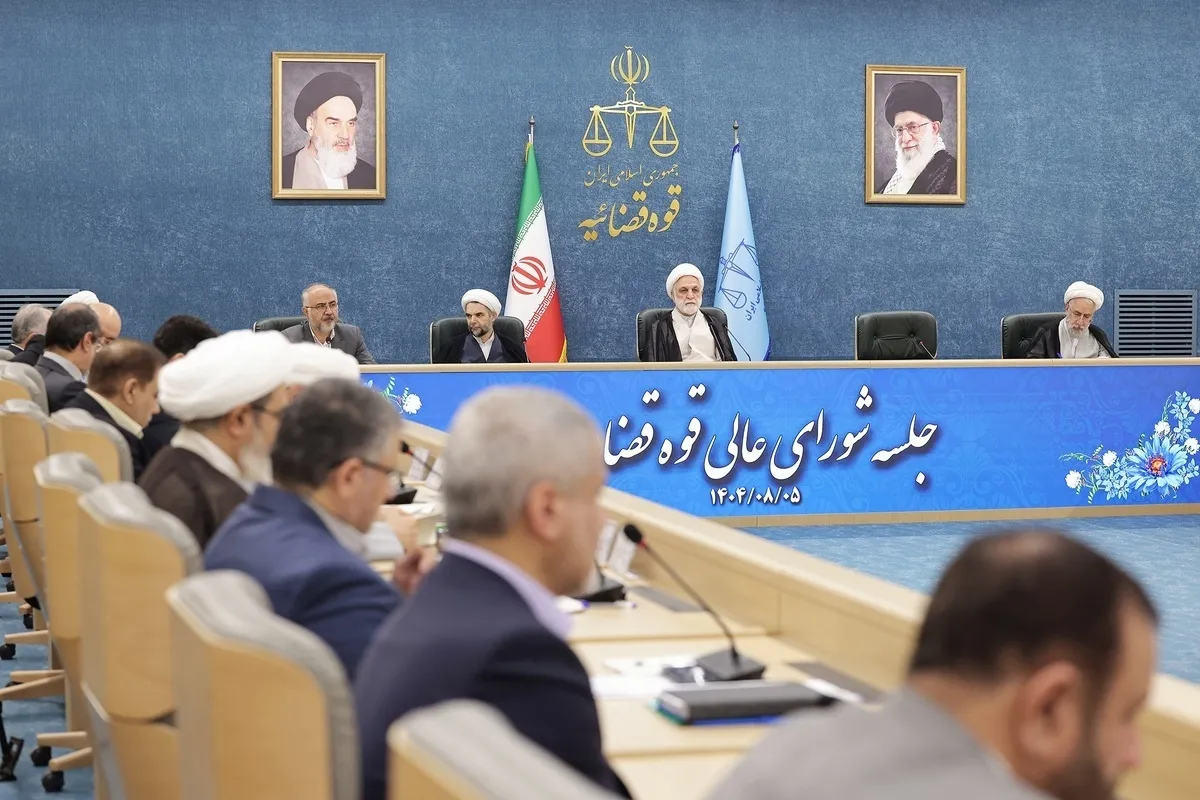
According to the Judiciary’s Media Center, Mohseni Eje’i, in his speech during the Supreme Judicial Council meeting on Monday (October 27) addressed the issue of Ayandeh Bank’s dissolution, saying: “The issue of severe imbalance in Ayandeh Bank’s finances has existed for years. Of course, some other banks are also facing balance sheet problems at varying levels. Since the end of the 12th administration, various individuals across the three branches and experts in the fields of economy and banking have been discussing the problems of Ayandeh Bank. The constant question was whether the bank could be reformed, and if so, what measures should be taken.”
He added: “In line with that, on more than two occasions during the 12th and 13th administrations, authorizations were obtained from the Supreme Council for Economic Coordination of the Heads of the Branches, and the composition of the bank’s board of directors and CEO was changed. However, these mechanisms proved ineffective, and the volume of overdrafts and deficits of the bank increased exponentially. Eventually, many at the Central Bank and the Ministry of Economy concluded in 2023 that Ayandeh Bank was beyond reform and should be dissolved. A letter to this effect was sent to the 13th administration. However, at that time, the issue was not brought to the Council’s plenary session; instead, it was referred to the secretariat for expert review, where it was concluded that reform was still possible — hence, the process was delayed.”
Eje’i continued: “I insisted that the Central Bank and its High Board are the main authorities responsible for this issue and that the Central Bank must use its legal powers regarding Ayandeh Bank. If extraordinary powers were required, those could be considered later. I emphasized that the longer we delay action, whether to reform or dissolve, the greater the damage will be — therefore, a prompt decision was necessary.”
He stated: “In 2024, the Central Bank wrote to the President — in his capacity as head of the Supreme Council for Economic Coordination — and declared its position in favor of dissolving Ayandeh Bank. At that stage, the Council’s executive officials decided to conduct further expert review and did not include the dissolution proposal on the Council’s agenda.”
The top judge noted: “Eventually, the Central Bank’s officials acknowledged that under the law, they possess the authority to dissolve Ayandeh Bank. However, they emphasized that post-dissolution, certain follow-up actions would require additional powers, which they lacked. We assured them that after the dissolution, the necessary authorizations would be granted.”
Ayandeh Bank’s dissolution was formally approved by the Central Bank’s High Board on October 6. Following this, on October 11, Head of the Judiciary sent a detailed six-point letter to the secretary of the Supreme Council for Economic Coordination. The six points covered:
1. The need to determine the fate of small and large depositors.
2. The need to decide on the future of the bank’s employees.
3. Identification and settlement of the bank’s assets.
4. Mechanisms for asset valuation.
5. The status of small and large shareholders.
6. Handling of past and potential violations during the dissolution and liquidation process.
Eje’i said he foresaw challenges that might arise during the dissolution process and therefore issued relevant warnings and recommendations to the responsible authorities.
He added: “The Central Bank has indeed exerted significant effort in this matter. It has been decided that further powers — referred to as ‘resolution implementation powers’ — will be granted to the competent authorities during the bank’s liquidation.”
The Judiciary Chief stressed: “The entire effort in dissolving Ayandeh Bank is aimed at protecting everyone’s rights and preventing further losses. The reported figure of 4.5 quadrillion tomans in losses is enormous and needed to be stopped as soon as possible.”
He clarified: “Some people think Ayandeh Bank’s debts are being transferred to Bank Melli — this is not the case. Others assume that shareholders who committed violations will face no action — on the contrary, the sixth clause of my October 11 letter specifically addresses how these violations will be investigated.”
Eje’i also revealed: “Less than 5% of the deposits belong to 95% of the bank’s depositors, while 5% of the depositors hold 95% of the total deposits. In any case, efforts are focused on ensuring all depositors receive their due, and measures will also be taken regarding the employees. It should be noted, however, that some deposits were made with funds that were not legally permitted for deposit, and some were fictitious. All such cases must be thoroughly reviewed.”
He concluded: “We are determined to complete the dissolution process with minimal cost and to protect the rights of depositors, shareholders, and employees — above all, to safeguard the country’s economy. The 4.5 quadrillion tomans related to Ayandeh Bank was fueling liquidity and inflation, and continuing on that path would have caused even greater harm.”
At the end of the session, the Judiciary Chief also addressed the issue of livestock feed, stating: “Livestock farmers are currently struggling to obtain animal feed, which could lead to serious problems in the near future. The General Inspection Organization must quickly and seriously investigate this matter. If not resolved promptly, the country may soon face food supply challenges.”
He continued: “The Inspection Organization must determine whether the problem lies in imports or distribution, and whether any corrupt or profiteering elements are involved. The issue could stem from the responsible ministry or from inadequate follow-up by the Judiciary — in any case, it must be resolved swiftly and precisely. Even now, it is already late.”