Head of the Judiciary: The enemy seeks to create unrest in our country every day
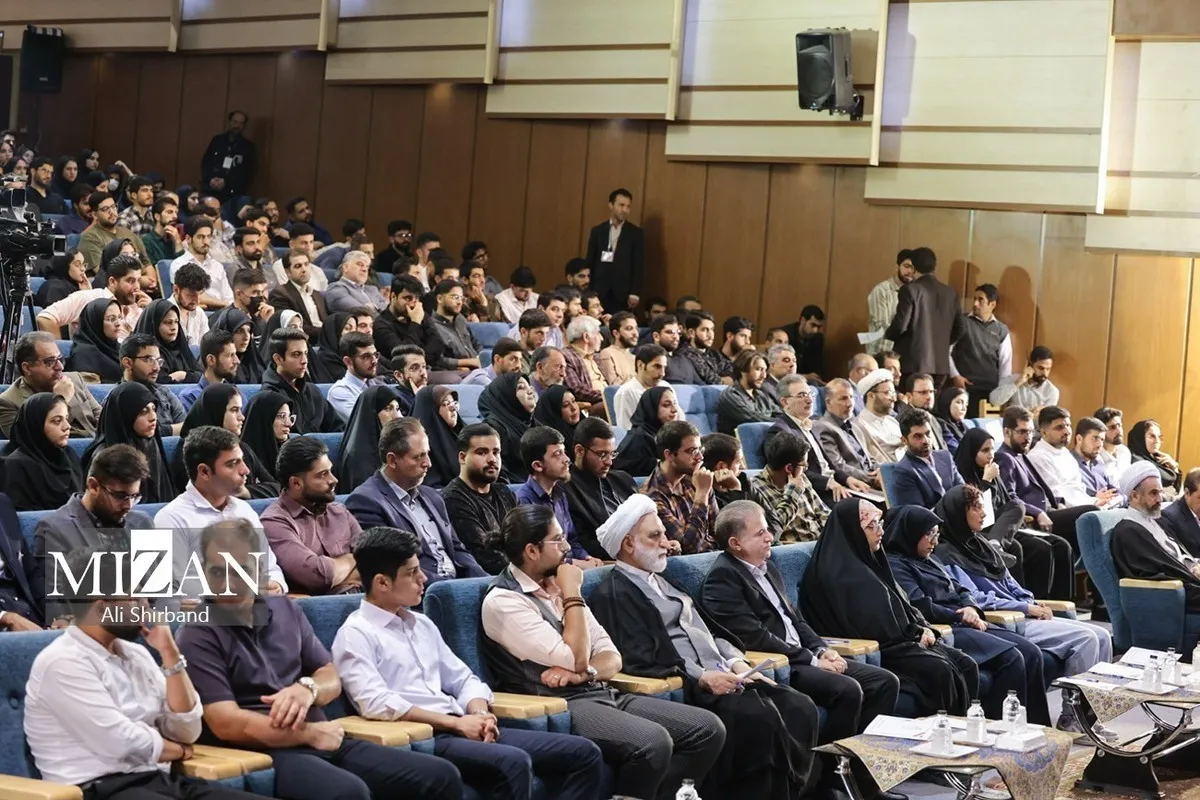
According to the Judiciary’s Media Center, Mohseni Eje'i, during his 45th provincial trip since taking office as head of the judiciary, arrived in Ilam this morning (Tuesday, October 21) in an unofficial visit accompanied by the High Judicial Delegation.
The head of the judiciary and other senior judicial officials will hold programs in Ilam aimed at addressing the legal and judicial issues facing the people of the province.
Meeting with judges, various segments of the public, and elites, as well as following up on the implementation of decisions from the previous High Judicial Delegation visit to Ilam, are among the head of the judiciary’s planned activities in the province.
It is worth noting that since assuming the office of Head of the Judiciary on 10 Tir 1400, Mohseni Eje'i has officially traveled, at the head of the High Judicial Delegation, to the provinces of Ilam, Qazvin, Khuzestan, Golestan, Razavi Khorasan, Sistan and Baluchestan, Qom, Yazd, South Khorasan, Zanjan, Markazi, Isfahan, Alborz, Kurdistan, East Azerbaijan, Kerman, Ardabil, Bushehr, Hormozgan, Kohgiluyeh and Boyer-Ahmad, Chaharmahal and Bakhtiari, Semnan, Tehran, Kermanshah, Gilan, Lorestan, West Azerbaijan, Hamedan, and Mazandaran.
In addition to official provincial visits undertaken with the High Judicial Delegation, the current head of the judiciary has also included informal, low-profile visits in his schedule; recently he has visited Alborz, Isfahan, Hormozgan, Bushehr, Kerman, Razavi Khorasan (twice), North Khorasan (twice), Mazandaran, Fars, Golestan (twice), and Khuzestan informally and without ceremony to examine judicial matters in those regions.
During a meeting to follow up on the implementation of decisions from his visit to Ilam Province, Judiciary Chief Mohseni Eje’i stated that during the second provincial trip of the High Judicial Council in the era of transformation and excellence, over 748 billion tomans were allocated to equip judicial centers and offices across the province.
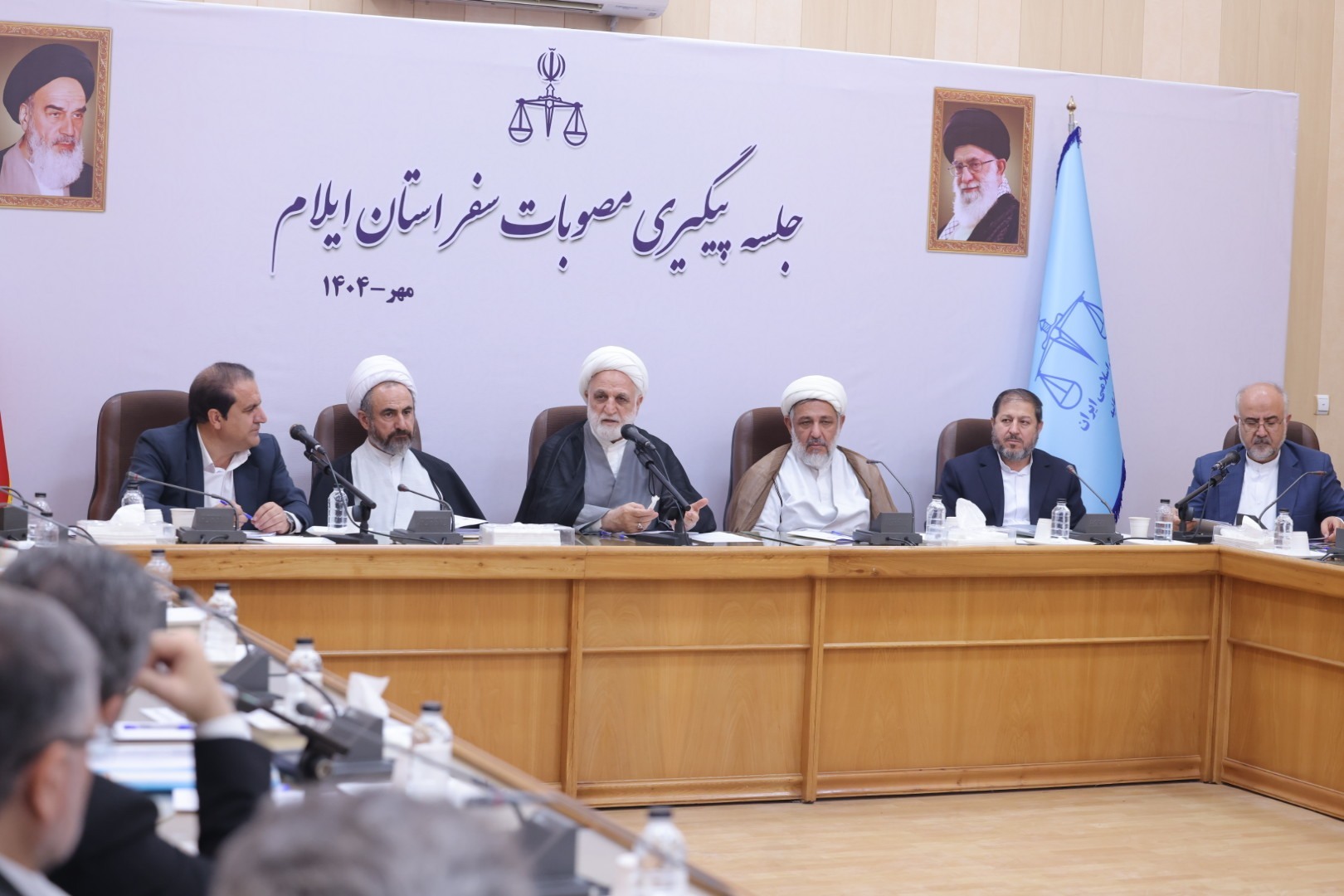
Eje’i noted that during this visit, senior judicial officials held face-to-face meetings with 425 citizens, and more than 1,500 letters and public requests were received. He emphasized that all these requests must be handled with special attention, accuracy, and in the shortest possible time, in accordance with legal standards.
He instructed the Judiciary’s Public Communications Office to immediately forward each letter or request received during these provincial trips to the relevant province on a case-by-case basis, instead of waiting for all to be reviewed collectively, stressing the need to expedite such matters and avoid delaying public affairs.
Eje’i reiterated that the judiciary is committed to fulfilling all promises made to the people as quickly as possible.
Speaking at the Ilam Provincial Administrative Council, he addressed the province’s issues and challenges, saying:
“In order to resolve Ilam’s problems—whether directly related to the judiciary or not, but where the judiciary can play a constructive role—I delegate my transferable powers to the head of the provincial justice department.”

He pointed out that there are unfinished projects in the province in production, industrial, and livestock sectors, and while the judiciary is not directly responsible for these matters, it can help accelerate their completion.
The judiciary chief added that if a matter arises that is urgent or of high priority, but the current law does not permit certain actions, it can be referred to the Council of Heads of the Three Branches of Government, so that temporary permissions can be granted to advance the matter.
Regarding pardons for eligible convicts, Eje’i said: “In 2022, by the grace of the Supreme Leader, a large-scale amnesty was carried out, resulting in the closure of nearly 90,000 cases. A new ‘criteria-based’ amnesty was also implemented recently. In Ilam Province, as in other provinces, comprehensive reviews are underway so that eligible inmates can be released or have their sentences lifted under this framework.”
He emphasized that for convicts with private complainants, assistance from charitable individuals is essential, as such convicts cannot be included in the amnesty list. “Therefore,” he said, “benefactors should help secure the plaintiffs’ consent to facilitate their release.”
The top judge further stressed that Ilam’s infrastructure, especially in transportation, must be developed in accordance with the needs of millions of Arbaeen pilgrims passing through the province.
In conclusion, Eje’i warned: “The enemy seeks to exploit existing problems and stir unrest in our society. The enemy wants to create turmoil in our country every day. Therefore, we must be extremely careful in our words, positions, and actions — and not play into the enemy’s hands.”
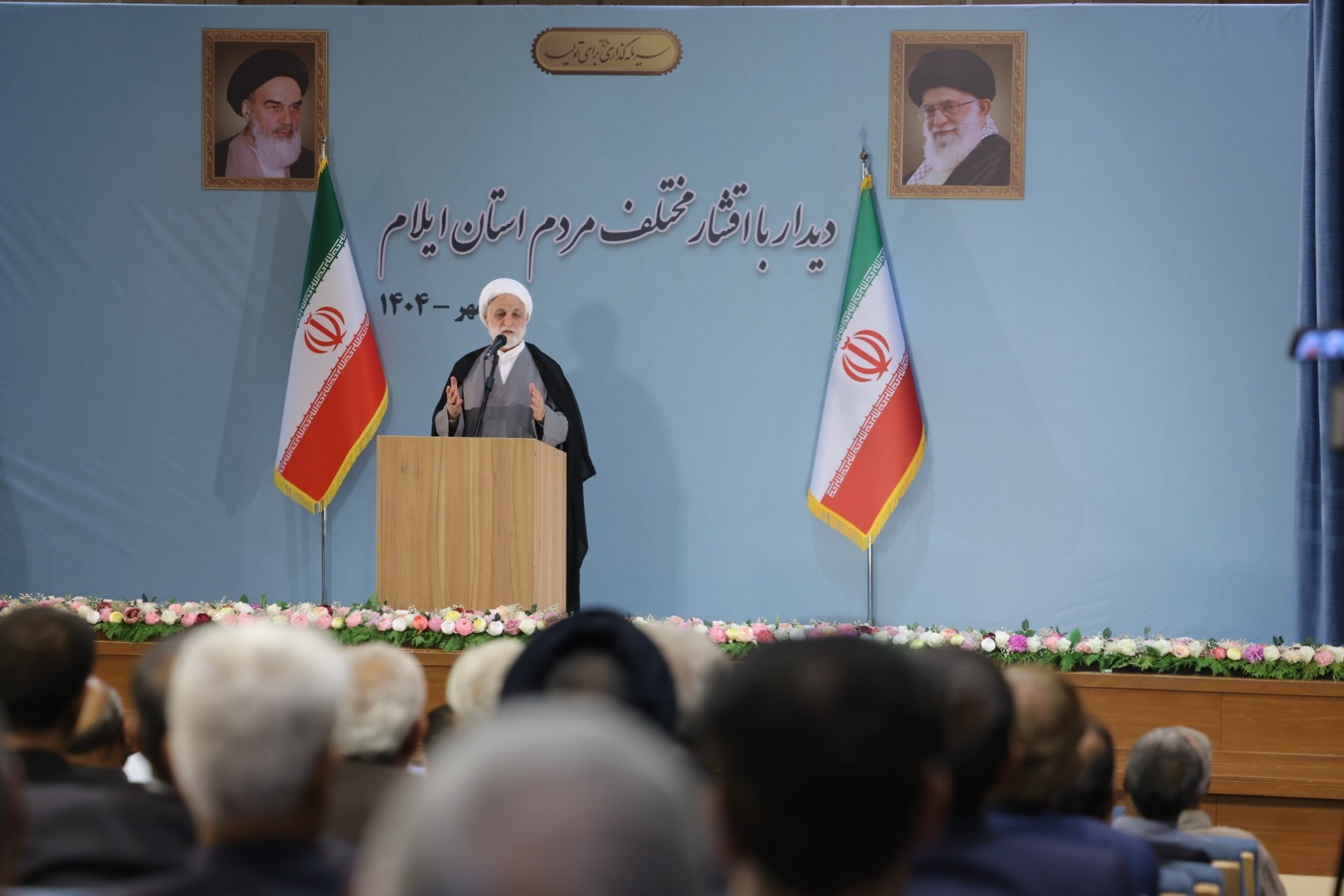
During his visit to Ilam province, Mohseni Eje’i, speaking before representatives of various social groups in the province, stated: “The people of Ilam are loyal and devoted to the path of the Guardianship of the Islamic Jurist and are also martyrs’ supporters. Together with senior judicial officials, we have come to Ilam to speak face-to-face with the people and listen to their problems. I hope we can make our utmost efforts to address the issues of the people of this province.”
Referring to the judiciary’s strategic approach, the Head of the Judiciary emphasized: “The strategy of the judiciary is to exercise firmness combined with Islamic compassion while observing the ethics of Islamic justice. Criminals who disrupt public security will face decisive and lawful action, while eligible convicts will benefit from Islamic compassion. In all cases, the ethics of Islamic justice are strictly observed.”
Addressing the enemy’s attempts to promote social misbehavior, he stated: “After failing to achieve its objectives during the 12-day war, the enemy is now focused on spreading social deviance in our society and attempting to normalize it. Today, the enemy’s intensified efforts aim to undermine our religious and social values through cyberspace and other means.”
The Chief Justice added: “The enemy seeks to estrange our youth from us; promoting social misbehavior is one of its tools. The effects are evident in rising divorce rates and other social issues. We must provide scholarly solutions to address these problems, and everyone must consider themselves responsible in this matter.”
Referring to economic challenges in Ilam province, such as unemployment and inflation, Eje’i said: “According to a provincial official, the head of a trade guild in this province reportedly said: ‘I overcharge and hoard goods, and anyone who objects can do whatever they want!’ This matter must be investigated, and if it is confirmed that such a statement was made, it will be dealt with decisively without leniency, in line with the law.”
Eje’i further stated: “I have served in the judiciary for over four decades, experiencing its various levels and stages. I know that sometimes an individual is right but cannot prove their claim in court because there is no evidence before the judge. As a result, a ruling may go against them, which might create the perception that favoritism or nepotism exists within the judiciary.”
He continued: “Sometimes, people entrust their money or property to others, who then mismanage or squander these assets. Such cases often lead to multiple-claimant lawsuits. We emphasize to the relevant judicial authorities that in such cases, the priority should be to restore the rights of the victims. Measures should be taken to ensure that those who squander others’ property return it before facing imprisonment.”
On the issue of dowries, he stated: “It is often said that men should not be imprisoned for unpaid dowries, which is correct; however, what about the rights of the women? Sometimes, a dowry is divided into small installments, such as one coin per year, but the husband cannot pay it. In such cases, imprisoning the husband has consequences, but at the same time, the rights of the woman must also be protected.”
After attending a session with the students of Ilam province and concluding a question-and-answer session, Eje’i joined the students in their dining hall for lunch, where he listened to their conversations and engaged with them directly.

Today, Tuesday (October 21, 2025), during the 45th provincial visit of the High Judicial Council and as part of his ongoing series of meetings with academic and elite communities, Eje’i visited Ilam University. He participated in a close, informal session with the students, listening directly and attentively to their candid, inquisitive, and concerned remarks.
Eje’i’s presence at Ilam University marks his fourteenth visit to universities across the country and participation in student meetings during his tenure as Head of the Judiciary.
During the student session, the Head of the Judiciary stated: “I am very pleased to be here with you, the students. In these student gatherings, we do not merely want to vent or justify ourselves, nor shift responsibility for existing problems onto others. The main purpose of these sessions is to listen to your viewpoints and to benefit from your insights.”
He added: “At times, decisions or laws were enacted in the country that we now realize were inappropriate or incorrect. Students, we need your advice on how to address these past decisions and laws. For example, at one point, population control measures were implemented and funds allocated; at another point, private banks were expanded, and universities multiplied across the country. Today, the highest executive authority in the country, who has previously been a student, professor, and minister, openly states that ‘establishing so many universities was unnecessary.’”
Eje’i emphasized: “You students have legitimate demands from the judiciary. We take your demands seriously and will do our utmost to fulfill them. At the same time, you must understand the duties, responsibilities, and powers of the judiciary. Can the judiciary directly and independently complete an industrial project? Is this even within the judiciary’s authority? Of course, the judiciary must ensure the correct implementation of laws by other institutions and oversee the allocation of funds for project completion, but it cannot itself undertake industrial or production projects.”
The Chief Justice stressed: “Over the past four years of my tenure, I have focused on addressing problems systematically and at their roots. Of course, in some cases, we have intervened individually, but our firm belief is that issues must be resolved structurally, and bottlenecks must be corrected. For example, in the banking sector, we have compelled the Central Bank to fulfill its legal duties. While we can confront negligent bank managers and have done so legally, when necessary, we believe that systemic reform is required to prevent misconduct in the first place.”
Eje’i noted a student’s question regarding Ayandeh Bank and its overdrafts and losses, stating: “At one point, the Central Bank took away the authority of shareholders to appoint the CEO and board members and assumed this responsibility itself. I must say that from that date, the bank’s problems did not decrease; they worsened. I repeatedly reminded Central Bank officials that they have the authority to dissolve Ayandeh Bank. Initially, they denied this authority, but later admitted they did have it.”
He continued: “Regarding the dissolution of Ayandeh Bank, I told the Central Bank authorities: you have the authority to dissolve it — go ahead. Why seek permission from other branches? You have the law and acknowledge it, so why not act? They replied that certain powers would be restricted after dissolution. I said that’s fine; dissolve it, or tell us in advance which powers will be limited. We will help you gain those powers.”
Eje’i added: “Now, we have compelled Central Bank officials to use their powers to either dissolve or reform Ayandeh Bank, and if they fail, we will intervene and hold all responsible parties accountable.”
Referring to the enemy’s failure in the 12-day conflict, he said: “During the 12-day war, the enemy aimed to create chaos and collapse the country but failed. Yet, they continue their efforts through psychological operations, hoping to distract us from core issues and pit us against each other. We must not play into their hands and must neutralize their plans.”
Addressing student remarks on the JCPOA and the Crescent Gas Contract, he said: “Regarding Crescent, two perspectives exist: one sees the contract as the main source of current damages, the other attributes the damages to the manner of its cancellation. We have pursued both; those who should have been prosecuted have been, and judgments issued.”
He also indirectly referred to delays in judicial proceedings over past decades, saying: “In past governments, discussions about Crescent advised against presenting the case in this manner, aiming for compromise.”
Regarding the use of modern technology in judicial processes, Eje’i noted: “In recent years, we have increasingly utilized modern technologies to advance judicial proceedings. We now invite students from Ilam University to nominate experts to visit our Statistics and IT Center. This way, you will become familiar with our technological capabilities, and we can benefit from your insights to improve these systems.”
The Head of the Judiciary added: “Currently, in all provinces, over 90% of case handling is electronic, and in over 80% of our prisons, families can conduct electronic visitations with inmates.”
Responding to a student’s question about judicial misconduct and review of rulings, he stated: “If a judge’s misconduct affects a ruling, the Judicial Disciplinary Office will conduct thorough investigations. However, not all misconduct affects verdicts; for example, a judge failing to sign every page of a ruling is a violation but does not alter the content or quality of the judgment.
During his visit to Ilam, Mohseni Eje'i attended a gathering of judges and staff of the province’s judiciary and, in remarks emphasizing the need for special attention to addressing the people’s issues and problems, said: “The people are a strong and firm bulwark against our enemies; today the best form of worship is service to these people. We must seize the opportunity to serve the public; the hardships and difficulties encountered in the course of our work should not prevent us from selfless service to the people.”
The Head of the Judiciary stated: “People do not have excessive expectations of us; they expect that when their affairs bring them before the judiciary we will treat them with good and kind conduct, process their cases as quickly as possible, and act justly and in accordance with the law in handling their matters.”
He added that justice must be manifested in the best and most complete manner in all our behaviors and affairs. “If we receive a report and delay referring it, and as a result of this delay a right is violated, we must recognize that we are indebted and bear responsibility. If our conduct prevents a complainant or defendant from presenting their claims and defenses, we must acknowledge that we are certainly at fault.”
The Chief Justice stated that if indictments issued by our prosecutor’s offices are repeatedly overturned in our courts or repeatedly lead to acquittals, a precise and comprehensive fault analysis must be carried out to identify the defects in the work.
He emphasized: “At various stages of judicial proceedings there are complaints from the public; we must be listeners to these complaints and do our utmost to address them.”