Decoding an uprising
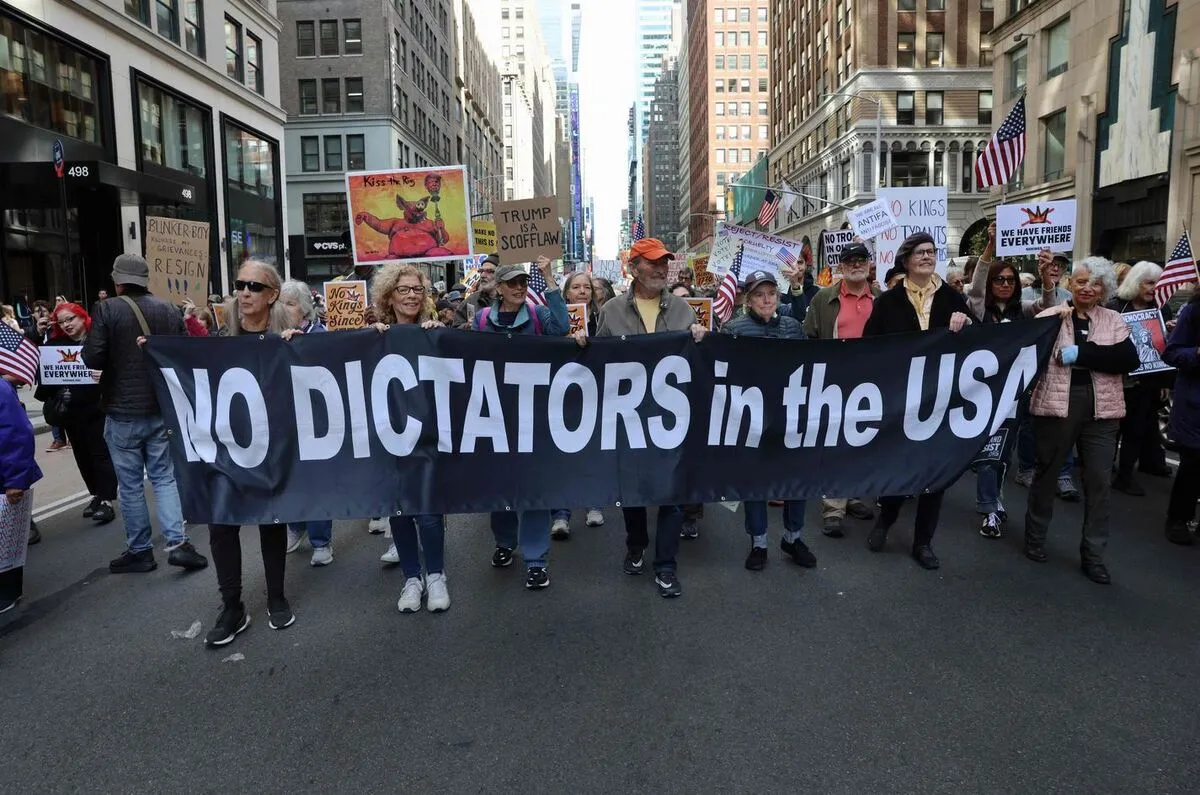
The massive demonstrations of October 18, which brought together seven million protesters across the United States under the slogan “No to King,” were not merely a show of dissent — they were a tangible confirmation of a warning issued six years ago by former U.S. Secretary of State Rex Tillerson.
In 2019, Tillerson warned of a looming “political uprising” as he observed deepening divisions and the rise of extremist tendencies across the country. He urged the main political parties to cooperate in curbing this threat — a plea that was largely ignored at the time.
Tillerson argued that internal conflicts in the U.S. had reached a point where they could no longer be described as “manageable government disputes.” His concerns were echoed by numerous strategists, economists, and sociologists, but both the visible and hidden centers of power in Washington refused to take them seriously.
Today, the consequences of those neglected warnings are fully manifest. The phenomenon known as “Trumpism” has evolved into a major social and security challenge — visible in events such as the ousting of the Speaker of the House and the repeated indictments of the former president. These developments raise a fundamental question: Are these crises simply symptoms of partisan struggles, or do they reflect a deeper structural decay?
A closer analysis reveals that America’s current turmoil is not a mere skirmish between Democrats and Republicans, but the result of conceptual erosion at the core of U.S. governance. The foundational principle of American liberalism — the state’s legitimacy to manage crises — has been gravely undermined after repeated failures in handling political and social unrest.
Domestic critics of U.S. governance argue that the nation’s most urgent need today is to restore public trust. As long as citizens cannot trust their leaders or institutions, the government’s ability to govern and resolve crises will remain limited.
Americans no longer view politicians as saviors, but rather as creators of both domestic and global crises. The central pillar of trust has effectively collapsed, leaving no cohesive center around which social synergy, cooperation, or even coexistence can occur within a stable system.
Meanwhile, the media aligned with both the Democratic and Republican parties have deliberately focused on the symptoms of the crisis — slogans, trials, and protests — while avoiding its root cause: the erosion of trust and the disintegration of liberalism’s moral core. This reduction of a structural catastrophe to a mere partisan struggle provides a false narrative that blinds the power elites to the true depth of the crisis — a reality far graver than most admit, and one that vindicates Tillerson’s warnings.
American society is now facing chronic socio-political fractures centered on a profound distrust of governance, which will not vanish even if Trump himself exits the political stage. The new generation of Americans is playing a pivotal role in these uprisings, and their demands fundamentally challenge the red lines of the country’s ruling system.
Hard times lie ahead for America’s centers of power.