The dark trade beneath occupation: Evidence mounts of Israeli organ theft from Palestinians
The theft of organs from Palestinians killed by Israeli forces has long been a recurring and controversial topic. These allegations are rooted in both historical and recent reports, typically raised by human rights organizations, media outlets, and Palestinian officials.
Israel categorically denies these accusations, dismissing them as antisemitic or unfounded rumors. However, past official admissions point to instances of such violations.
These allegations date back to the 1980s and 1990s and are linked to Israel’s policy of retaining Palestinian bodies. The regime is reported to keep more than 255 Palestinian corpses in the so-called “Cemetery of Numbers,” a secret military burial ground to which access is strictly prohibited—a policy that has fueled further suspicions of organ theft.
Officials in Gaza recently accused the occupying army of stealing organs from Palestinian bodies and called for the establishment of an international committee to investigate what they described as a horrific crime.
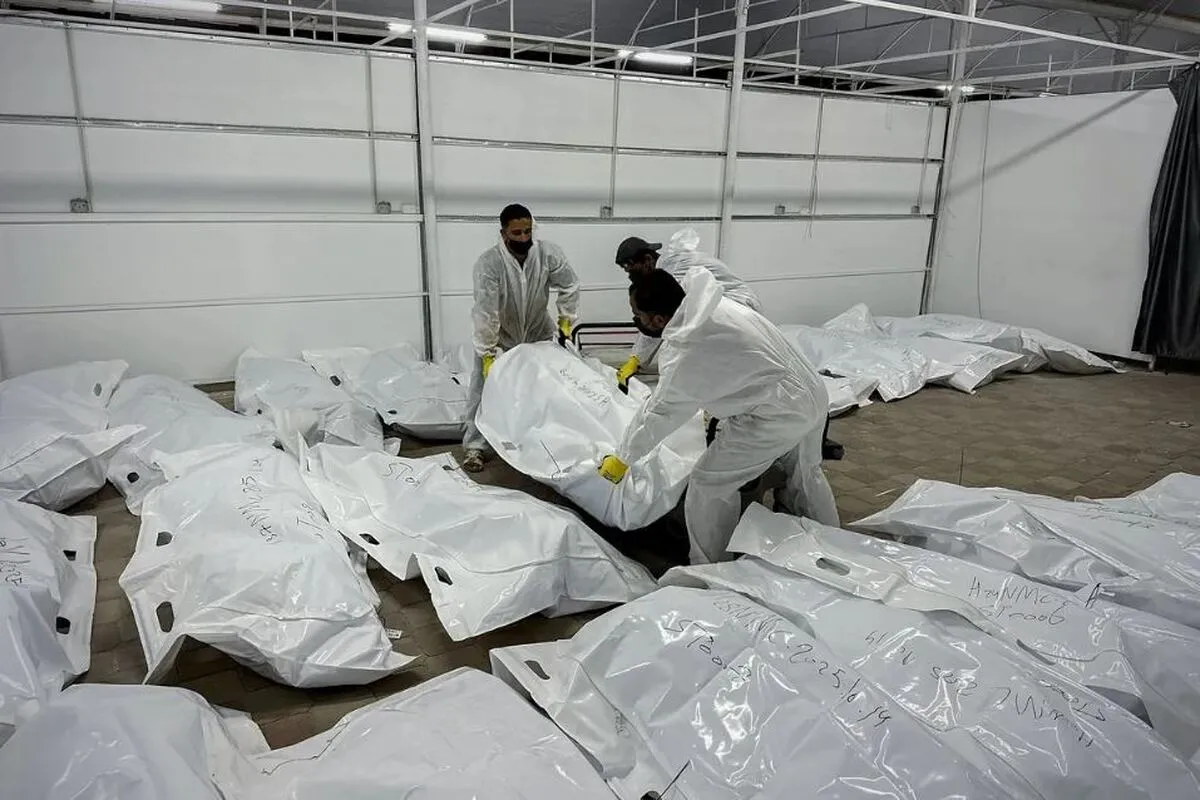
The head of Gaza’s Media Office said in an interview: “Over the past three days, the occupiers have returned 120 bodies through the International Committee of the Red Cross.”
He added that most of these bodies arrived in appalling condition, showing evidence of systematic killings and torture.
According to the official, some of the martyrs were returned blindfolded and with their hands and feet bound, while others bore signs of strangulation and rope marks around their necks—clear indications of deliberate execution.
He also revealed that parts of many bodies—including eyes, corneas, and other organs—were missing. Calling this a barbaric crime, he said it proves that the Israeli army stole the organs while the bodies were in its custody.
The Palestinian official urged the international community and human rights organizations to immediately form an investigative committee to hold Israel accountable for its grave violations against the bodies of martyrs and the theft of their organs.
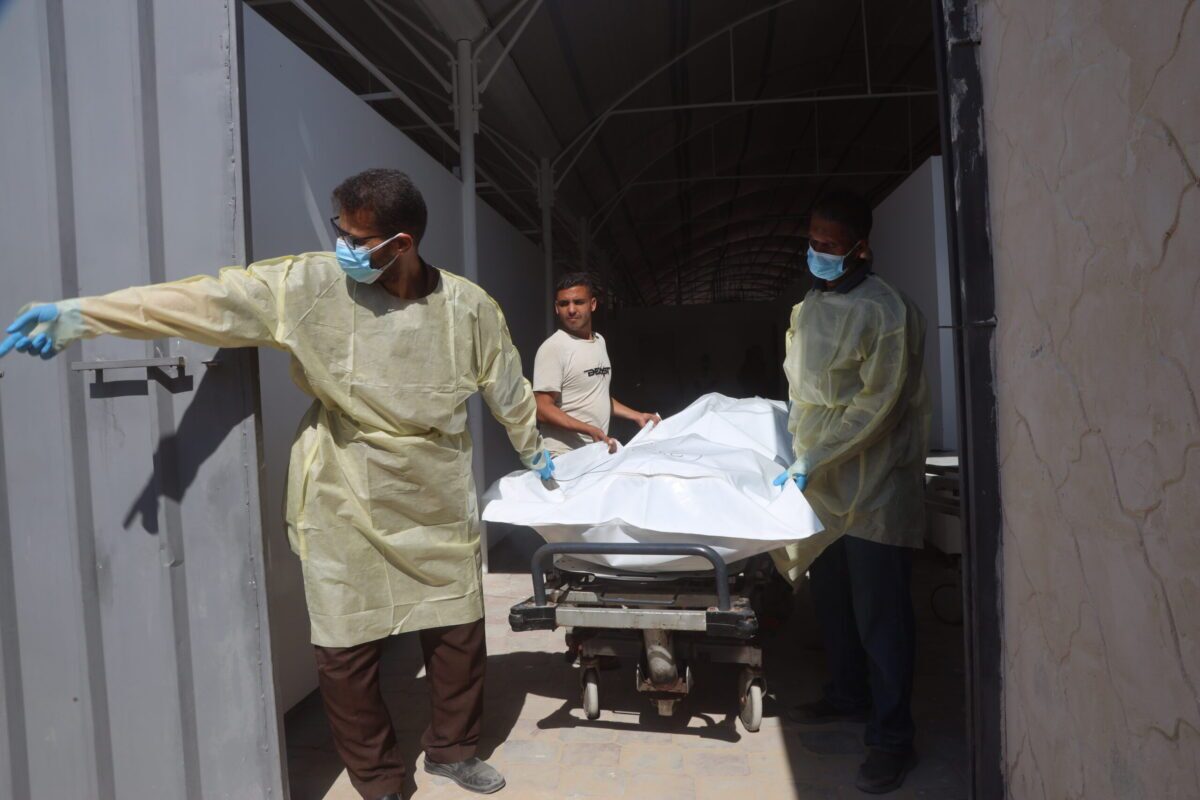
According to reports, Israel currently holds the bodies of 735 Palestinian captives, including 67 children.
The Israeli newspaper Haaretz has reported that Israel keeps around 1,500 Palestinian corpses from the Gaza Strip at the Sde Teiman military base in the Negev Desert (southern occupied territories).
Palestinian organs: A trade for the Zionist regime
In September 2024, the Anadolu Agency wrote that Israel’s ongoing wars against Palestinians are usually viewed through the lens of military operations, territorial disputes, and political stalemates. However, behind these events lies a darker dimension—where the vulnerable bodies of the oppressed are turned into commodities for the organ trade industry.
Allegations that Israel harvests organs from Palestinian prisoners and war victims for use in the international organ trade—or that the regime has become a hub for “organ tourism”—have existed for decades. These claims are not limited to wartime, suggesting that even in times of relative calm, Palestinian bodies are commodified—adding a shocking layer to the ongoing violations of human rights.
The report also noted that the first significant wave of organ-theft allegations against Israel emerged during the First Intifada in the late 1980s and early 1990s. During this period, many Palestinian families said the bodies of relatives killed by Israeli forces were returned missing organs. Although these claims were initially dismissed as baseless propaganda, the growing number of similar reports strengthened suspicions and concern.
The case of Bilal Ahmad Ghanem, a young Palestinian killed by Israeli soldiers in 1992, became emblematic of these allegations.
Israeli officials have previously admitted to harvesting organs from Palestinians and others. In a controversial 2014 television program, senior Israeli officials confessed to stealing skin from deceased Palestinians and African workers to treat burns suffered by Israeli soldiers. The head of Israel’s skin bank revealed that the regime’s stockpile of human skin had reached 17 square meters (183 square feet)—an unusually large amount for such a small population, suggesting large-scale organ collection.
Mira Weiss, an Israeli physician and anthropologist, detailed in her 2002 book Over Their Dead Bodies a systematic practice of harvesting organs from Palestinians for medical research in Israeli universities and for transplant into Israeli patients.

A report published in October 2023 by the Euro-Med Human Rights Monitor reignited concerns about organ-theft allegations, particularly in cases where bodies returned from Israeli prisons showed signs of tampering.
According to the report, health authorities in Gaza observed inconsistencies in the returned bodies that indicated possible organ theft. It added that Israeli forces had collected dozens of corpses from hospitals in northern Gaza and later returned them in a mutilated state.
The occupied territories: A destination for organ transplant tourism
Israel has also long been criticized as a destination for “organ transplant tourism.” A 2015 European Parliament report titled Trafficking in Human Organs listed Israel among the main parties involved in global organ trafficking, identifying it as both an importer and consumer of trafficked organs. The report also noted Israel’s refusal to sign the 2008 Istanbul Declaration, which aims to combat organ trafficking.
Interest in organ transplants within the occupied territories can even be tracked through online activity. The official website of Israel’s Ministry of Health lists hospitals equipped with organ transplant units.
Google Trends data showed that searches in the U.S. for terms like “kidney in Israel” and for hospitals such as Sheba Medical Center, Soroka Medical Center, and Rambam Health Campus surged dramatically after the onset of Israel’s war on Gaza on October 7, 2023—rising from a score of zero to 100. Meanwhile, hospitals without transplant units, such as Lis Maternity Hospital and Assuta Hospital, showed no such increase.
In 2009, Sweden’s largest daily newspaper, Aftonbladet, published a two-page cultural feature titled “They Plunder Our Sons’ Organs,” reporting that Israeli soldiers were kidnapping Palestinians to harvest their organs.
The article referred to the exposure of a criminal network in New Jersey that included several American rabbis and a man named Levy Isaac Rosenbaum, who was charged with conspiring to sell human kidneys for transplantation.
The author also recounted a 1992 case during the 1987 Intifada, where Israeli forces arrested a young man named Bilal, known for throwing stones at soldiers in the Nablus area. He was shot in the chest, both legs, and abdomen, then airlifted to an unknown location by a military helicopter.
Five nights later, Bilal’s body was returned wrapped in green hospital sheets. When his body was placed in the grave, the chest area became exposed—revealing the extent of the abuse he had suffered. Bilal was not the only one buried with his torso cut open from stomach to chin, and speculation about the reason for this had already been circulating.