Hunger in 2025: A global crisis of conflict, climate, and inequality
World Food Day was first established in 1979 to mark the anniversary of the founding of the United Nations Food and Agriculture Organization (FAO) on October 16, 1945, with the mission of ending global hunger and improving living standards worldwide.
This year’s World Food Day slogan is: “Together for Better Food and a Better Future”, calling for global cooperation to build a peaceful, sustainable, prosperous, and food-secure future.
Why World Food Day 2025 is significant
Two key reasons make World Food Day 2025 especially important: the 80th anniversary of FAO’s founding and the occurrence of catastrophic famines in several regions, particularly Gaza.
Although the world produces enough food to feed over 8 billion people, multiple factors contribute to hunger. Global hunger has only slightly decreased since 2016; however, as of 2025, insufficient progress in reducing hunger reflects the growing challenges of overlapping crises, including armed conflicts, accelerating climate shocks, economic fragility, and lack of political participation.
Armed conflicts remain the most destructive driver of hunger; last year, violence caused 20 food crises affecting nearly 140 million people. At the same time, humanitarian aid budgets have sharply decreased while military spending has increased, reversing priorities and weakening the global response to hunger.
Global hunger hotspots
Africa and Western Asia face significant food access challenges due to conflict and extreme weather. According to the World Food Programme, regions such as Gaza, Sudan, and Haiti are home to 1.9 million people experiencing catastrophic hunger.
Globally:
- 733 million people suffer from malnutrition.
- 2.8 billion people lack consistent access to adequate food.

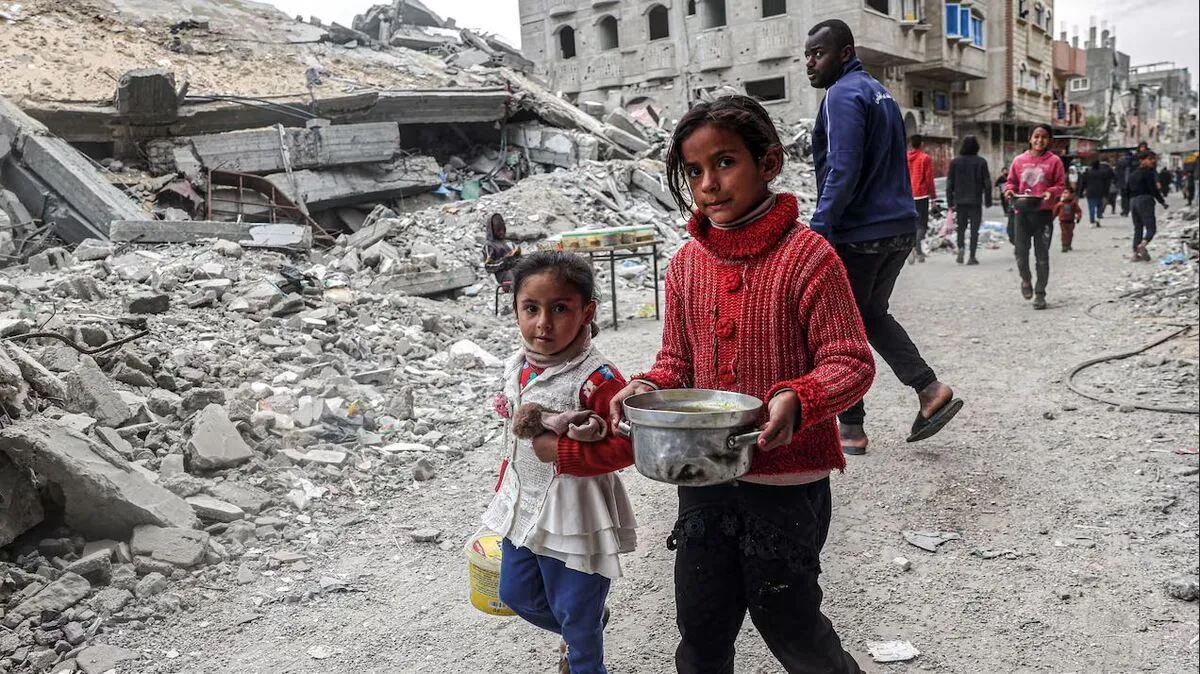
In Gaza, famine has been officially confirmed due to the Israeli occupation, which has rendered 98.5% of Gaza’s agricultural land destroyed or inaccessible, leaving the population under the shadow of famine until the land becomes arable again. The destruction of farmland and orchards aimed not only to displace Palestinians but also to prevent them from sustaining their livelihoods.
Hunger situation in 2025
- 1 in 11 people goes hungry every day.
- While the world produces enough food for 8.2 billion people, 673 million went hungry at least part of last year.
- 770,000 people currently face famine conditions (IPC confirmed famine in Sudan in late 2024 and Gaza in summer 2025).
- Hunger rates are serious or alarming in 42 countries.
- Many countries are falling behind in efforts to end hunger.
- Measuring and assessing hunger has become more challenging.
- Funding cuts make combating hunger more difficult.
- Conflict is the main driver of hunger; last year, armed violence caused 20 food crises affecting 140 million people, including confirmed famines in Sudan and Gaza.
- Climate change now poses a permanent threat.
- 50% of all child deaths are related to malnutrition.
Child hunger: A critical crisis
Children are especially vulnerable to hunger caused by overlapping crises. Annually, 9 million people die due to hunger-related factors, about one-third of whom are children under 5.
Since children’s bodies are still developing, even a single episode of malnutrition can have lifelong consequences on organs, muscles, and cognitive growth. Malnourished children are also more likely to die from preventable diseases due to weakened immunity.
Recent statistics highlight that 148 million children worldwide have stunted growth due to hunger, and 45 million suffer from acute wasting. Half of under-5 child deaths are related to malnutrition.

In areas such as Sudan and Gaza, war and displacement leave millions of children without adequate food. In Sudan, conflict has displaced over 14 million people, creating famine-like conditions in North Darfur; in Zamzam refugee camp, a child dies of hunger every two hours. In Gaza, the UN confirmed famine in August 2025, marking the first officially declared famine in the Middle East. Over 500,000 people face hunger, and tens of thousands of children and pregnant women are at risk of severe malnutrition until mid-2026.
Hunger and climate change: A vicious cycle
Rising food insecurity and malnutrition are exacerbated by climate change. Experts assert that hunger is not caused by food shortages but by inequality, ineffective systems, and lack of political will.
According to Al Jazeera, hunger is neither a natural human condition nor an inevitable tragedy; it results from government and economic system choices that ignore or even promote inequality.
The global system that leaves 673 million people without sufficient food simultaneously allows 3,000 billionaires to control 14.6% of global GDP.
In 2024, the wealthiest nations reached the largest military expenditure increase since the Cold War, totaling $2.7 trillion, yet failed to invest 0.7% of their GDP in development initiatives for poorer countries.
Today’s world faces challenges reminiscent of 80 years ago, when FAO was established. Unlike that time, the world now experiences compounding crises of war, hunger, and climate, and the international system created in 1945 is insufficient to address today’s problems.
The broken dream of zero hunger by 2030
While global planning aims to achieve zero hunger by 2030, the situation is alarming. Hunger, food insecurity, and malnutrition have intensified in recent years and remain major global issues.
By 2030, it is projected that 512 million people will still face hunger, with nearly 60% in Africa.
World Food Day 2025 serves as a yearly reminder that food insecurity persists. According to FAO:
- 1 in 12 people still faces hunger.
- Around 673 million people (8.2% of the global population) experience hunger.
- More than 2.3 billion people faced moderate or severe food insecurity last year.
- Only 34% of infants aged 6–23 months met minimum dietary standards for vitamins and minerals.
The growing global population requires more food than ever, yet conflict and inflation continue to drive up food costs. Climate change, through rising temperatures, extreme weather events, and altered rainfall patterns, further threatens food security.
Over the past decade, progress in combating hunger has slowed alarmingly, especially in sub-Saharan Africa and South Asia, where malnutrition, child mortality, and poor diets are compounded by economic challenges and natural disasters.
Currently, achieving zero hunger by 2030 appears nearly impossible. At the current pace, the world may not reach even low levels of hunger until 2137 — more than a century away.