Systematic torture and medical neglect: The plight of released Palestinian prisoners
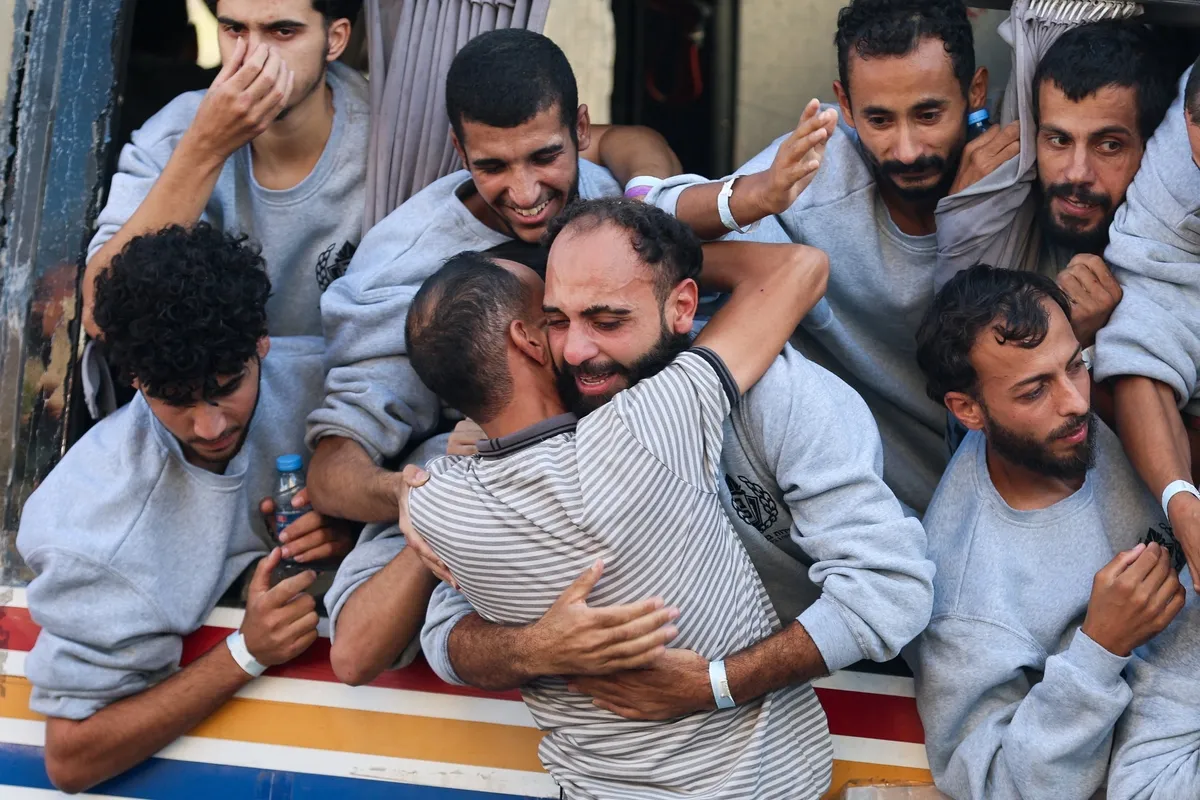
Under the framework of the Gaza ceasefire agreement mediated by third-party countries, on October 13, 2025, Israel released approximately 1,968 Palestinian prisoners.
The released prisoners included two main groups: 250 inmates serving life sentences or long-term imprisonment, and 1,718 prisoners who had been detained in Gaza and held in Israeli jails.
According to international media reports, including The Guardian, Al Jazeera, Anadolu, and eyewitness accounts, the physical condition of most Palestinian prisoners was critical, resulting from systematic torture, starvation, and medical neglect. This condition was starkly different from that of settlers detained in Gaza, who were reported to be in full health and able to walk unaided.
Common physical signs observed among the released prisoners included severe weight loss and malnutrition, weakness and inability to walk, physical injuries from torture, and psychological trauma.
The Guardian reported that some prisoners had prominent cheekbones and extremely emaciated bodies, making them almost unrecognizable to their families. One prisoner stated after release: “We went hungry for two full years.”
Al Jazeera also reported that many of the released prisoners required assistance to stand or walk; some experienced severe dizziness caused by years of medical neglect. Some could not move without leaning on others.
Meanwhile, a human rights organization noted that fresh bruises, limb loss (such as legs), or partial paralysis were clear signs of torture and harsh conditions in Israeli prisons. One Palestinian prisoner said after his release: “I went in with two legs and came back with one.”
The director of the Al-Shifa Medical Complex in Gaza, in an interview with Al-Aqsa Network, confirmed that the released prisoners were in very critical condition, with visible signs of torture on their bodies.
Mohammad Abu Salmiya stated that some prisoners were released after losing limbs, and many others were war-injured individuals who had received no medical care in the occupation prisons.
He added that despite the presence of many doctors in the Israeli prisons, the critical situation in Gaza’s hospitals remains unchanged.
The freed Palestinians said they were beaten and humiliated, describing the Israeli prisons they were held in as “slaughterhouses”.
Al Jazeera correspondent Ibrahim al-Khalili’s brother, Mohammed, who was held for more than 19 months without charge, described his ordeal as a “big struggle”.
“We were beaten and humiliated. We suffered a lot. But thank God, it’s all over now,” al-Khalili said.
Abdallah Abu Rafe described his release as a “great feeling”.
“We were in a slaughterhouse, not a prison. Unfortunately, we were in a slaughterhouse called the Ofer prison. Many young men are still there. The situation in the Israeli prisons is very difficult. There are no mattresses. They always take the mattresses away. The food situation is difficult. Things are difficult there,” he said.
Another released detainee, Yasin Abu Amra, described conditions in Israeli jails as “very, very bad”.
“In terms of the food, the oppression, and the beatings, everything was bad. There was no food or drink. I hadn’t eaten for four days. They gave me two sweets here, and I ate them,” he said.
Palestinian journalist prisoner Shadi Abu Seed has given a harrowing account of life inside an Israeli prison after his release.
“I went hungry for the past two years. I swear to God, they didn’t feed us. They kept us naked. They beat us while we were naked day and night. We were tortured,” Abu Seed said.
“Until our last day in Israeli prison, they cut us and hit us and abused us. We endured every kind of torture, emotional and physical.”
“We couldn’t even sleep. They threatened us with our children. They told me they killed my children. They told us that Gaza was destroyed. I arrived here and found that everything was gone. It looked like the end of the world. Everything is different.”
Published images even show that the occupiers mistreated the prisoners at the time when they were forced to release them.