You have only yourself to blame, Mr. Macron!
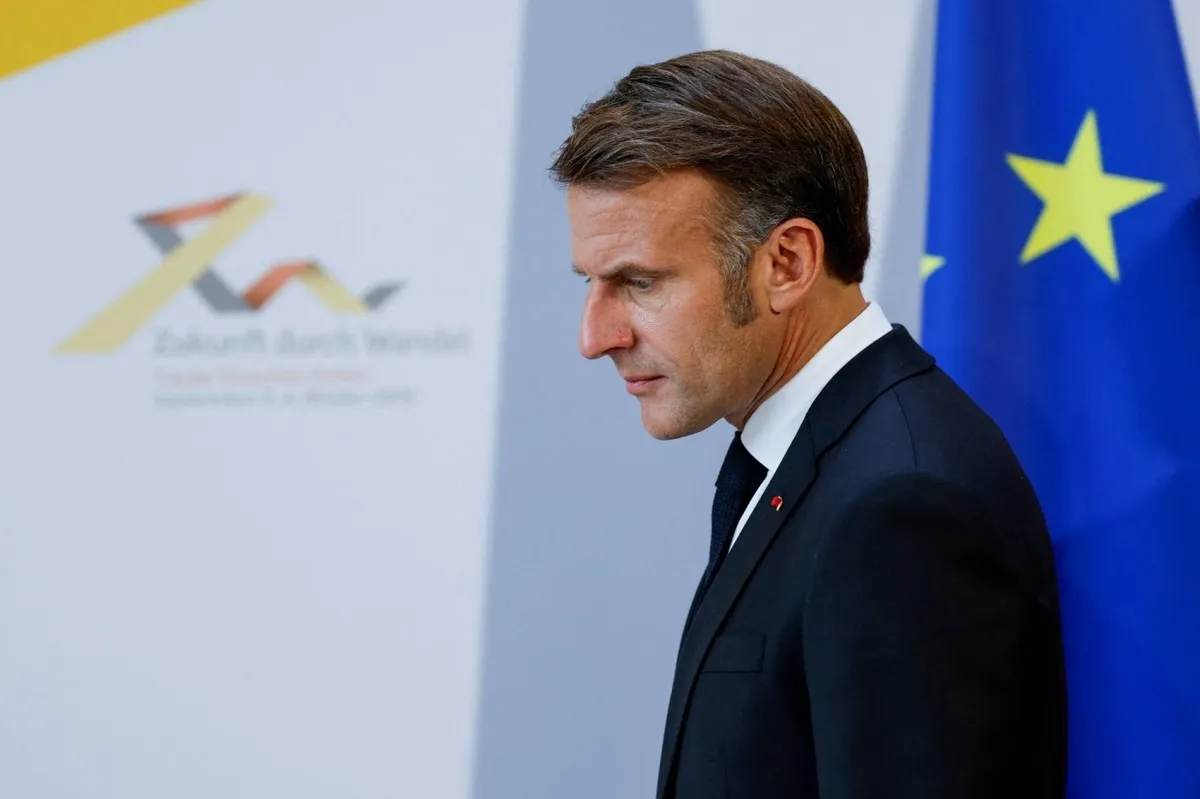
Most polls show that an overwhelming majority of French citizens hold their president responsible for the ongoing political crisis and demand his resignation. Since Emmanuel Macron’s re-election in 2022, France has entered a period of deep political instability—one that he himself exacerbated by calling for early parliamentary elections in 2024.
Now, in 2025, France once again faces the collapse of its government and the appointment of a new prime minister by Macron. The French president has become so entangled in domestic turmoil that he has lost even minimal influence within both the Eurozone (economically) and NATO (politically and strategically). What exactly has happened in France, and what are the key certainties emerging from these developments? Two essential points stand out:
First, Macron’s main Achilles’ heel is his lack of even a basic understanding of his own limits and of the realities—past and present—of international relations. When Macron first entered the European scene in 2017, he portrayed himself as an economic savior of the EU and the Eurozone. Many not only in France but across Europe believed he could forge a balance between “austerity” and “economic growth” and bring stability to the continent’s volatile economy. Yet Macron himself soon became trapped in the very austerity frameworks he once claimed to reform.
Macron’s failure is not merely the downfall of his party, La République En Marche! it represents a broader transition away from traditional political parties in France. Recent polls show that the far-right movement led by Marine Le Pen has captured around 35–37% of the public vote, putting her at the top of the list of candidates for the 2027 presidential election. It is precisely for this reason that Le Pen continues to push for early presidential elections.
Second, Macron and his allies are directly responsible for creating, deepening, and perpetuating the very crises that now threaten to bring them down. The French president cannot be seen as a mere victim of unforeseen or external international developments. His insistence on prolonging the Ukraine war and blocking peace between Moscow and Kyiv; his interventionist policies in West Asia, particularly regarding the Gaza conflict; France’s opportunistic role in Iran’s nuclear negotiations instead of honoring the JCPOA; and finally, Paris’s alignment with Washington’s militaristic and expansionist global agenda—all have collectively produced the multilayered crisis now engulfing the Élysée Palace.
Today, Macron stands as the symbol of simultaneous failure in both domestic and foreign policy. He no longer possesses the ability to recover from this entrenched crisis. The situation France faces today is the direct result of Macron’s own actions—and his alone.