The myth of Israeli invincibility shattered by Hamas’ resilience
"What is left to write about this war? A war that began with Israel’s most severe military defeat since its founding and continues without any end in sight." With this introduction, Avi Ashkenazi, the military reporter for Ma’ariv, released his latest commentary on the second anniversary of the Al-Aqsa Storm operation.
He continued: “The war began with a complete, humiliating, and shameful surprise. An organization, neither large nor powerful in Israel or the world, launched it—an organization that could not alter Israel’s strategic reality or existential threat. Even after October 7, Prime Minister Benjamin Netanyahu described its capabilities as no more than ‘a few Arabs with sandals and Kalashnikovs.’”
Ashkenazi wrote that Hamas actually managed to break the Gaza Division—the Israeli military unit assigned to counter it—gain control over parts of the territory, and threaten deep penetration inside Israel. Had its plan to consolidate fronts been executed as intended, Israel would have faced a completely different reality. Now, after two years, it is time to set aside media narratives and excuses and confront the truth: that fifty years after the Yom Kippur War, Israel was surprised and suffered military defeat in the early stages of the battle.
The high cost of illusion
The author continues: “Israel created a story for itself—and worse, believed it. In reality, Hamas forces emerged from tunnels after the war, dusted themselves off, and despite witnessing Gaza’s devastation and people’s suffering, they were not moved; they realized that mere resistance to Israel’s aggression was itself a victory.”
“From that moment, Hamas changed its military doctrine against Israel, just as Nasrallah and Hezbollah did after the Second Lebanon War. Both Hezbollah in Lebanon and Hamas in Gaza realized they were large and powerful enough not only to be defensive forces but to challenge Israel and bring offensive operations into Israeli-controlled territory.”
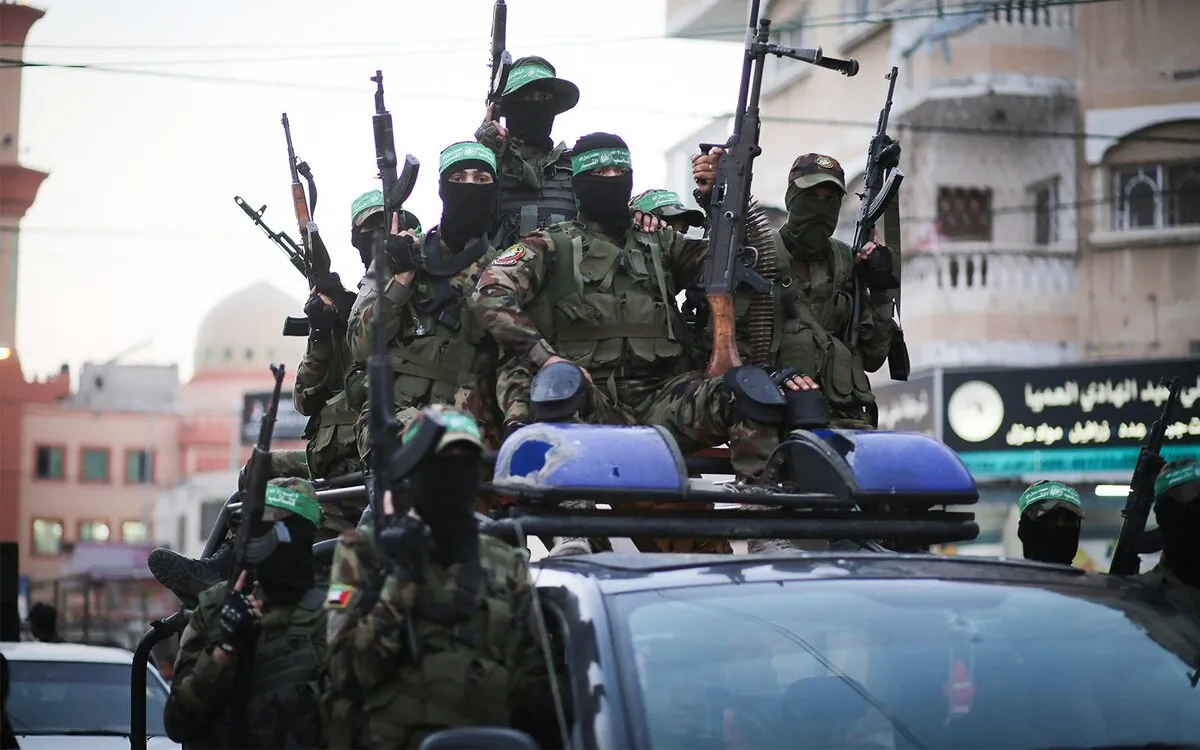
The author adds: “Hamas began building elite forces that transformed it into something resembling a regular army. They established a command-and-control structure including divisions, brigades, battalions, and combat units. A highly advanced intelligence apparatus was set up, Israel’s army and structure were carefully studied, and preparations were made for the day of operation, relying on a complex tunnel network and full control over Gaza’s population.”
Ashkenazi emphasizes: “Meanwhile, Israel continued telling itself a story and, worse, believed it without challenge—neither in the military, political, nor domestic policy spheres. This self-deception cost Israel dearly: 1,954 civilians and military dead, 255 kidnapped—48 of whom remain in Hamas captivity—and thousands injured.”
Israel’s defeat goes beyond the battlefield
The author notes: “Israel’s defeat to Hamas is not just military, intelligence, or managerial—it is a comprehensive failure in governance and society. Failure in citizens’ daily mindset, in the relationship between government and people, and in the deep-rooted belief that ‘everything will be fine’ and ‘we can handle it.’”
Ashkenazi admits: “In this war, unfortunately, Hamas won; it proved that Israel can be challenged and managed to resist the most intense war in 77 years for two years. Hamas succeeded in swaying global public opinion, evident in Europe: Palestinian flags fly everywhere, protests fill public squares, calls for recognition of Palestine rise, and Israel’s international isolation deepens.”
He continues: “Yes, this is a story of failure in understanding and perception. Israel can build the most precise missiles, the best defense systems, the strongest tanks, and the most advanced aircraft, and train its soldiers at the highest level; yet this is not enough. The issue runs much deeper. Israel must pause and fully review its structures, understanding that power must be built on diverse foundations, not solely on military might.”
Israel must stop deceiving itself
He warns: “Israel must not deceive itself again. It must face tomorrow with the understanding that the Israeli narrative is not necessarily complete or correct; the other side may have a hidden story that could surface in a new disaster tomorrow or next year. Israel has been engaged for two years in a war on seven fronts, built on the illusion of absolute victory—but in this era, there is no absolute victory.”
Ashkenazi concludes: “The Israeli military must rebuild itself to face any surprise from any front—north, east, south, the front line, or within. Today, the army is not at that level of readiness. Israeli society must also rebuild itself: it must demand accountability, ask questions, and abandon blind obedience to leadership. Otherwise, it will face a new ‘October 7th,’ before which the morning of October 7, 2023, will seem like a mere faint shadow—just as October 7 once cast a shadow over October 6, 1973.”