Araghchi: Western countries rejected a fair negotiated solution
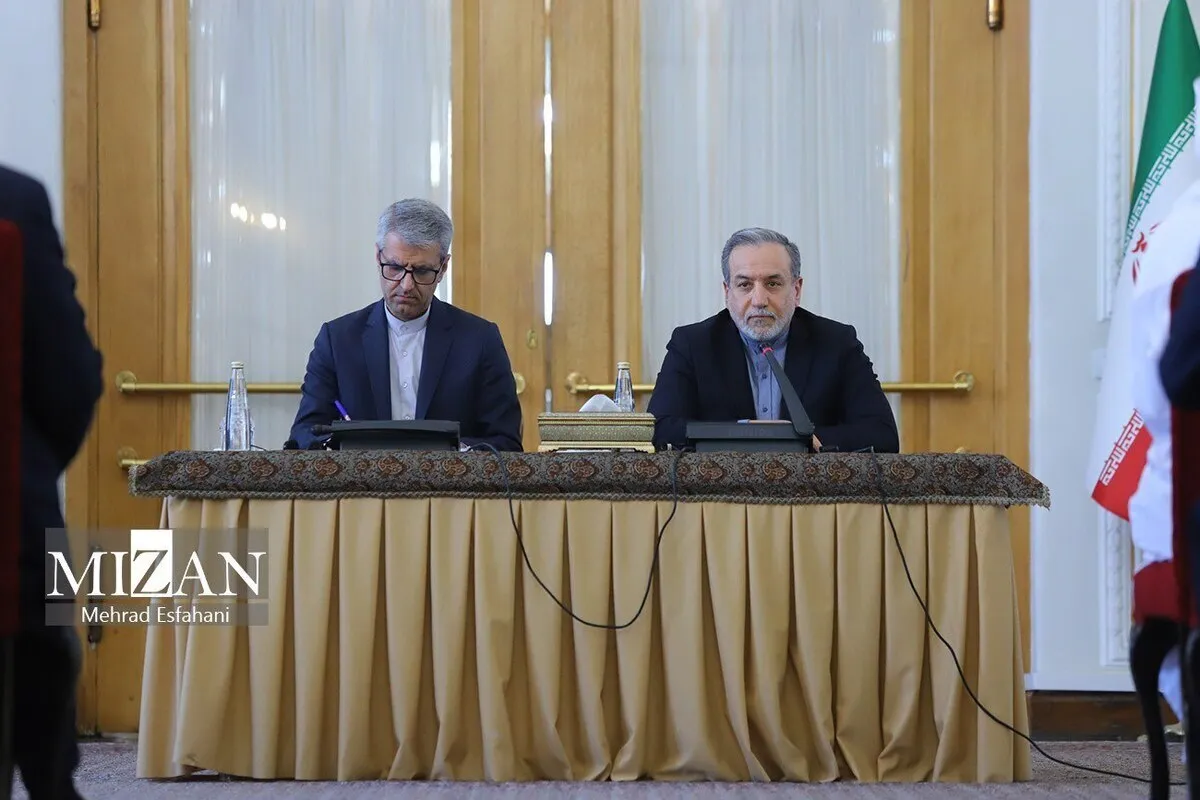
On Sunday, October 5, 2025, Foreign Minister Seyed Abbas Araghchi, in a meeting with reporters, elaborated on the issues raised during his talks with ambassadors, chargés d’affaires, and heads of foreign and international missions residing in Tehran.
Regarding the details of this session, the Foreign Minister said: “Explanations were provided about the consequences of the decision taken, so that everyone is aware of the situation Western countries have created in the Security Council and the legal and political challenges that will inevitably arise as a result.”
On talks with European countries, Araghchi noted: “Experience has proven that there is no solution to Iran’s nuclear program other than a diplomatic and negotiated one. In recent years, Iran was repeatedly threatened with military action, but such threats solved nothing. The Europeans also threatened to trigger the snapback mechanism, but like military threats, this measure was ineffective and only made negotiations more complicated and difficult.”
According to him, the three European countries thought that by using the snapback mechanism they could achieve results, but this leverage proved ineffective and only hindered diplomacy.
The Foreign Minister stressed: “Diplomacy will always continue, but the format and the negotiating parties have now changed. Certainly, the role of European countries in future talks will be diminished, and their justification for participating in negotiations has weakened.”
Elsewhere, he said that the so-called U.S. demands cited in the media were never officially conveyed to Iran. “In recent months, our discussions—direct or indirect—with the American side have been exclusively on the nuclear issue. Our proposals were completely transparent, and had they been given due consideration and diplomacy not been restricted, reaching a negotiated and diplomatic solution would not have been out of reach.”
He added: “Even now, if both sides act with goodwill and mutual interests are taken into account, negotiations can continue. But recent actions in the Security Council have made the process more difficult. The Foreign Ministry will nevertheless continue its diplomatic efforts, as diplomacy can never be ignored. That said, the situation after military strikes and the snapback mechanism is different, and future talks will undoubtedly differ from the past.”
On Iran’s relations with the IAEA, Araghchi said: “Iran has signed a new agreement with the International Atomic Energy Agency regarding technical cooperation. This was necessary due to field changes and security threats, including attacks on nuclear facilities, since the previous cooperation framework was no longer viable.”
He continued: “After several rounds of negotiations, this agreement was reached in Cairo, but now the Cairo Agreement is insufficient in light of new conditions, including the snapback mechanism, and new decisions will be taken. To prove the peaceful nature of its nuclear program and its goodwill, the Islamic Republic of Iran has exhausted all diplomatic avenues, pursued cooperation and consultations, and put forward constructive and balanced proposals.”
The Foreign Minister said: “There is now no excuse left for Western countries to prevent Iran from cooperation or dialogue. Iran’s positions are entirely legitimate and justifiable, and it is ready to pursue any solution that builds confidence.”
Araghchi added: “During the previous military attack, over 120 countries and nearly all international organizations condemned the action and declared their support and solidarity with the Islamic Republic of Iran. This support stemmed from Iran’s wisdom, rationality, and prudence as a responsible actor in international relations, as well as its consistent efforts in pursuing negotiations.”
The Foreign Minister concluded: “Today, once again, Iran has shown that while safeguarding its rights, it is fully prepared to pursue any solution that can secure the interests of both sides and build confidence in the peaceful nature of its nuclear program.”