Gaza’s future at risk: Occupation hidden in the name of peace
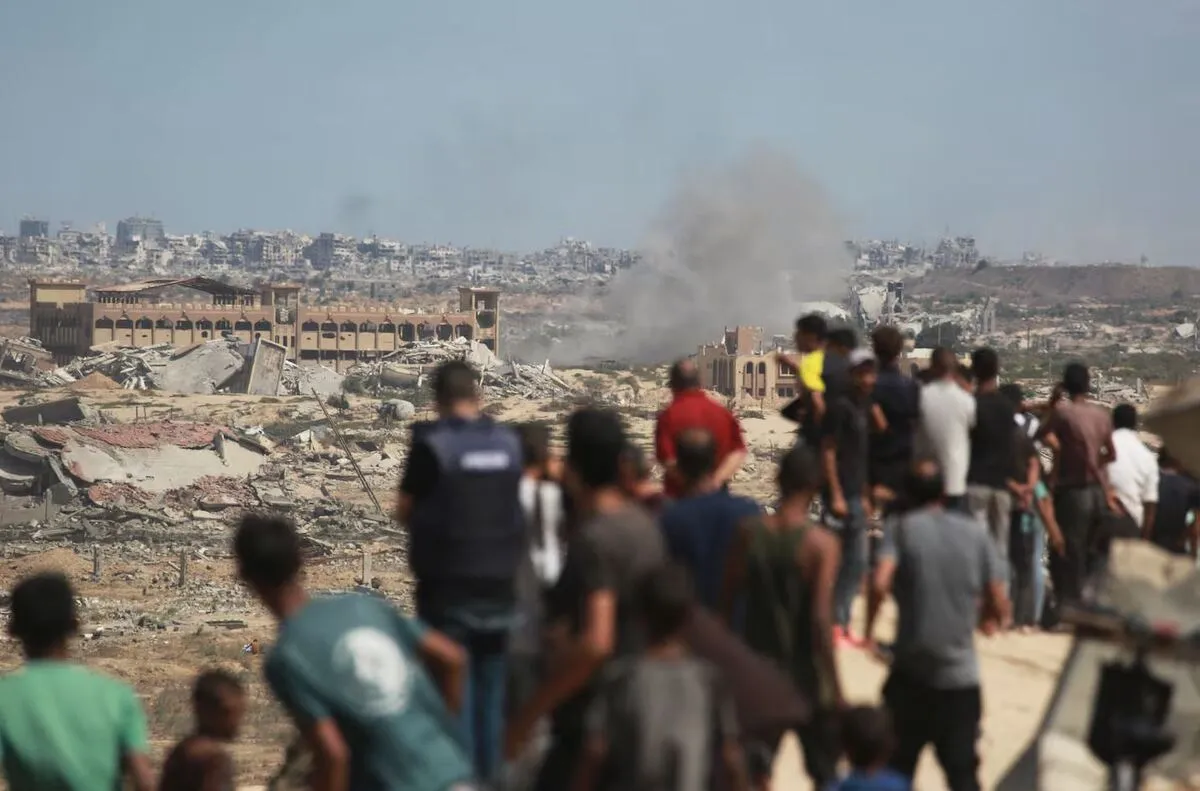
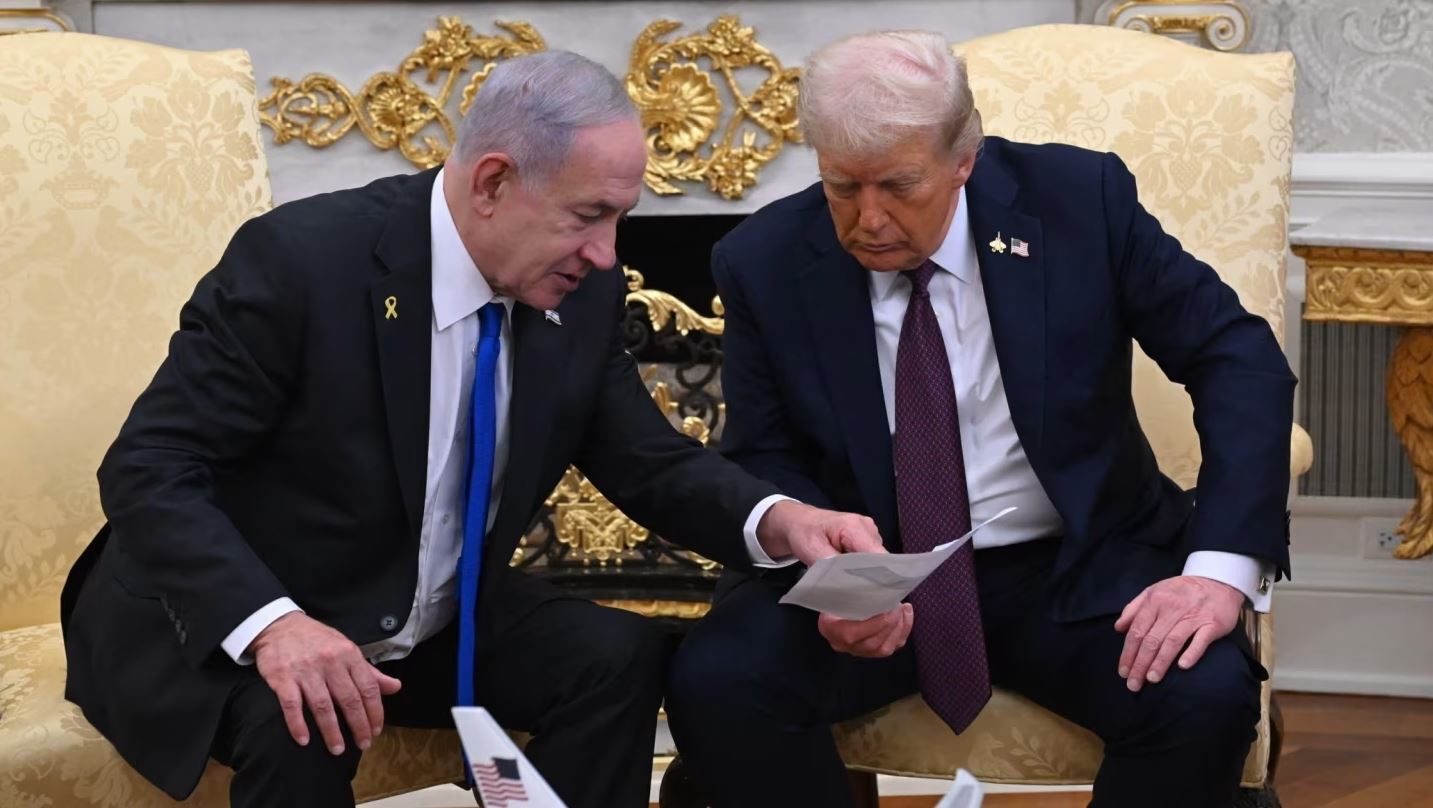
Palestinian resistance is expected to respond in the coming days to Trump’s alleged 20-article peace plan for Gaza; Israel had previously approved the plan.
This plan, which seeks to completely remove Gaza from Palestinian control, also aims to eliminate Palestinian identity.
Acknowledging responsibility for crimes
The text of Trump’s alleged peace plan contains points that clearly highlight violations of the law by the Israeli regime.
The plan explicitly states that “all women and children detained in the area will be released,” indicating that the authors acknowledge Israel deliberately kept these individuals as bargaining tools while in custody.
Another section mentions that if all parties agree to the plan, “full aid will immediately be delivered to the Gaza Strip; this aid will be distributed without interference, through the United Nations, its agencies, the Red Cross, and other organizations entirely independent of any party involved.”
This seems to signal an end to the so-called Gaza Humanitarian Foundation (GHF) supported by the U.S. and Israel. Once again, the wording acknowledges Israeli legal violations and clearly suggests that aid has not been sufficiently allowed into Gaza and has been distributed by an organization connected to Israel.
However, due to vague references regarding timelines, much of the agreement leaves significant leeway for Israel.
International stabilization force and Israeli withdrawals
The plan proposes that an “International Stabilization Force” (ISF) will be deployed in Gaza. Meanwhile, the Israeli military will withdraw “according to standards, milestones, and timelines related to demilitarization,” agreed upon between Israel, the ISF, the U.S., and international guarantors.
What these milestones and timelines will actually be remains speculative.

Daniel Levy, a British-Israeli analyst and former peace negotiator, said: “There is nothing in this plan that is sufficiently fundamental or detailed to be implementable. There are no specifics about timelines or maps.”
He added that this ambiguity is deliberate, allowing Israel to blame the other side when agreements are not implemented or when Netanyahu decides to halt compliance and resume genocidal attacks.
Anne Shelling, a former U.S. State Department official who resigned over the Gaza war, agreed that the plan is deliberately ambiguous, recalling the failed 1993 Oslo Accords. She noted that, as with Oslo, there are no penalties if Israel fails to comply, giving Israel no incentive to uphold the agreement—a standard feature of U.S. proposals for “resolving” the conflict.
Unlike the previous ceasefire in January, which forced Israel to withdraw to a 900-meter perimeter around Gaza, Trump’s plan initially allows Israel to occupy major cities such as Rafah, Khan Yunis, Jabalia, and Beit Hanoun.
Ethnic cleansing concerns
Regarding the displacement of Palestinians from Gaza, Trump’s language appears to have softened. While in February, he spoke of “ownership of Gaza” and expelling residents to create a “Middle Eastern Riviera,” the current proposal states: “No one will be forced to leave Gaza, and those wishing to leave may do so freely and return freely.”
The report adds that people are encouraged to stay and will be given the opportunity to “build a better life,” though analysts are skeptical about whether this will happen in practice.
Palestinian political analyst Abed Abu Shahadeh stated that one reason for the lack of mandatory displacement is that Israel has been unable to find a third country to host the Palestinians. If such a country is found, Israel may continue to expel more Palestinians, either through a deal or under the guise of voluntary humanitarian departures.
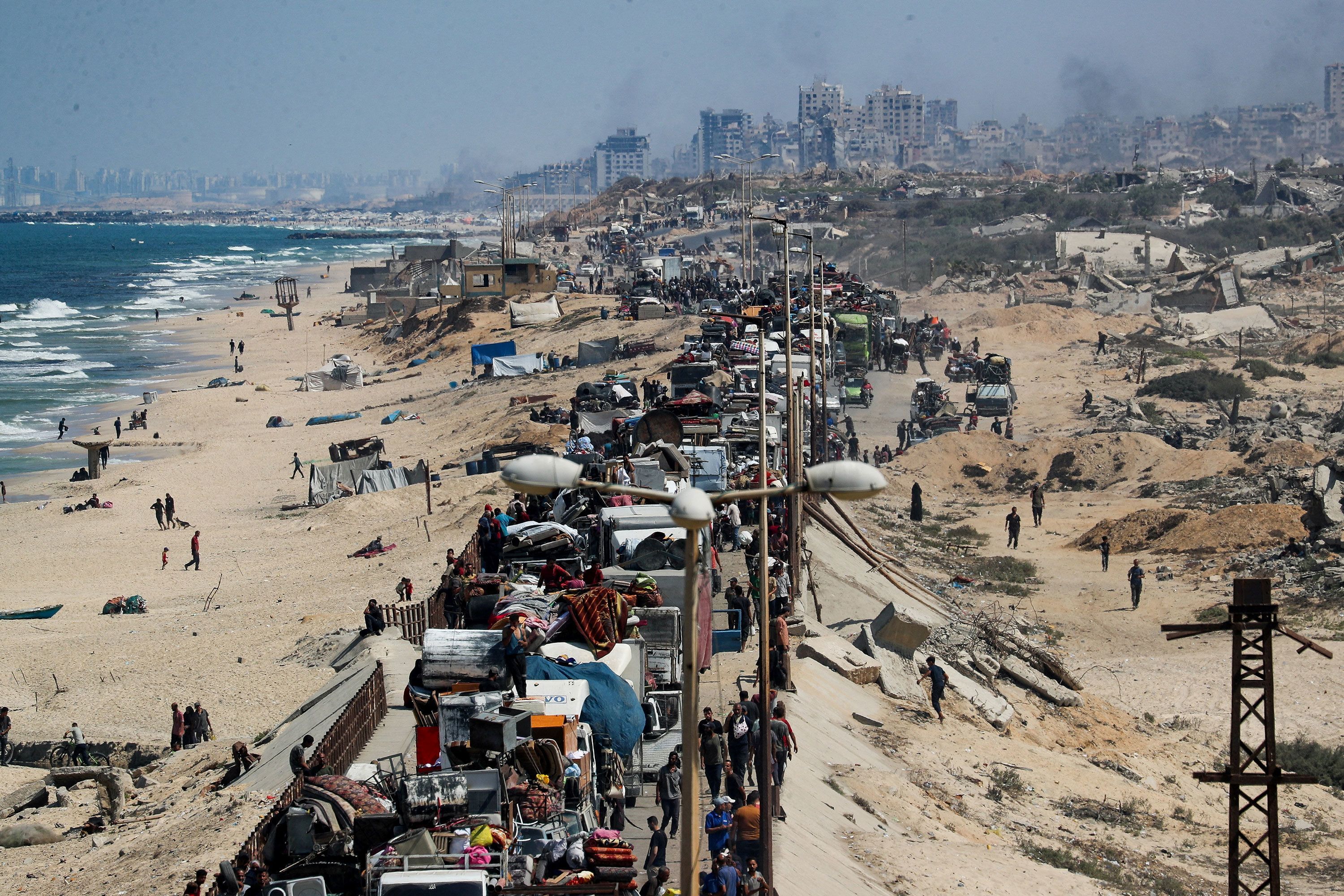
Abu Shahadeh emphasized that Israel has invested significant effort, including establishing a government agency, in what it calls “voluntary exit,” and that Western observers underestimate Israel’s seriousness in planning Palestinian displacement.
Qusai Hamed, a Hamas expert and professor at Al-Quds University in Ramallah, noted that although the plan does not explicitly mandate Gaza’s displacement, inhumane conditions could compel people to leave, and both Israel and the U.S. understand that Gaza may no longer be livable.
Governance by a “Board of Directors”?
Trump’s alleged peace plan proposes a transitional international board called the “Peace Board” to govern Gaza, with Trump as its head, supported by former UK Prime Minister Tony Blair and other global leaders.
Haaretz reported that the board is dominated by billionaires and businesspeople, while “neutral” Palestinian directors are placed at the bottom after heavy vetting.
Levy commented: “It is more like the charter of the Dutch East India Company than a 21st-century political document. Remember, this plan was prepared without consulting any Palestinian factions that must approve the ceasefire.”
Levy further noted that Trump appointing himself as chair of the Peace Board and Blair as his “subordinate” would be “laughable” if it weren’t for the fact that it could determine the fate of many lives.
The language used by both Trump and Blair reflects a corporate mindset, speaking of a board, chairman, and CEO, rather than a country or territory.
Abu Shahadeh added that this is a deliberate attempt to erase Palestinian history; for Blair, it is all about GDP and economics, as if national history, narrative, or livelihood does not exist.
He continued: “This is a long-tested U.S. method: exploiting vulnerable populations to accept conditions they would otherwise reject. No one has the moral right to judge Palestinians who merely want a ceasefire; Americans and Israelis are aware of this.”
Shelling also stated that Blair, given his involvement in the Iraq war, should know the implications. She explained that the U.S.-backed temporary coalition government in Iraq was never considered legitimate by Iraqis, and that foreign occupation—as envisioned in this plan—will always provoke resistance.
The former U.S. State Department official added that given the created conditions, ongoing occupation, lack of justice, and absence of reparations for decades of abuses, coupled with the two-year genocide in Gaza, it is completely unrealistic to expect Gaza resistance to disappear.
The 20-article plan concludes by proposing interfaith dialogue to promote peaceful coexistence and attempts to change the narratives of Palestinians and Israelis.
While acknowledging Palestinian aspirations for an independent state, nothing in the plan obliges Israel to facilitate its establishment.
Support for peaceful coexistence and a form of Palestinian governance among Israelis, particularly within Netanyahu’s cabinet, remains low.
Shelling noted that little discussion has occurred regarding the radicalization of Israeli society, most of whom continue to support policies of genocide, massacres, and starvation imposed on Gazans