Judiciary spokesperson: We are pursuing Israeli crimes and damages in the 12-day war
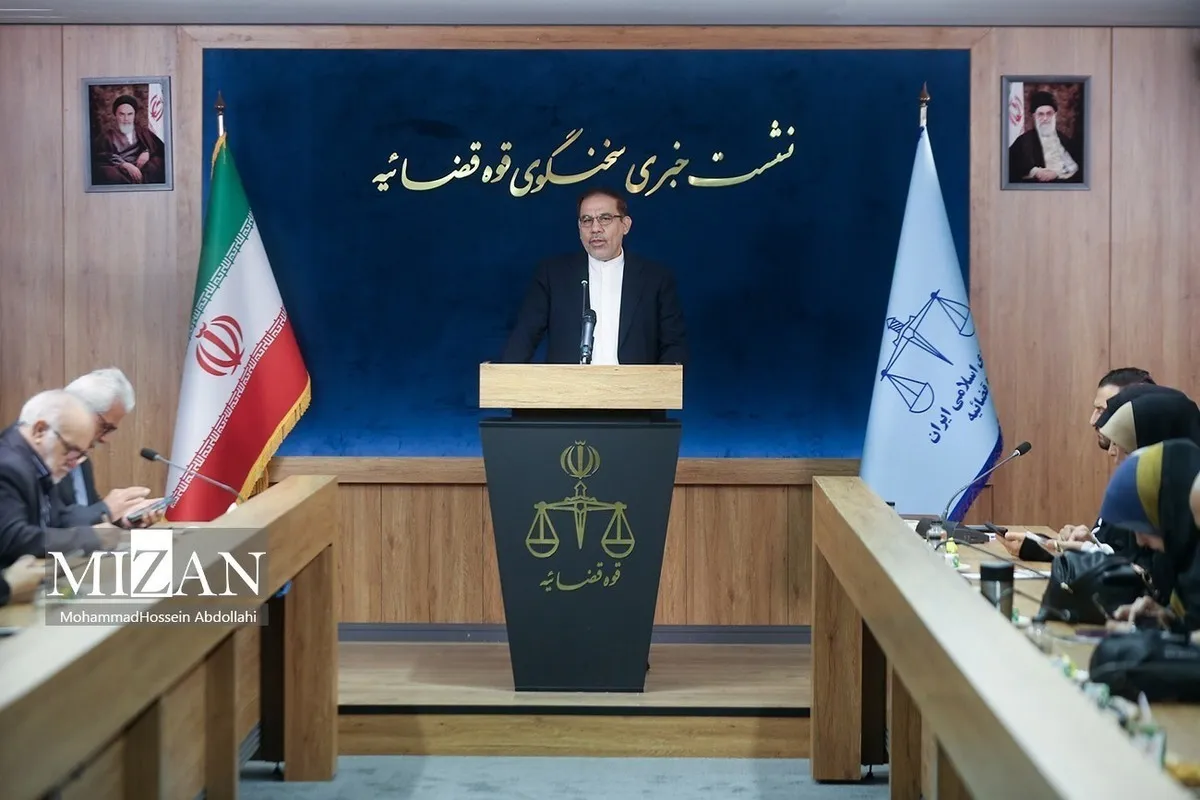
At the beginning of the briefing, the spokesperson referred to the anniversary of the martyrdom of Sayyid Hassan Nasrallah, stating that commemorative ceremonies were held with large public participation in Lebanon and across Beirut, as well as by many freedom-seeking Muslims worldwide.
He added that Nasrallah was one of the leaders from the generation inspired by Imam Khomeini, and the path he opened 50 years ago for the Iranian nation became a luminous path for Iran and all freedom-seekers around the world. Nasrallah, as one of the prominent figures nurtured by this school, is honored, and it is believed that other leaders like him will rise in Lebanon and the Islamic world to continue his path for the liberation of Jerusalem.
Jahangir emphasized that enemies try to instill despair through psychological operations in society, and everyone has a responsibility to ensure that the nation does not fall into the trap of these malicious schemes. He stated that the 12-day war was another example showing that the Iranian nation, whenever it senses aggression, defeats the enemy through unity.
He further said that the Supreme Leader, in his recent televised address to the Iranian nation, outlined three strategic priorities, the first of which emphasized the importance of unity and cohesion among the Iranian people during the 12-day war and for the present and future of the country. This unity must be pursued by all officials with all their capacities to ensure its continuity because a nation that stands firmly behind its leader and system deserves the best.
Regarding the follow-up on the Supreme Leader’s directive to address Israeli crimes, Jahangir said that most of the monitoring and legal follow-up concerning recent Israeli and U.S. crimes in Iran falls under the responsibility of the Legal Affairs Deputy of the Presidency. The Judiciary, the International Affairs Deputy, and the Attorney General’s Office act as collaborating bodies, providing their data, which is ultimately submitted to the Legal Affairs Deputy.
He added that the Judiciary also has direct responsibilities. Based on direct reports from the Attorney General’s Office, the head of the Judiciary assigned the responsibility of following up on Israeli crimes to the Attorney General. The Attorney General’s Office, in effective collaboration with all relevant bodies within the Judiciary, including the International Affairs Deputy, the High Council for Human Rights, the Lawyers and Official Experts Center, and other entities, has undertaken extensive actions. These include numerous communications with domestic and international authorities such as the Supreme National Security Council, the Ministry of Foreign Affairs, the Atomic Energy Organization, the UN Secretary-General, the High Commissioner for Human Rights, and prosecutors from the Shanghai Cooperation Organization. Through the Attorney General, steps have been taken to fulfill obligations, collect documentation, and submit these to relevant domestic and international authorities.
Jahangir stated that to accurately estimate damages to the country—such as those to nuclear and military infrastructure, administrative buildings, and residential areas—multiple daily and weekly meetings are being held as part of legal and criminal task forces at the Attorney General’s Office, with representatives from all responsible agencies. The legal follow-up for the 12-day war includes documenting damages, filing criminal complaints, and initiating civil lawsuits both inside and outside the country. Criminal complaints against Israel began from the first days of the war, and currently, 15 cases are under review in two branches of the International Prosecutor’s Office in Tehran.
In terms of civil lawsuits, Branch 55 of Tehran’s Judiciary has declared readiness, and the head of Tehran’s judiciary has been informed that additional branches may be added if necessary. Jahangir stated that so far, 30 lawsuits have been filed, and in criminal cases, the situation is similar. More than 30 complaints against individuals and legal entities have been submitted and are under review.
The current focus is on documenting damages. Expert assessments and evidence collection have been completed for approximately 80% of affected private properties. Documentation of damages to military facilities, the national broadcasting organization, the Atomic Energy Organization, and prisons has been completed fully and submitted to the Legal Affairs Deputy of the Presidency.
Reports from 11 provinces affected by the war have been received, documented, and communicated to the Legal Affairs Deputy. To avoid scattered efforts and ensure clear division of labor, a task force has been established in Tehran’s Prosecutor’s Office to provide legal assistance and guidance to complainants, enabling them to file complaints and pursue their cases efficiently. The aim is to follow up on these issues in a timely and organized manner.
Regarding pardons, Jahangir stated that based on current estimates, between 60,000 and 70,000 prisoners are expected to be eligible. Exact figures have not yet been announced. Some parts of the pardon program are subject to deadlines, allowing individuals with private complainants to secure consent within a specified period to benefit from the pardon.
He added that in other cases, some individuals have been allowed to qualify but may not yet have met the conditions. Since their deadlines have not expired, final statistics on pardons will be announced once deadlines have passed.
Jahangir emphasized that the head of the Judiciary has instructed that anyone who believes they qualify for the pardon but has not been included should report to the Judiciary’s Deputy Office for immediate follow-up. For eligible prisoners with active deadlines, their cases will be reviewed at the end of the specified period, and if all conditions are met, they will be granted the pardon.