Iran’s representative at the Astana Congress calls for truthful coverage of events in Gaza
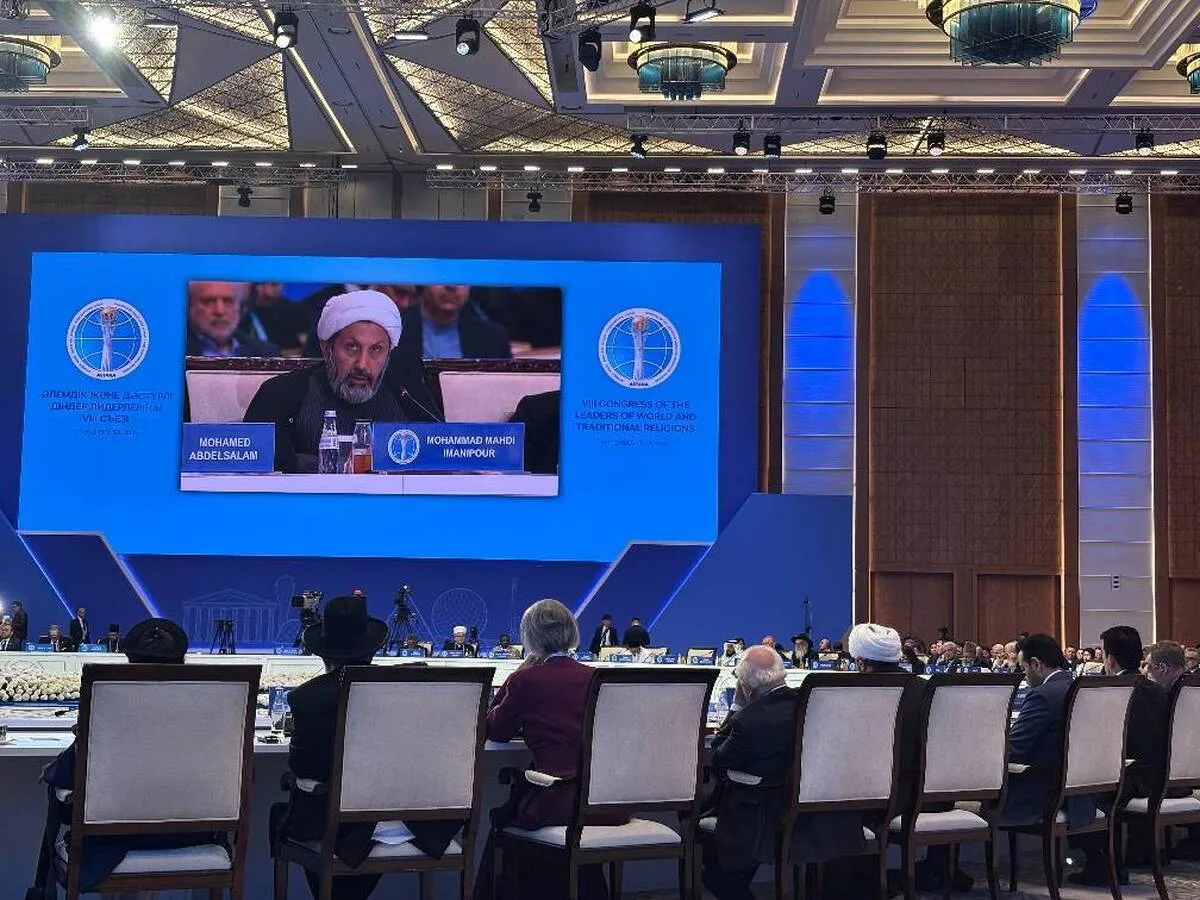
Mohammad Mahdi Imani pour, Head of the Islamic Culture and Communication Organization of Iran, stated this at the 8th Congress of Leaders of World and Traditional Religions. He emphasized that at present, the owners of cyberspace are actively working to distort or obscure the truth.
Imani pour said: “We live in one of the most difficult periods in human history. Solving certain issues is clearly challenging. Among them, I have chosen ‘digital slavery’ as the subject of my short speech, because it is one of the most serious problems. Our daily lives are increasingly dependent on the internet, social networks, and digital services. This dependency pushes users into collective services and ecosystems that influence their key decisions. Such dependency, like economic or cultural enslavement, can restrict freedom of choice and action.”
According to him, advanced algorithms are capable of guiding user behavior, and in some cases, individuals may not even realize the extent of this control in the online space.
The Iranian representative added: “I also want to specifically address the owners of big data, who, by managing massive amounts of information, are using it as a tool in today’s hybrid wars. At present, the owners of cyberspace are making broad efforts to distort or hide reality. Posts and comments by some users are easily deleted under the pretext of promoting hatred. For example, the events in Gaza have been distorted and concealed. If major powers continue to control content and big data and shape public opinion wrongly, how can we expect the real truth to be published in the future?”