The Technological revolution in mineral exploration
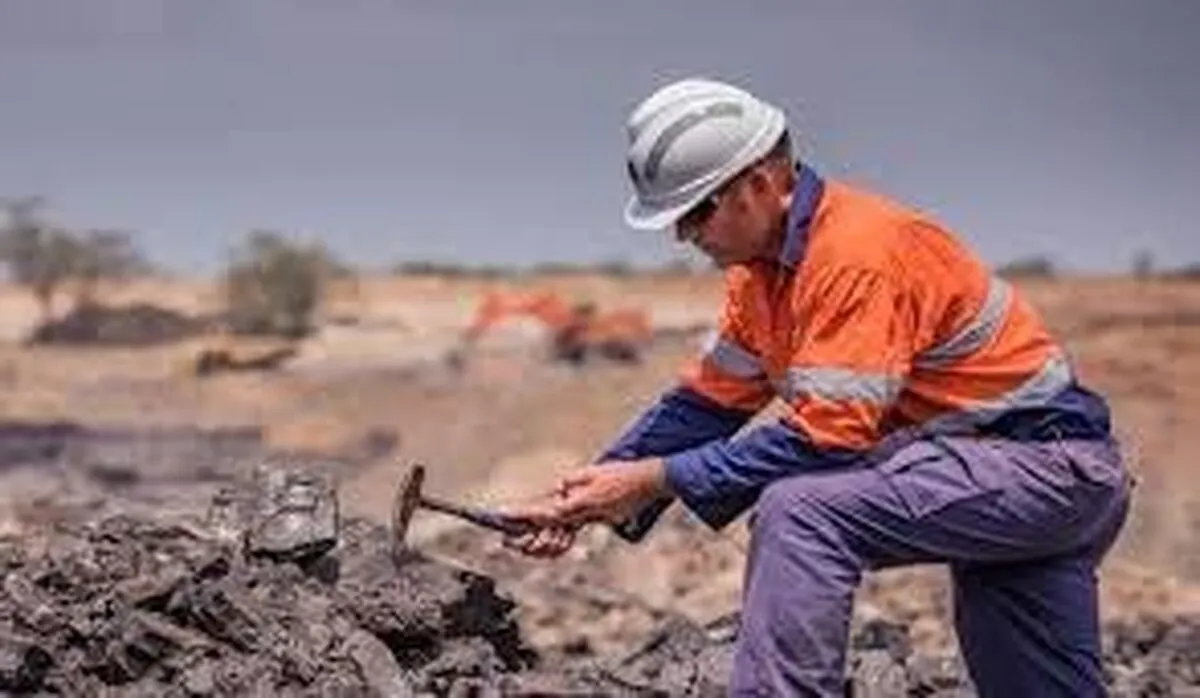
The year 2025 marks a turning point in this transformation, where technologies such as Artificial Intelligence (AI), advanced remote sensing, Big Data analytics, and smart drones have elevated precision, speed, and sustainability to unprecedented levels. These innovations not only significantly improve the efficiency of exploration processes but also help reduce costs and minimize environmental impacts.
From AI to remote sensing technologies
Artificial Intelligence (AI) and Machine Learning (ML) are becoming powerful tools for decoding complex geological data. These technologies can identify hidden and subtle patterns in large sets of geochemical, geophysical, and drilling data, enabling more accurate predictions of high-potential mineral zones.
A prominent example is the Australian company Earth AI, which successfully discovered valuable indium deposits in previously unknown areas using AI-driven analysis. Today, the use of neural networks and advanced algorithms such as Random Forest has become common and essential in many modern exploration projects.
Remote sensing technology, relying on hyperspectral, radar, and LiDAR satellite imagery, has also provided a powerful means for high-resolution analysis of the Earth’s surface. These spatial datasets make it possible to identify geological structures, faults, and mineralization with remarkable accuracy. In 2024, Fleet Space Technologies launched a constellation of Low-Earth orbit satellites and introduced the innovative ExoSphere platform, revolutionizing fast and non-invasive exploration. This technology has already been applied to major mining projects in Australia and Africa.
As accessible onshore mineral resources decline, the seabed has emerged as a new and vital frontier for securing strategic metallic elements. Advanced robotics and submersible sensors now allow the precise identification of polymetallic nodules, hydrothermal sulfide deposits, and manganese-rich crusts at depths of 4,000 to 6,000 meters. The Metals Company, with pilot projects in the Clarion-Clipperton Zone of the Pacific Ocean, has become a pioneer in tapping these untapped resources.
Exploring the deep layers of the Earth
Significant advances in geophysical methods—including Ambient Noise Tomography (ANT), space magnetometry, and Magnetotellurics—have greatly enhanced our ability to analyze deep geological structures. By integrating seismic and electromagnetic data, these techniques enable the identification of mineral-bearing layers at depths of more than 1,000 meters. Stanford University studies have also demonstrated the effectiveness of these methods in modeling subsurface copper reservoirs.
Sensor-based ore sorting technology allows precise separation of valuable mineral-bearing rocks from waste using X-ray, optical, or infrared spectroscopy. This method boosts efficiency, reduces water and energy consumption, and optimizes mineral processing. TOMRA, a pioneer in this field, has developed advanced systems now widely used in African diamond and gold mines.
An Inevitable Path
Dr. Mehrdad Shirazi, CEO of Ma’na Knowledge-Based Company—the first venture capital investor in the mining sector—explains:
“The technological transformation in mineral exploration has opened new horizons for the industry—a time when accuracy, efficiency, and sustainability are interwoven. AI, remote sensing, satellite data, advanced geophysics, drones, seabed exploration, and even eco-friendly approaches like phytomining are all responding to the long-standing challenges of exploration. The future of mining belongs to those who can strike the optimal balance between innovation, performance, and sustainability. Establishing and maintaining this balance will be decisive.”
He adds: “A data-driven, intelligent, and interdisciplinary approach is the inevitable path toward a fundamental transformation in mineral exploration in the coming decade. Investment in these technologies is not an option, but a strategic necessity to preserve competitiveness in the global mineral resources market.”