Unprecedented anti-government protests and nationwide strike in France
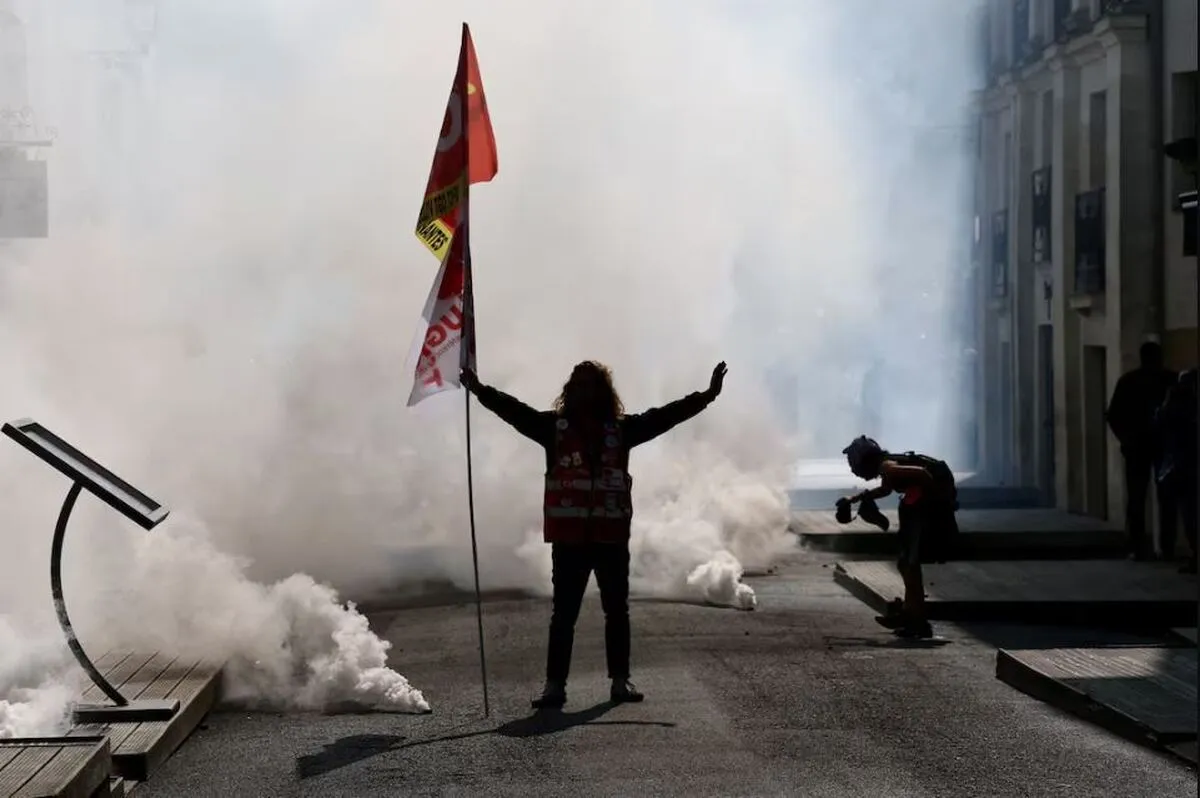
The French began their day with protests and strikes, with hundreds of thousands of workers expected to spend the day on strike in opposition to budget cuts. So far, more than 90 people have been arrested.
Clashes have been reported in Lyon and Nantes, where police used tear gas to disperse protesters.
The French Ministry of the Interior estimates that between 600,000 and 900,000 people may participate in the nationwide demonstrations, with 80,000 police officers deployed.
These protests come less than a week after Sébastien Lecornu, a close ally of the French president, was appointed Prime Minister following the fall of François Bayrou’s government.
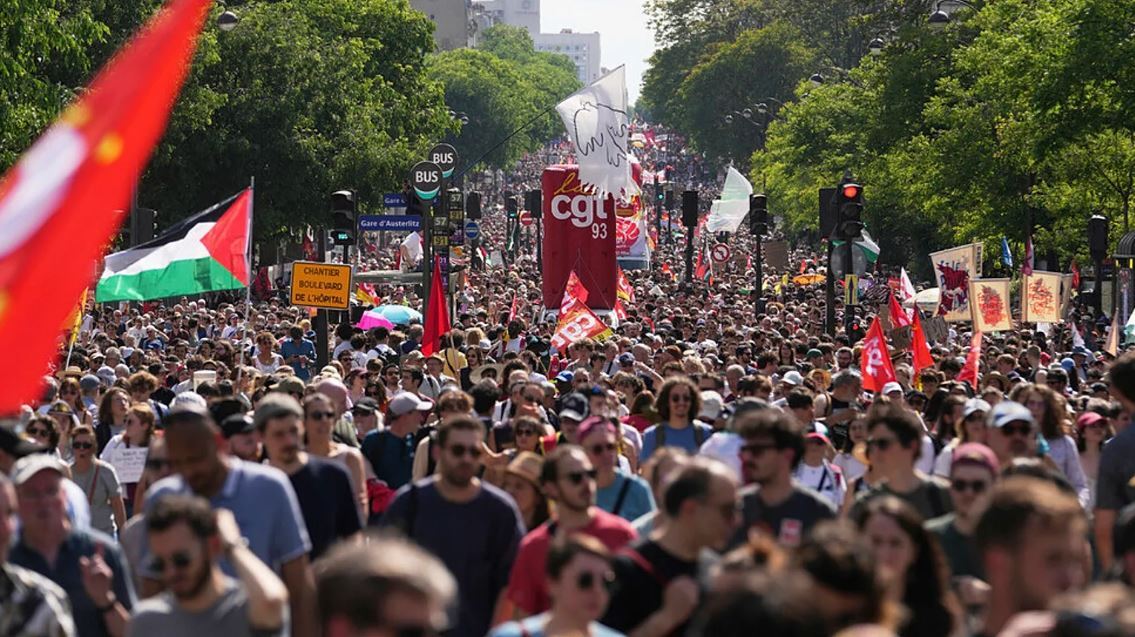
Strikes severely disrupted public transportation in France this morning. Many metro lines in Paris were closed, and protesters blocked roads and streets in major French cities.
Students gathered outside schools and universities in the capital and elsewhere, blocking entrances and chanting slogans. About one-third of teachers also walked out of classes.
Pharmacists joined the strikes widely, with an expected 98% of pharmacies remaining closed.
Labor unions are calling for increased funding for public services, higher taxes on the wealthy, and the repeal of budget cuts approved by the short-lived Bayrou government.
Last week, around 200,000 people participated in protests that caused some disruptions across France.
Today, a group of protesters entered the French Ministry of Finance building, also known as “Bercy,” a few hours before the start of the capital’s march.
According to one union, about 300 demonstrators—including railway workers, Paris transport employees, and students—participated in this protest, which was described as a “nonviolent and non-destructive intrusion.”
Meanwhile, the French Newspaper La Provence reported that on the sidelines of union-organized demonstrations, the city of Arles witnessed a shooting around 12:30 local time, leaving three people injured.

This incident occurred near Place Charles de Gaulle while French security forces and police were managing the union-organized protests.
Bayrou’s unpopular plan, aimed at reducing France’s high public debt and including €44 billion in budget cuts, caused him to lose a confidence vote in the National Assembly last week, leading to the collapse of his government.
The new French Prime Minister, Sébastien Lecornu, who has yet to form his cabinet, has not abandoned the budget cuts entirely and is in discussions with opposition parties to reach an agreement on the budget.
His position is precarious, facing a fragmented parliament with strongly differing political tendencies, making it difficult to draft a budget acceptable to a majority of representatives, similar to his predecessors Bayrou and Michel Barnier.
Meanwhile, France faces a public debt crisis amounting to approximately €50,000 per French citizen.