UN rapporteur condemns Israeli aggression against Iran / Seraj: Sanctions and unilateral measures are major obstacles to the tight to development
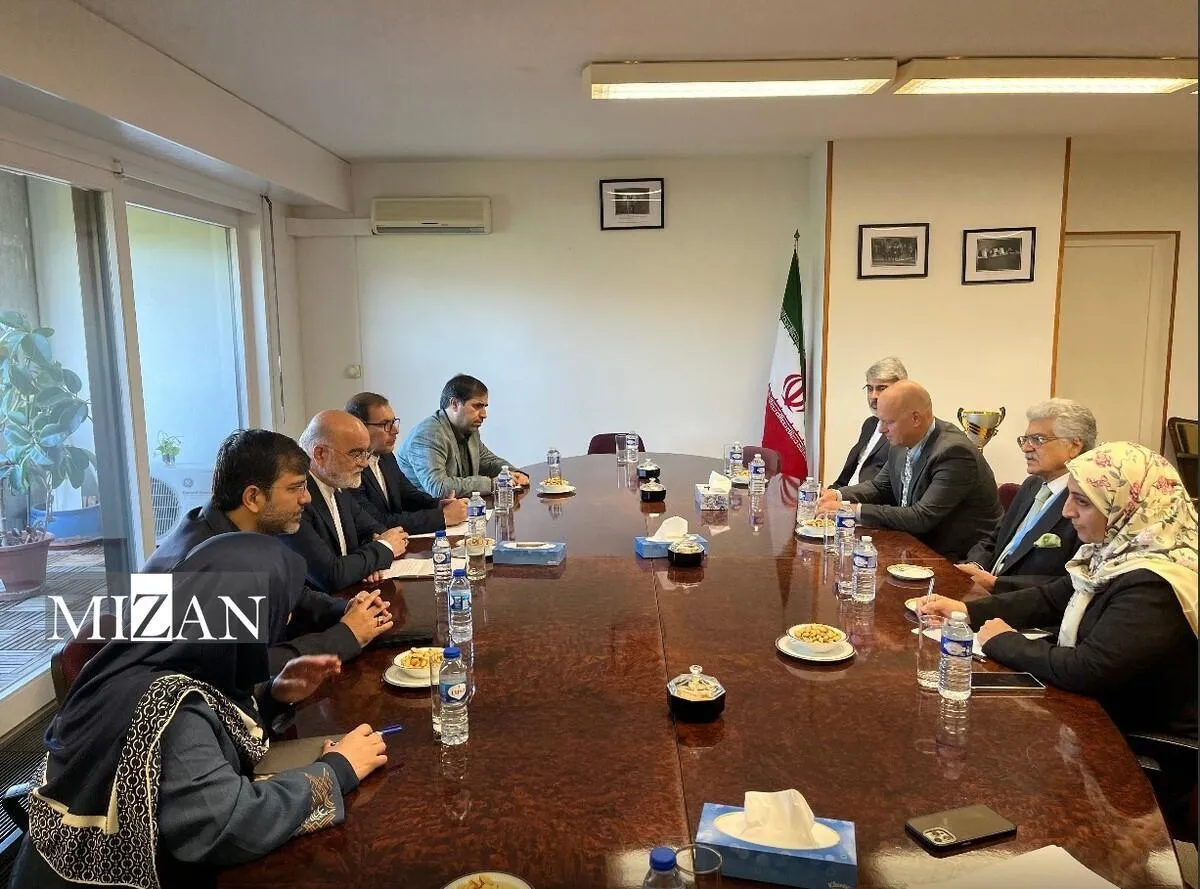
Naser Seraj, Deputy for International Affairs of Iran’s Judiciary and Secretary of the High Council for Human Rights, who is attending the 60th session of the UN Human Rights Council in Geneva, met today, Wednesday, September 17, with Zamir Akram, Chair and Rapporteur of the Working Group on the Right to Development, at the Iranian Mission to the UN in Geneva.
Seraj thanked Akram for his efforts in leading the Working Group on the Right to Development and highlighted the importance of his role in drafting the final text of the International Covenant on the Right to Development, emphasizing that despite the right being explicitly mentioned in the mandate of the UN High Commissioner for Human Rights, it has not received sufficient attention.
The head of the Iranian delegation pointed to the negative impact of sanctions and unilateral measures as major obstacles and challenges faced by many developing countries in achieving the right to development. According to Seraj, Western countries not only fail to support this right in other countries or fulfill their responsibilities, but by imposing unilateral sanctions, they also prevent its realization.
The Secretary of the High Council for Human Rights cited Israel’s 12-day aggression against Iran, including the assassination of scientists, attacks on industrial, scientific, research centers, and peaceful nuclear facilities, as an example of serious obstacles to achieving the right to development. He emphasized the need for a legally binding international document obliging states to cooperate on development and to take urgent measures to finalize the draft International Covenant on the Right to Development, which would formally recognize this right for developing countries.
Seraj stressed that, according to all existing interpretations, the right to development is a collective right and that no country should obstruct its realization. He highlighted the role of elites and scientists in national development and, referring to Israel’s recent aggression against Iran, noted that Israel has assassinated scientists from various countries in recent years, including 14 Iranian scientists in the recent attack.
He expressed hope that the Covenant on the Right to Development would soon be finalized at the UN General Assembly.
In the meeting, Zamir Akram praised Iran’s cooperation in advancing the Working Group’s goals and reported on his efforts in preparing the draft covenant. The UN rapporteur also condemned Israel’s aggression against Iran.
Akram confirmed Seraj’s points, highlighting obstacles created by developed Western countries and their lack of cooperation in preparing the draft covenant, stating that developed nations have been obstructive in producing a legally binding instrument. He criticized the Western approach, emphasizing that the right to development, like other human rights, is a collective and universal matter.
Akram stressed that while Western countries strive to universalize other legal frameworks and oblige states to comply, they must adopt the same approach toward the right to development. The draft covenant was finalized in 2023 and submitted to the Human Rights Council before being forwarded to the UN General Assembly. The rapporteur emphasized the urgency of approving the document, warning that delays or obstruction by Western countries could jeopardize the covenant’s adoption process.
For context, on December 4, 1986, the UN General Assembly adopted the Declaration on the Right to Development, affirming fundamental principles outlined in the UN Charter and the Universal Declaration of Human Rights. These include international peace and security, international cooperation for development, recognition of the inherent equality and dignity of all humans, the right to an adequate standard of living, the right to self-determination, and the right to participate in a social and international order where human rights and freedoms can be fully realized without discrimination.
The General Assembly defined development as a comprehensive process in economic, social, cultural, and political dimensions, aimed at continuously improving the well-being of individuals and nations through active participation and equitable distribution of development benefits.
In 1998, the UN Commission on Human Rights (replaced by the Human Rights Council in 2006) established the Intergovernmental Working Group on the Right to Development. Its mandate includes monitoring progress in promoting and implementing the right to development at national and international levels, providing recommendations, analyzing obstacles, focusing annually on specific obligations of the Declaration, reviewing reports from states, UN agencies, international organizations, and NGOs regarding development activities, and reporting to the Human Rights Council.
The working group’s reports include recommendations to the Office of the High Commissioner for Human Rights on implementing the right to development and propose professional assistance programs for interested countries to advance and implement this right. The group holds annual sessions in Geneva and submits its reports to the Human Rights Council and the UN General Assembly. UN agencies, other international organizations, and civil society representatives participate as observers.