Head of the Judiciary: The Zionist regime has crossed all red lines and spares no crime
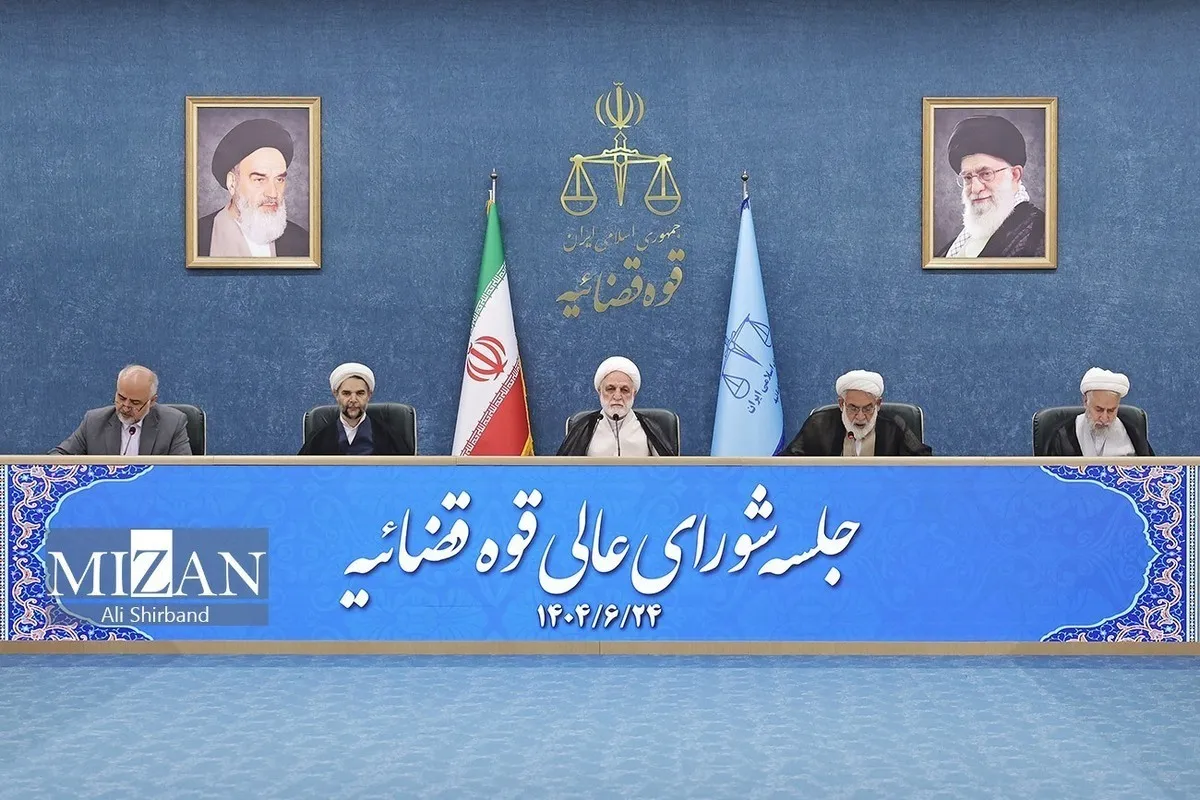
According to the Judiciary’s Media Center, Mohseni Ejei, speaking today (Monday, September 24) at a session of the Supreme Council of the Judiciary, referred to the recent conditional amnesty and stated: First of all, we express our utmost gratitude to the Supreme Leader for approving the proposed amnesty. Secondly, I must note that in preparation for this amnesty, consultations were held over several months with officials from different branches of government, relevant institutions, experts, and elites both inside and outside the judiciary, leading to a final conclusion.
Referring to the features of the recent amnesty, the head of the judiciary said: For convicts who have private complainants, the opportunity has been provided to secure the satisfaction of their plaintiffs so they may be pardoned. In this regard, from this very platform, we call upon private plaintiffs — while recognizing that they are fully entitled and justified — to act magnanimously and, if possible, forgive, so that the release and pardon of these convicts may also be facilitated.
The head of the judiciary emphasized: In the recent amnesty, provisions have also been made for convicts who, provided they repent, reform, and make restitution, can be included in the pardon. It must be stressed, however, that criminals whose release threatens public security are excluded from this amnesty. Nevertheless, I point out that if such convicts genuinely repent, correct their behavior, and compensate for damages caused, they may be considered for amnesty in future stages.
The judiciary chief added: Those who were released or had their sentences annulled under this amnesty must pay special attention not to fall back into committing crimes; otherwise, they will face difficulties in receiving amnesty in the future, and may even deprive other convicts of such opportunities. The families of pardoned convicts should also be attentive, so that the pardoned family member does not relapse into criminal acts.
He stressed: The recent amnesty can strengthen social cohesion and reinforce the foundations of families affected by imprisonment.
In today’s session, the judiciary chief also touched on current national and regional issues, particularly the “battle of narratives” and the importance of victory in this struggle as emphasized by the Supreme Leader.
He said: All officials, policymakers, and especially media outlets, including national media, must produce narratives of power, strength, and authority about the country and the system. This does not mean ignoring shortcomings and weaknesses — we are certainly obliged to resolve them. However, it must be strongly emphasized that weaknesses should not be exaggerated or highlighted while achievements and capacities are neglected, as this enables the enemy to exploit and dominate in the narrative war.
He added: In the narrative battle, silence and magnifying weaknesses are unacceptable. We must not speak in a way that the enemy can misuse our words or find encouragement in them.
The judiciary chief then referred to the continuation of the Zionist regime’s brutal crimes in Gaza and today’s Doha meeting, saying: Backed fully and openly by the United States, the Zionist regime continues its savage atrocities in Gaza, killing dozens of people daily, including those standing in line for food. The Zionist regime has crossed all red lines and spares no crime. Just last week in Doha, Qatar, this predatory regime once again carried out aggression and crimes — an act that may perhaps serve as a wake-up call for some regional rulers to recognize the regime as the axis of evil and the source of insecurity. In any case, we hope that at today’s Doha meeting decisive measures will be adopted to stop the crimes and aggressions of the Zionist regime and to prosecute its perpetrators.
In conclusion, the judiciary chief underlined: All of us in the judiciary must always uphold three fundamental principles: “respectful conduct with the people,” “accuracy and solidity in rulings and decisions,” and “expedition in handling judicial and legal affairs of the people.” The people expect us to adhere to these three principles, and this is neither excessive nor unreasonable — it is among our most basic duties and responsibilities.