New York Times: America can't match China without allies
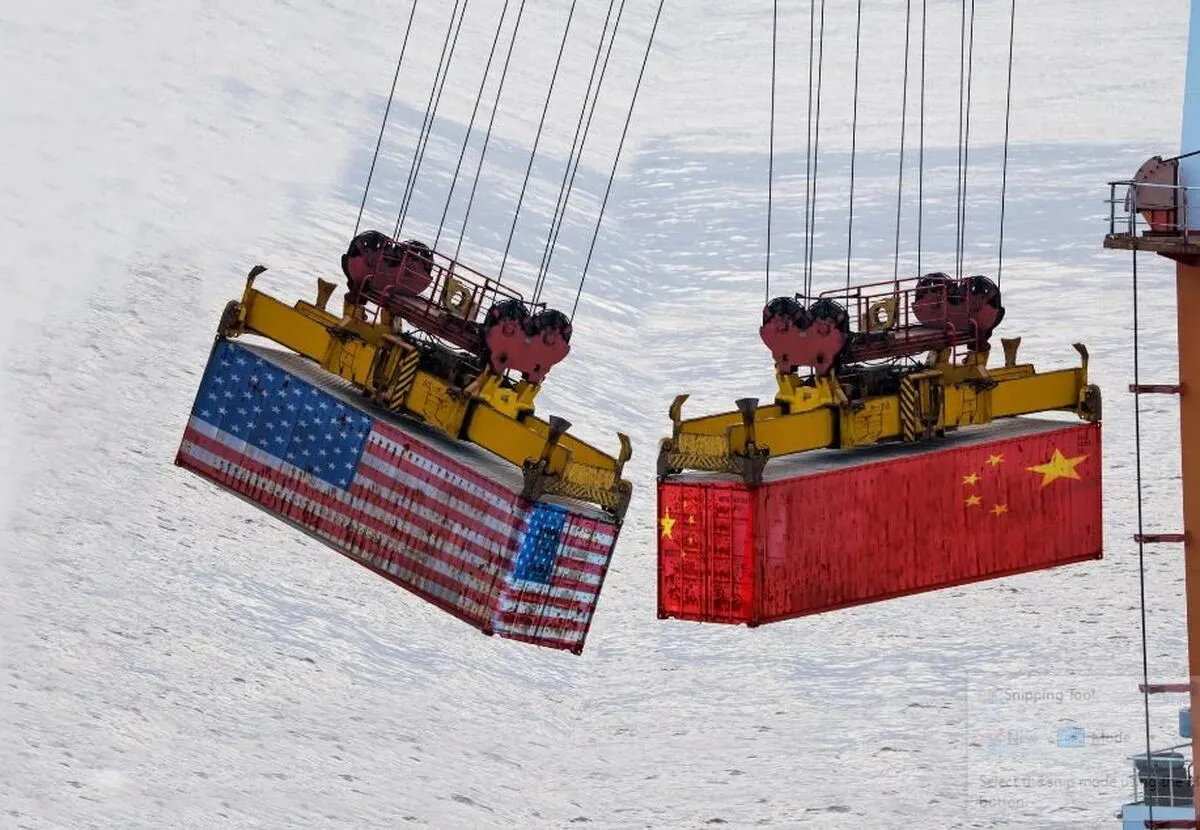
In an article titled “America can't match China without allies”, the American media examined the growing competition between the United States and China. They acknowledged that China has surpassed the United States in many vital indicators of power, leaving the United States with no choice but to resort to its allies.
The New York Times notes that for the first time in modern history, the United States is facing a rival that surpasses it in most dimensions of national power. America’s national capacity alone is no longer sufficient, and the White House has no choice but to consolidate power with its allies.
However, according to the New York Times, US President Donald Trump is moving in the opposite direction. Trump’s unilateral, tariff-based diplomacy has undermined the trust of allies and created space for Beijing to strengthen its alliances. The latest example was the imposition of heavy tariffs on India, a country that the US had spent three decades trying to attract as a counterweight to China. The result was Indian Prime Minister Narendra Modi’s first visit to China in seven years, along with an agreement with Chinese President Xi Jinping to establish a new partnership.
The article explains that China’s situation differs from that of past US rivals, such as Germany, Japan, and the Soviet Union. China has already surpassed the US in key indicators: its economy, in purchasing power parity terms, is about 30 percent larger than the US. It has twice the manufacturing capacity of the US and produces the bulk of the world’s cars, steel, ships, batteries, electric vehicles, and vital minerals. In science and technology, China has more inventions and highly cited papers than the United States. In military terms, China also boasts the world's largest navy, with a shipbuilding capacity more than 230 times that of the United States. Additionally, Beijing is a leader in hypersonic weapons, drones, and quantum communications.
Although China faces challenges such as population decline, industrial overcapacity, high debt, and weak government finances, as acknowledged by The New York Times, history shows that scale and quantity have often determined the fate of great powers. Just as larger countries eventually overtook England despite the onset of the Industrial Revolution, and the United States was able to defeat Germany and Japan with its vast industrial capacity in the 20th century, so too does China today, with its enormous industrial capacity.
Comparing the power of China, the United States, and the collective power of the United States and its allies in influential metrics
America's only hope for balance is to utilize the power of its allies. This means that the White House must consider its allies as equal partners to pool its market, technological, military, and industrial capabilities with them. The United States will be powerless against China alone. It will have to reach out to economies such as those in Europe, Japan, South Korea, Australia, India, Canada, Mexico, and Taiwan.
However, the New York Times emphasizes that even if such an alliance is formed, its goal cannot be to “contain China”, because such a thing is fundamentally impossible. The American media highlights that the goal of this alliance should be to create a balance against Beijing. This balance enables the United States to maintain common industrial bases, technological superiority, and deterrence against China.
According to US media, Trump’s recent trade deals with Japan, South Korea, and Europe have made the US appear like a landlord to its allies, which has led to a decline in Washington’s global popularity.
US media warn that Trump’s overreliance on coercion may bring short-term benefits, but in the long run, it will erode the trust of Washington’s allies. Instead of insisting on vague commitments, the United States should encourage its allies to make real, long-term investments in areas such as industrialization and military cooperation. Otherwise, the current approach may cause countries like India to move ever closer to China.