From Yellow Vests to “Block Everything”: France’s endless cycle of protest and instability
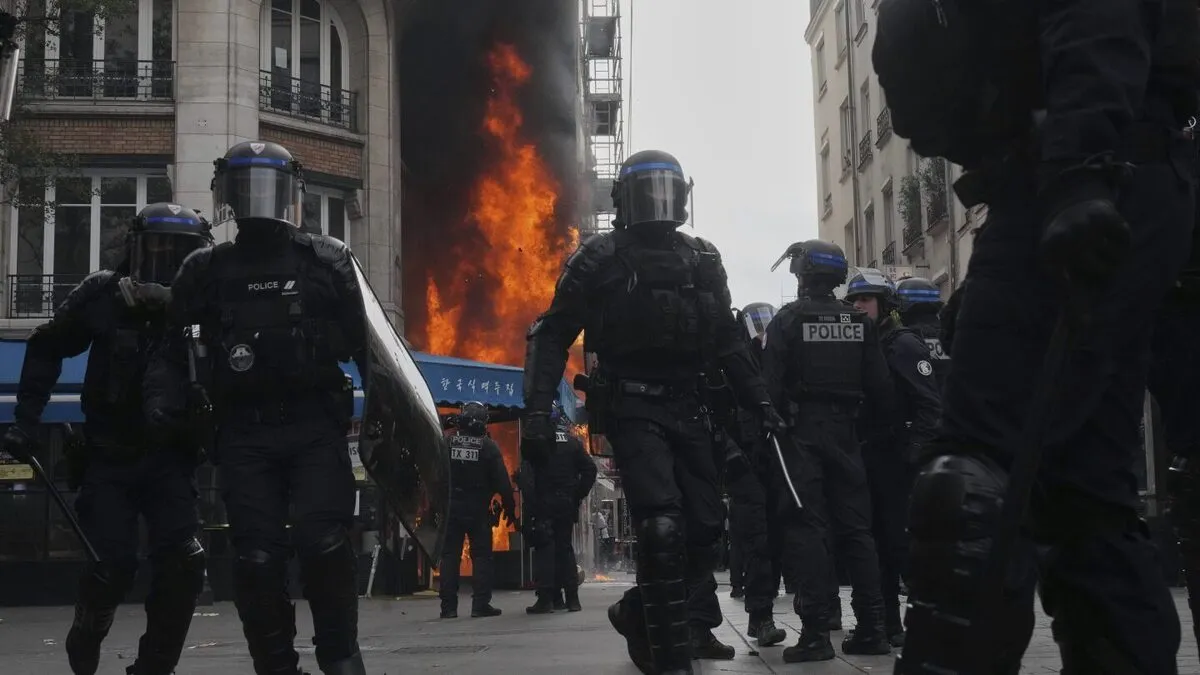
“Block Everything” protests swept across the country, effectively paralyzing France. According to Reuters and the Associated Press, protesters across France on Wednesday, September 10, 2025, in a display of anger and opposition toward President Emmanuel Macron and other political leaders, blocked highways and clashed with police.
More than 80,000 security forces were deployed nationwide to counter these protests.
According to reports, in some cities security forces dispersed protesters using water cannons; riot police in Paris, the capital, used tear gas to disperse crowds, with nearly 200 people arrested in the capital alone.
Police in Rennes, Montpellier, Nantes, and several other cities also used tear gas to disperse demonstrators, bringing the total number of arrests across French cities to 300.
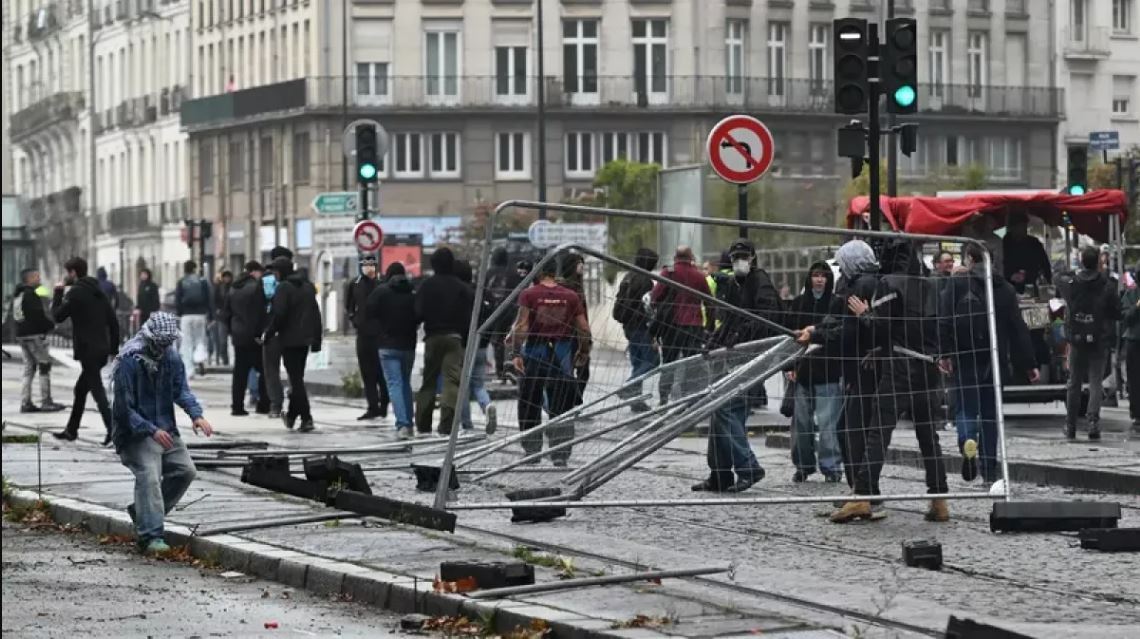
The protests halted rail services and caused massive traffic jams, creating serious disruptions to daily life.
Although the protests did not achieve their declared goal of completely paralyzing France, they were able to cripple parts of daily life and ignite hundreds of flashpoints across the country.
The “Block Everything” movement represents widespread discontent that has spread through social media. It first appeared online among right-wing groups in May but later expanded across other political spectrums.
The protests added to political turmoil on the very day that conservative Sébastien Lecornu took office as Macron’s new prime minister, after his predecessor was dismissed by parliament over deeply unpopular budget-cutting plans.
France is under pressure to reduce a budget deficit nearly twice the EU’s 3% ceiling and a mountain of debt equal to 114% of GDP.
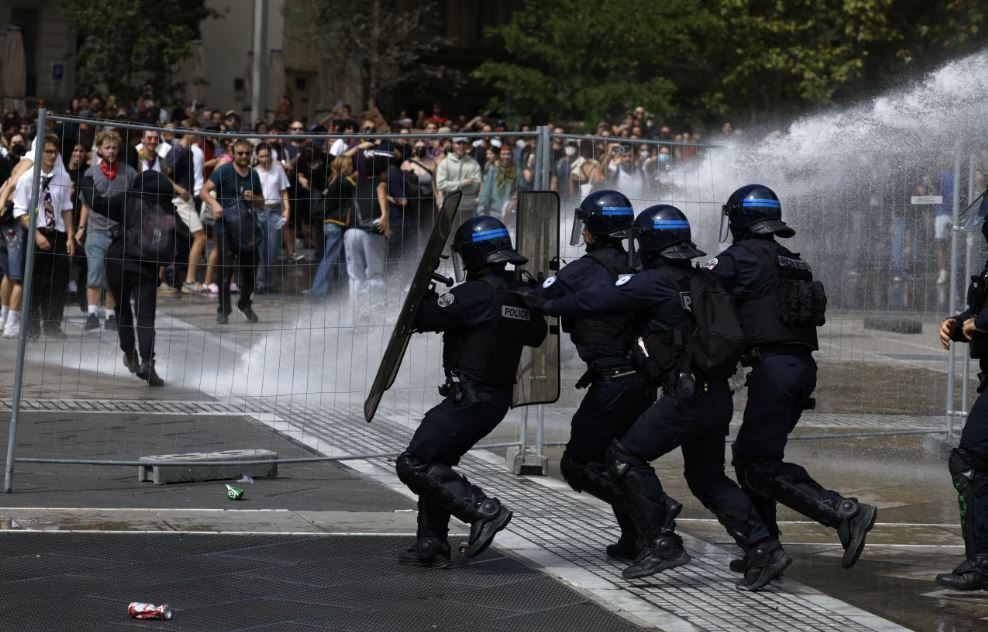
The nationwide protests on Wednesday, the new prime minister’s first day in office, posed a serious challenge to the French government.
Experts compared the “Block Everything” movement to the “Yellow Vest” protests of 2018–2019, which erupted over taxes and the cost of living and forced Macron to grant political concessions worth billions of euros. They noted similarities between the two movements in terms of massive security deployments, violent clashes, and recurring street confrontations with the government.
A sociologist from the Jean Jaurès Foundation think tank pointed to the generational divide between the two protest movements: in the Yellow Vest movement, France’s relatively vulnerable population—many workers and retirees struggling to make ends meet—took to the streets, whereas this new movement involves a much younger demographic.
France’s long cycle of political instability, with Macron’s minority governments lurching from one crisis to another, has fueled widespread discontent.
Macron’s governments have been in a very fragile state since last year, when he dissolved the National Assembly, leading to snap legislative elections that filled the lower house of parliament with his opponents.