Wall Street Journal reveals details of Israel’s strike on Hamas in Qatar
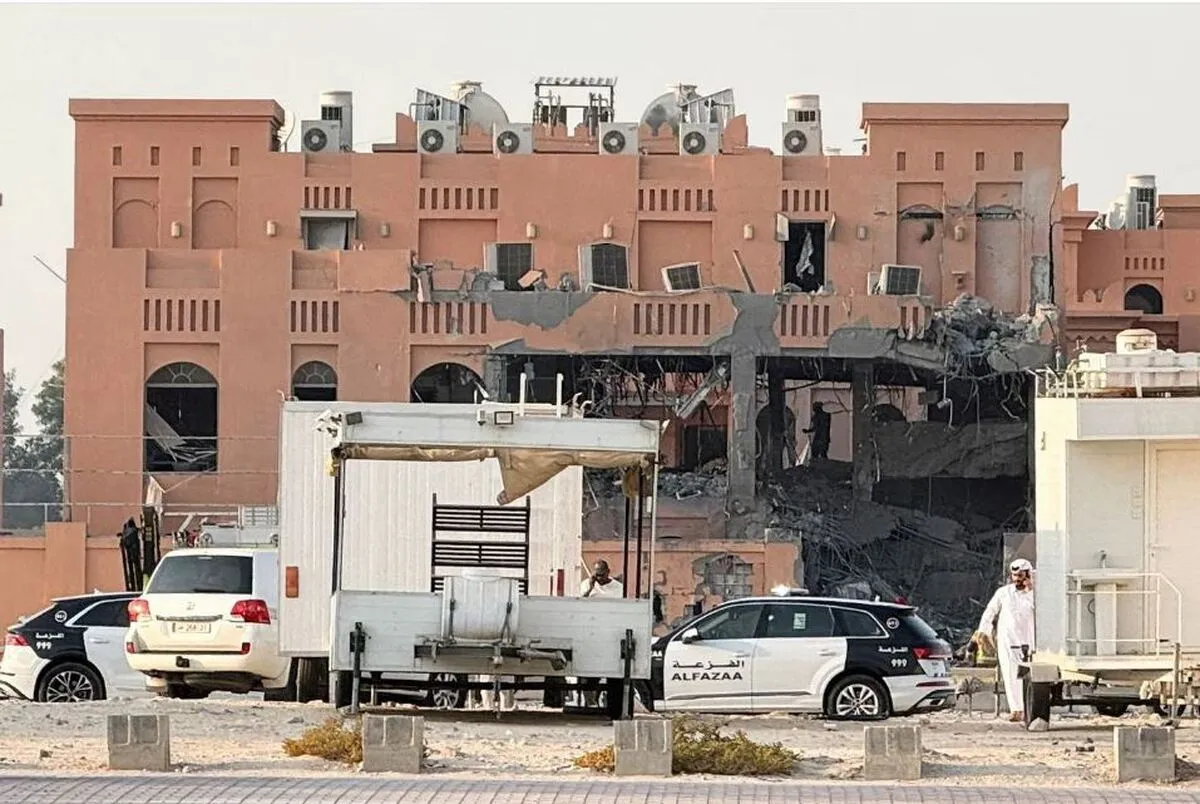
According to the Wall Street Journal, Israeli Prime Minister Benjamin Netanyahu issued the order for an airstrike in Qatar on Tuesday afternoon. More than ten Israeli fighter jets, armed with long-range missiles, targeted a building on the outskirts of Doha.
The newspaper reported that while senior Hamas leaders had traveled to the movement’s headquarters in Doha earlier this week to discuss a new U.S. ceasefire plan for Gaza, Israeli officials risked straining relations with the Trump administration by attempting an attack on U.S.-allied territory.
The Wall Street Journal wrote: “This represents a sharp escalation of tensions resulting from Israel’s tactics against Hamas by targeting its leaders on the soil of an independent country that mediates Gaza peace talks and hosts one of America’s key airbases in the region.”
Israel reportedly aimed to target political leaders including Khalil al-Hayya and Zaher Jabarin. According to Hamas, the strike failed to hit the top leadership but killed five lower-ranking members of the movement.
The newspaper emphasized that the Israelis intended to send a message that they disregard red lines or the risk of creating diplomatic tensions.
Weeks before the strike, Egyptian and Turkish officials issued a stern but vague warning to Hamas leaders, urging them to strengthen security measures around their meetings.
Israel had been preparing for months to carry out a complex strike against Hamas leaders outside Gaza. The operation was also linked to efforts to refine airstrike tactics amid ongoing Israeli operations in Yemen and Iran.
After Qatar hosted Hamas headquarters for more than a decade—implicitly accepted by the U.S. to keep negotiation channels open—Israel chose to break taboos and risk heightened tensions by conducting the strike in Doha.
The report stated that Israel deployed at least ten fighter jets for the operation, each armed with long-range missiles capable of striking targets from a safe distance. Their objective was to capture Hamas leaders during a meeting and kill as many as possible.
The newspaper noted: “Although the distance from Tel Aviv to Doha exceeds 1,000 miles, the fighter jets approached close enough to use guided long-range missiles without flying directly over the sensitive airspace of Saudi Arabia or the United Arab Emirates.”
Hamas political leaders typically split their presence between Qatar, Egypt, and Turkey. They arrived in Doha on Sunday to discuss the U.S. plan to end the war. Arab officials familiar with the discussions said the U.S. had asked the group to release remaining captives in exchange for Palestinian prisoners held by Israel, securing U.S. guarantees for the negotiations. Mediators deemed the proposal impractical, expecting Hamas to surrender leverage without addressing the complex issues necessary to end the war.
On Tuesday, Hamas leaders were scheduled to hold a meeting on this proposal. At noon, Netanyahu convened his security chiefs and ordered the strike.
U.S. officials stated that as the fighter jets approached, Israel informed Washington only minutes before firing missiles, without providing details or the exact target location.
One U.S. official said American military personnel observed the missile launches and tracked their path to the target.