Head of the Judiciary: Multiple agencies and individuals found responsible in Shahid Rajaee Port incident
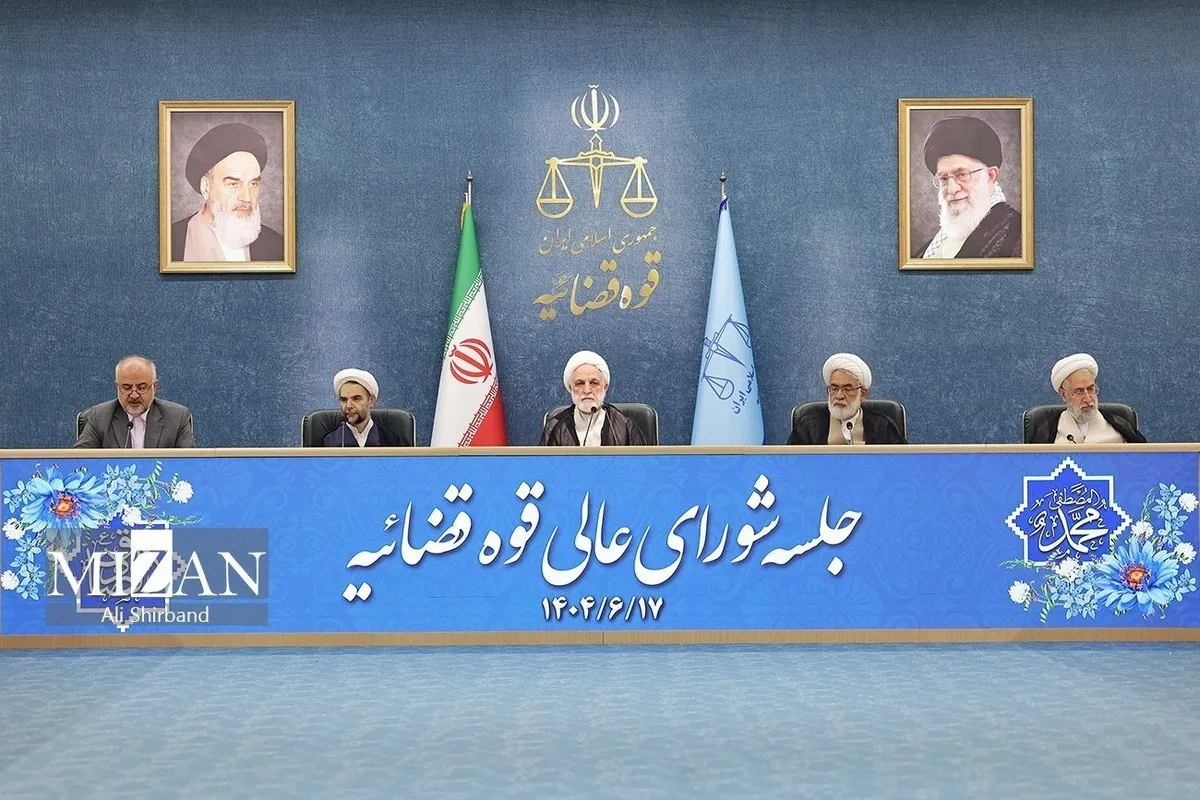
According to the Judiciary Media Center, Mohseni Ejei, in his remarks at the Supreme Council of the Judiciary session on Monday (September 17), commemorated Unity Week and the blessed birthdays of the Holy Prophet Muhammad (PBUH) and Imam Ja’far al-Sadiq (AS).
He said humanity today lives in an era of “modern ignorance,” trapped by predators such as the Zionists. This darkness, he added, is the result of turning away from divine prophets and the Messenger of Islam (PBUH). The tragedies unfolding in Gaza, Syria, and elsewhere in the Islamic and non-Islamic world, he said, reflect this modern ignorance and necessitate humanity’s return to the teachings of the Prophet (PBUH).
Addressing the legal and judicial follow-up on the explosion at Shahid Rajaee Port, Mohseni Ejei described the incident as extremely tragic and sorrowful but noted that in the four months since, significant actions have been taken. These include crisis management at the site, reactivation of the port, formation and handling of the judicial case, support for the families of the deceased and missing, compensation for the injured, financial redress for insured and uninsured vehicles, and relief for traders and economic actors.
He once again expressed condolences to the families of those killed in the explosion, stressing that no action or assistance can truly ease their grief. He urged all responsible authorities to take stronger measures to prevent such painful and devastating incidents in the future.
The Judiciary chief added that blood money (diyah) for all 58 victims has been secured. Payments for 55 of the deceased have already been transferred to their heirs, while the remaining 3 await the submission of necessary documents. In addition, further assistance has been provided to the families of the victims.
He noted that despite significant progress in handling the case, some work remains. Multiple agencies and legal/individual entities have been investigated, with many questioned. Based on expert findings, several institutions and individuals have been identified as at fault. While due process must continue, once finalized, accountability will be pursued against those found negligent, and actions will be taken proportionately against those guilty of carelessness. These developments, he stressed, must be transparently communicated to the public and followed through without undue delay.
Mohseni-Ejei thanked national and provincial officials for their crisis management, the reactivation of Shahid Rajaee Port in Hormozgan Province, and their roles in the legal and judicial processes. He made special mention of local judicial authorities, including the provincial chief justice and prosecutor, for their efforts.
He also referred to the recent remarks of the Supreme Leader during his meeting with the president and cabinet members, highlighting the Leader’s emphasis on unity and cohesion, both religious and national. Mohseni Ejei said the judiciary is also committed to supporting national unity, as strongly stressed in Islamic texts and traditions.
On economic matters, he reiterated the Leader’s call to improve the livelihood of the people. He warned that the enemy is betting heavily on economic pressure and hybrid warfare to paralyze Iran and stressed the need for urgent measures to improve living conditions and thwart the enemy’s designs. While regulating markets and tackling profiteering fall primarily to the government and regulatory bodies, the judiciary will provide support and will not allow opportunists to worsen people’s hardships or disrupt access to essential goods.
He urged the government to step up efforts to ensure essential goods are distributed via ration cards at fixed, affordable prices, especially for lower-income households.
On economic production, Mohseni Ejei stressed the judiciary’s key role in ensuring investment security and removing barriers to production. He instructed judicial officials to promptly resolve the legal problems of economic enterprises, avoid seizing production assets, and prevent unnecessary account freezes or detentions that could hinder businesses. He emphasized that both small and large production units must be shielded from disruptions, not only from closure but also from reduced output.
He added that while the government and Central Bank hold primary responsibility over liquidity and credit, the judiciary can also supervise proper allocation of loans. He called for strong support of export-oriented producers who face bureaucratic, customs, and legal hurdles in clearing goods and raw materials.
On market oversight, he noted that sharp price disparities between production and distribution points often lead to unjustified price hikes. He said these are management issues that cannot be blamed on sanctions, and insisted they can and must be controlled.
Regarding corruption, he vowed a comprehensive, uncompromising, and informed fight against those who obstruct production, exploit permits, or disrupt distribution of essential goods.
On security, he reaffirmed that the judiciary will never allow citizens to suffer both economic hardship and insecurity, pledging strong legal action against those who disrupt public safety, while supporting and guiding security and law enforcement agencies.
Finally, Mohseni Ejei emphasized judicial and legal pursuit of Zionist crimes, declaring that perpetrators of atrocities in Iran, Gaza, and elsewhere must be prosecuted. He said the judiciary will not neglect this responsibility domestically or internationally and will not allow time to obscure or erase these crimes.