Fake investigations: The Israeli regime’s method of whitewashing crimes
Nearly two years after Israel’s war on Gaza began, Prime Minister Benjamin Netanyahu and his cabinet face a long list of accusations of war crimes and crimes against humanity, including the perpetration of genocide against Palestinians.
Despite mounting evidence and global outrage, Israel has faced virtually no accountability, routinely shielded by unwavering U.S. support and diplomatic cover at the United Nations.
Each time public anger surges over blatant massacres, Israel pledges to investigate itself. Israeli officials typically claim that such incidents are reviewed, independently assessed, and resolved transparently.
But the reality tells a very different story.
Sham investigations
Since October 7, 2023, Israel has announced at least 52 investigations into separate incidents.
According to the London-based Action on Armed Violence (AOAV), 88% of these cases remain unresolved or were quietly closed. Only one case resulted in a prison sentence.
These 52 cases involved separate Israeli military attacks that reportedly killed at least 1,300 people, injured about 1,880, and included two cases of torture.
Out of 52 alleged war crimes, only 6 cases (12%) led to symbolic acknowledgments of wrongdoing, and just one resulted in a token prison sentence.
Experts note this pattern is nothing new.
Israel has a long history of so-called self-investigation, dating back at least to the 1956 Kafr Qasim massacre, when Israeli border police killed 49 Palestinian civilians for allegedly violating a curfew they had not even been informed about.
A handful of officers were convicted, but sentences were quickly reduced, and the perpetrators were released within a few years.
More recent wars—including the 2008–2009 Gaza war and the 2014 assault on the blockaded enclave—followed the same pattern: mass civilian casualties, international condemnation, prolonged or failed internal probes, and minimal accountability.
The most recent example occurred on August 25, 2024, when an airstrike on Nasser Hospital killed at least 20 people, including five journalists working for Reuters, AP, and Al Jazeera.
Netanyahu described the strike as a “tragic accident,” repeating the familiar formula of emotionless language in response to civilian deaths.
But how exactly does Israel investigate itself?
FFA: The Israeli regime’s whitewash mechanism
Israel’s main body for investigating alleged war crimes is the army’s Fact-Finding Assessment Mechanism (FFA).
Reports indicate that the FFA has consistently acted as a shield for the occupation rather than a tool for exposing violations.
Its stated purpose is to collect preliminary information on incidents where civilians may have been harmed and to determine whether full criminal investigations are warranted. In practice, however, it is run by officers within the Israeli military chain of command—not by independent civilians.
Palestinian victims or witnesses are rarely interviewed; the system relies almost exclusively on operational reports submitted by Israeli soldiers themselves.
Investigations are typically delayed for months or years, and many cases are quietly closed without meaningful review.
Human rights groups describe the FFA as a cover-up mechanism—a way for Israel to appear transparent while ensuring impunity.
AOAV reports that of at least 664 complaints submitted during previous Gaza conflicts, 542 (over 80%) were closed without criminal investigation. Only 19 led to official probes, and just one resulted in an indictment—yielding a prosecution rate of only 0.17%.
According to AOAV, the FFA functions less as an accountability tool and more as legal armor: delays are systemic, senior Israeli officials enjoy immunity, and broader military policies are never scrutinized.
The organization concluded: “We were struck by how opaque the internal investigation process was—possibly deliberately so—and by the suspicion that the outcomes were designed to protect the legitimacy of Israeli actions rather than to deliver justice.”
Overall, Israel’s system of self-investigation into military crimes amounts to little more than political theater. AOAV researchers Ian Overton and Loukas Tsantsoris wrote: “The figures reveal a system that broadly shields its forces from accountability, even in the most serious and public cases.”
Some cases still under investigation
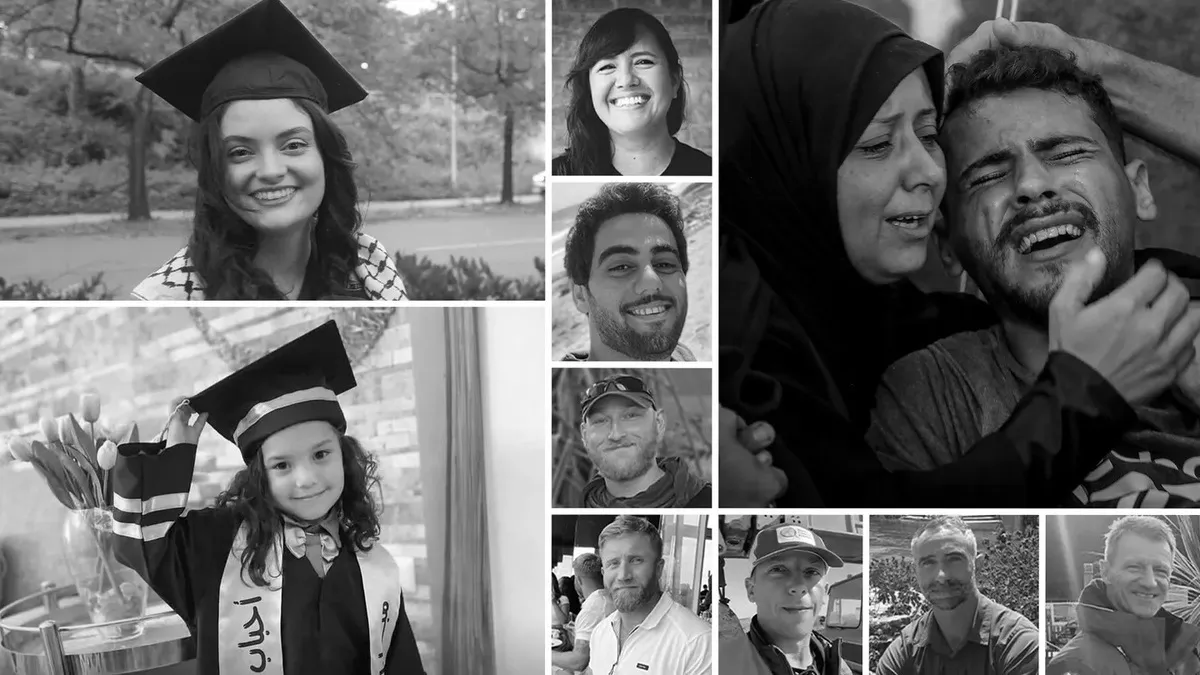
- January 2024: The killing of 6-year-old Hind Rajab in Gaza City. The attack highlighted the dangers faced by children in densely populated areas.
- February 2024: The deaths of at least 112 Palestinians waiting in line for flour in Gaza City. Civilians were struck by Israeli artillery at a UN food distribution site.
- April 2024: The killing of seven World Central Kitchen aid workers (from Australia, the UK, Poland, and Palestine) while delivering food in clearly marked vehicles. Their coordinates had been shared with Israeli forces beforehand. The Israeli army later called it a “grave mistake,” but no criminal charges were filed.
- May 2024: The strike on a displaced persons camp in Rafah that killed 45 civilians, mostly women and children. The camp had no links to military activity, raising serious questions about Israel’s rules of engagement.
- September 2024: The killing of Ayşe Nur Özge İygi, a 26-year-old American-Turkish activist, during a peaceful protest against Israeli settlements near Beita in the occupied West Bank. Initial findings suggested she was likely indirectly targeted by Israeli fire. Despite U.S. and Turkish pressure, the case remains unresolved.
Experts say Israel’s internal probes fall far short of international standards for independent and transparent war crimes investigations.
By fabricating the appearance of justice while ensuring impunity, Israel shields itself from external legal scrutiny—leaving victims without accountability.
With hundreds of unresolved cases, a near-zero prosecution rate, and high-profile massacres going unpunished, Israel’s cycle of impunity continues.