Voices buried under rubble: Journalism as a war crime in Gaza
On Wednesday morning, September 3th, 2025, news broke of the martyrdom of Ayman Haniyeh, a journalist and broadcast engineer from Gaza, following an Israeli airstrike near the Jordanian hospital in Gaza City.
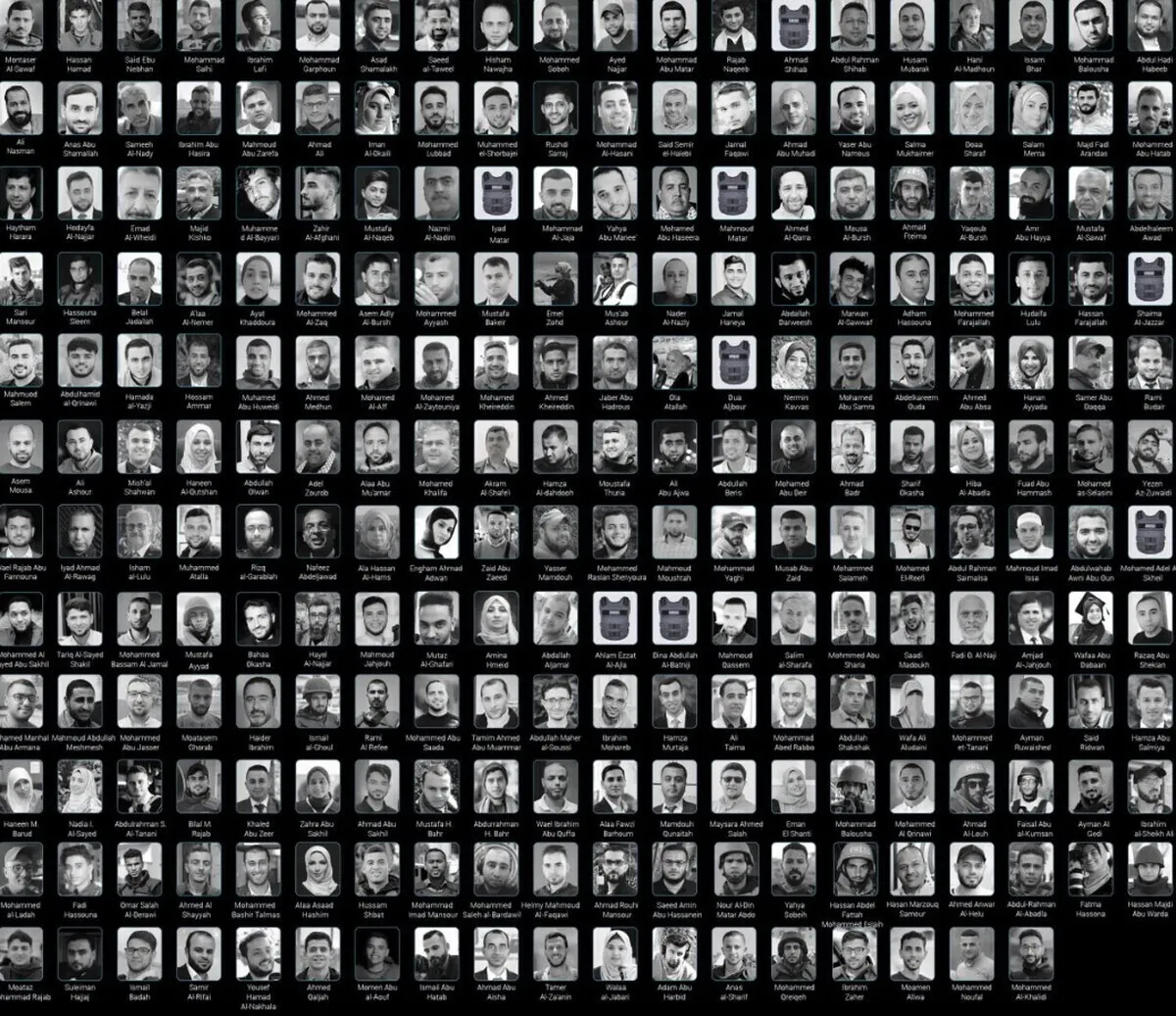
Haniyeh was the third journalist killed in the 24 hours leading up to Wednesday morning. According to statistics, since October 2023, the number of journalists martyred in Gaza has reached 249.
The Deadly campaign of journalist-killing in Gaza
The Guardian reported on the systematic massacre of journalists in Gaza by the Israeli regime.
According to the report, the ban on foreign media forced Palestinians to be the sole war correspondents, while the campaign of deliberate killings and silencing of journalists was part of a premeditated plan.
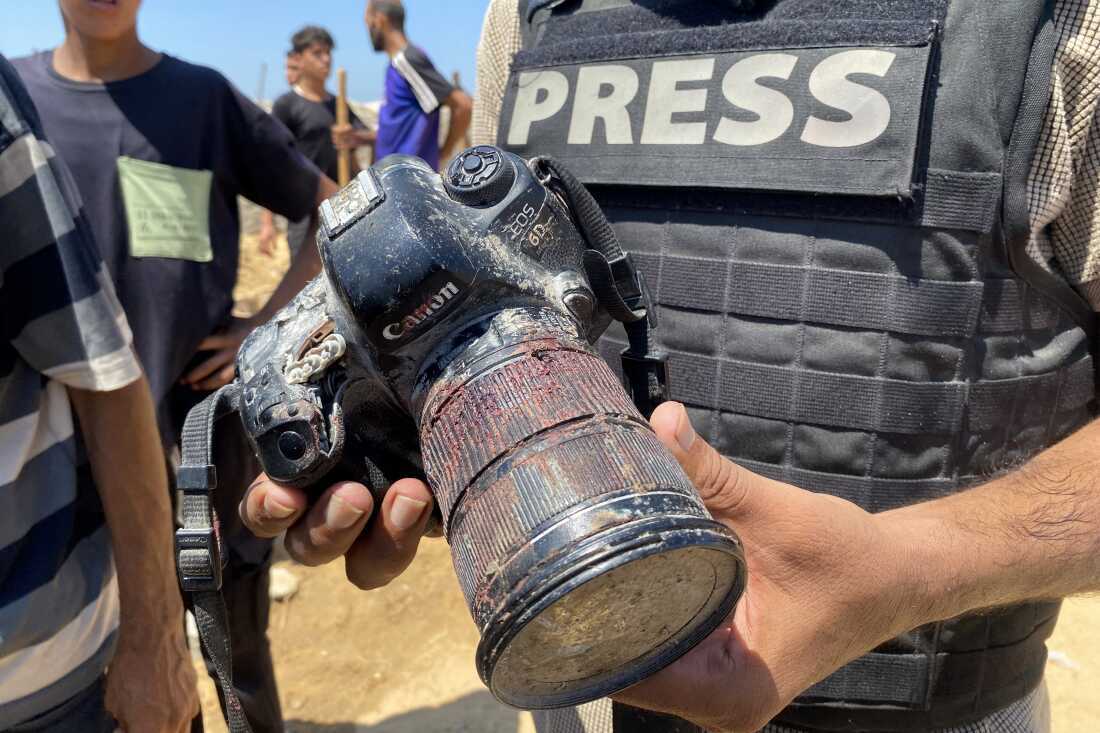
Over the past 22 months, the Gaza war has become the deadliest conflict for journalists in history.
Last week, five Palestinian journalists — Hussam al-Masri, Maryam Abu Deqqa, Muhammad Salama, Ahmad Abu Aziz, and Mu’az Abu Taha — were killed in a double Israeli strike on Nasser Hospital. According to the Committee to Protect Journalists (CPJ), the total number of journalists and media workers killed in the Gaza war stands at least 189.
Other figures report higher numbers: the Gaza Media Center and other Palestinian media groups put the toll at 238, while the UN Human Rights Office cites 247.
Just a week earlier, four Al Jazeera journalists and two freelancers were massacred in a targeted Israeli attack on their tent outside al-Shifa Hospital in Gaza City.
Following this crime, the Israeli army falsely accused Al Jazeera journalist Anas al-Sharif, announcing that he had been deliberately assassinated despite having reported continuously since the start of the war.
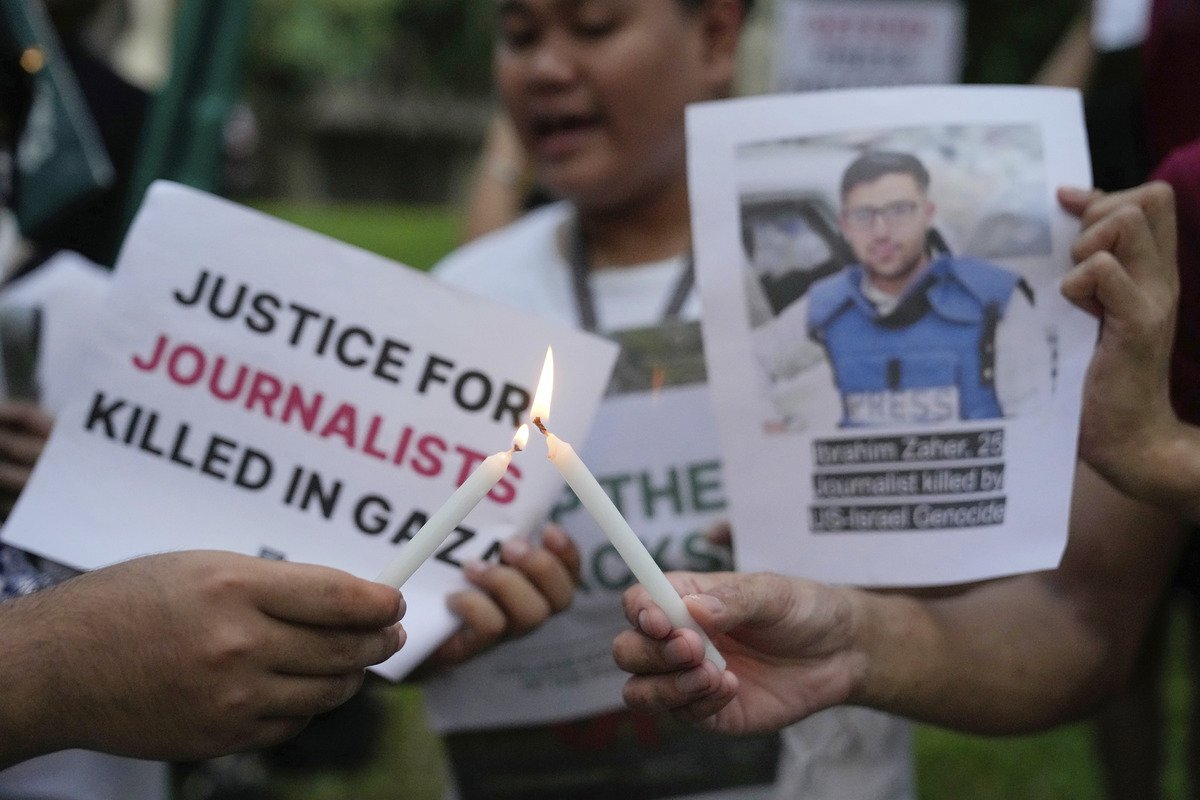
Israel has blocked international journalists from entering Gaza and has dismantled its media community. According to international law, journalists are considered civilians, but the CPJ stated that Israel is engaged in “the deadliest and most deliberate attempt to kill and silence journalists ever documented by the committee.”
The CPJ also reported: “Palestinian journalists are threatened, directly targeted, and killed by Israeli forces. They are arbitrarily arrested and tortured in retaliation for their work. By silencing the media — those who document and bear witness — Israel is silencing the war itself.”
Calls for immediate investigation
The International Federation of Journalists (IFJ) and the Palestinian Journalists’ Syndicate (PJS) condemned the ongoing killings and continuous assaults on journalists in Gaza.
The IFJ also called for an immediate investigation into this massacre.
The Gaza Government Media Office has repeatedly condemned Israel’s deliberate targeting of Palestinian journalists and media workers, describing it as a systematic campaign against the press.
It urged the IFJ, the Arab Journalists’ Union, and press institutions worldwide to denounce these crimes and demand international accountability for Israel.
An endless list
According to TRT, Palestinian journalist Hussam Marouf, in a note reflecting on the massacre of over 245 of his colleagues over the past 22 months, wrote:
“Every morning when I wake up to the sound of drones flying overhead, I ask myself: on what day will my name be added to the ever-growing list of martyred journalists in Gaza?”
Excerpts of his note read:
“Since October 2023, more than 245 of my colleagues have been killed; some were shot despite wearing press vests, others crushed under rubble at home with their families. I knew many of them — they were not just numbers.
When news came of Ismail Abu Hatab’s martyrdom, I had no words, not even tears. What I felt instead was a vast emptiness, as if part of me was buried with him.
The message of this war is clear: this is not only a war on Gaza, but a war on journalism itself. From where I sit, under Israeli bombardment, I cannot see solidarity with Gaza’s journalists as anything more than a passing trend. Headlines and black banners may last a day; the killing of my colleagues never stops.
Compare this with Ukraine, where the death of just a few journalists led to international investigations, major coverage in Western media, and urgent calls for justice. The contrast is stark: Western blood seems to weigh more. Our deaths in Gaza vanish in the back pages, while in Ukraine each killing echoes in parliaments, newsrooms, and human rights courts. We feel abandoned, as if our suffering means nothing.
Maybe I will not live to see tomorrow. Perhaps this will be my last note. But to remain silent would mean collaborating in my own erasure. My colleagues died trying to prevent the extinction of our narrative. I owe them to keep writing, filming, and speaking.
Without us, who will document the famine, the war crimes, the genocide? Without us, who will speak for those buried beneath Gaza’s ruins? If all Gaza’s journalists are killed, it is not only our voices that will die — history itself will.”
Journalists in Gaza: “our lives feel worthless”
According to ABC, journalists in Gaza feel their blood is cheap and their lives worthless.
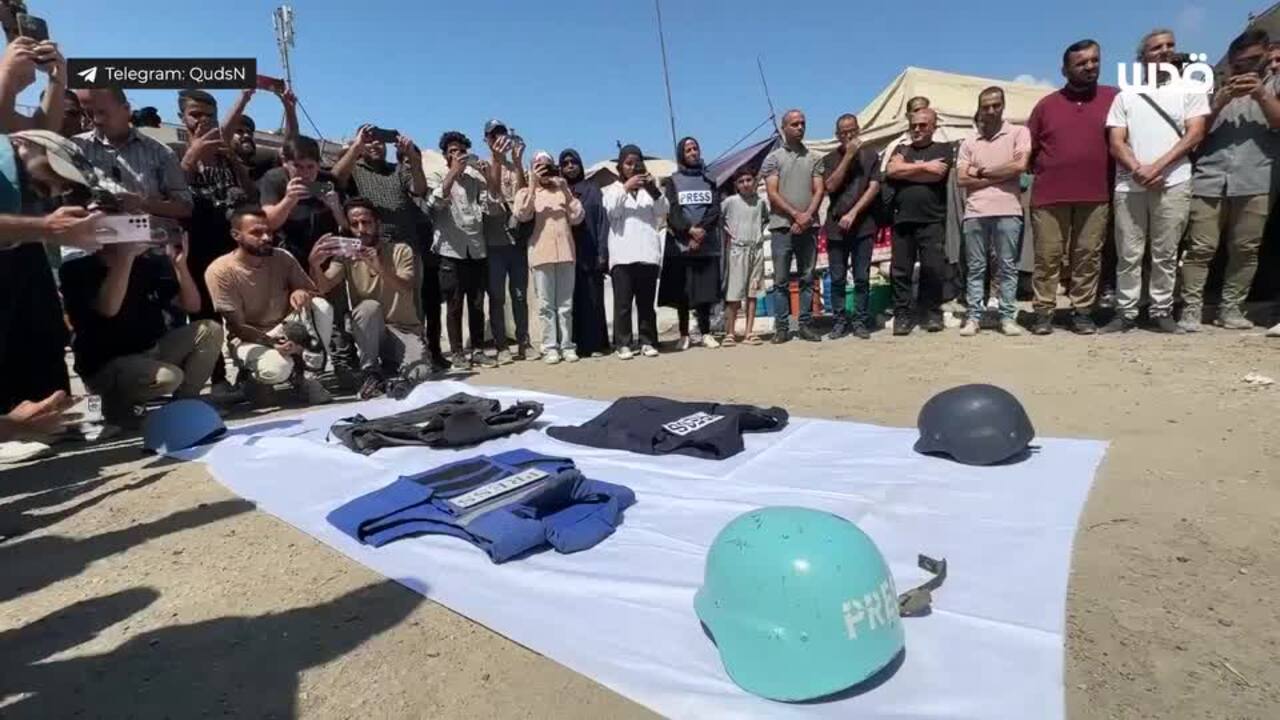
They stress that unlike in other wars, where press vests and helmets are symbols to ward off fire — as required under international law — in Gaza these protections mean nothing.
Addressing their colleagues in Western media, they emphasize: “For you, we are only a headline, a tragedy to consume, not fellow journalists to defend.”
In Gaza, most journalists work in tents near hospitals, relying on their electricity and internet for reporting. These hospitals were once thought to offer relative safety, but over the past 22 months they have been repeatedly bombed by Israel.
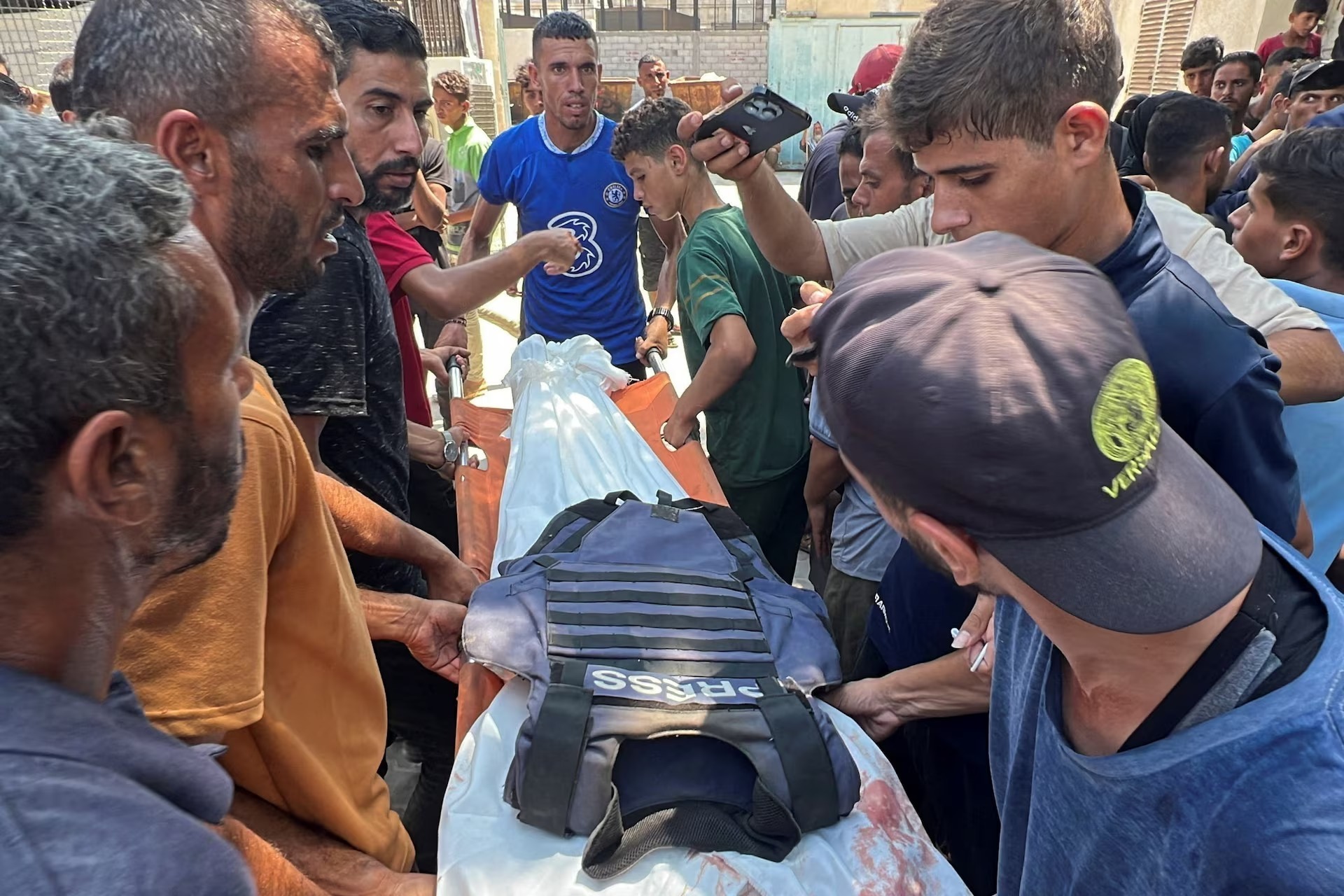
The recent Israeli strike on Nasser Hospital killed five journalists. Reports indicate the hospital was targeted twice — the second strike hitting as journalists and medics arrived to evacuate the wounded and the dead.
International law experts describe such “double-tap” strikes as war crimes, as they violate the 1949 Geneva Conventions, which prohibit targeting civilians and the wounded.
The CPJ has called for an independent investigation into these attacks as “clear war crimes.”
Jodie Ginsberg, executive director of the CPJ, stated: “Israel’s initial report does not explain why an Israeli tank fired at Reuters cameraman Hussam al-Masri, whose camera was clearly visible and broadcasting live for weeks from that location. Nor does it explain why first responders, including journalists, were targeted in a so-called ‘second strike’ at the very same site.”
According to the CPJ, in the past 20 years, no one in the Israeli military has ever been held accountable for killing Palestinian journalists.
In May 2023, the CPJ reported that Israel has shown a “deadly pattern” of using lethal force against journalists and has consistently failed to hold perpetrators accountable.