Albania’s criminal investigation into the Monafeghin
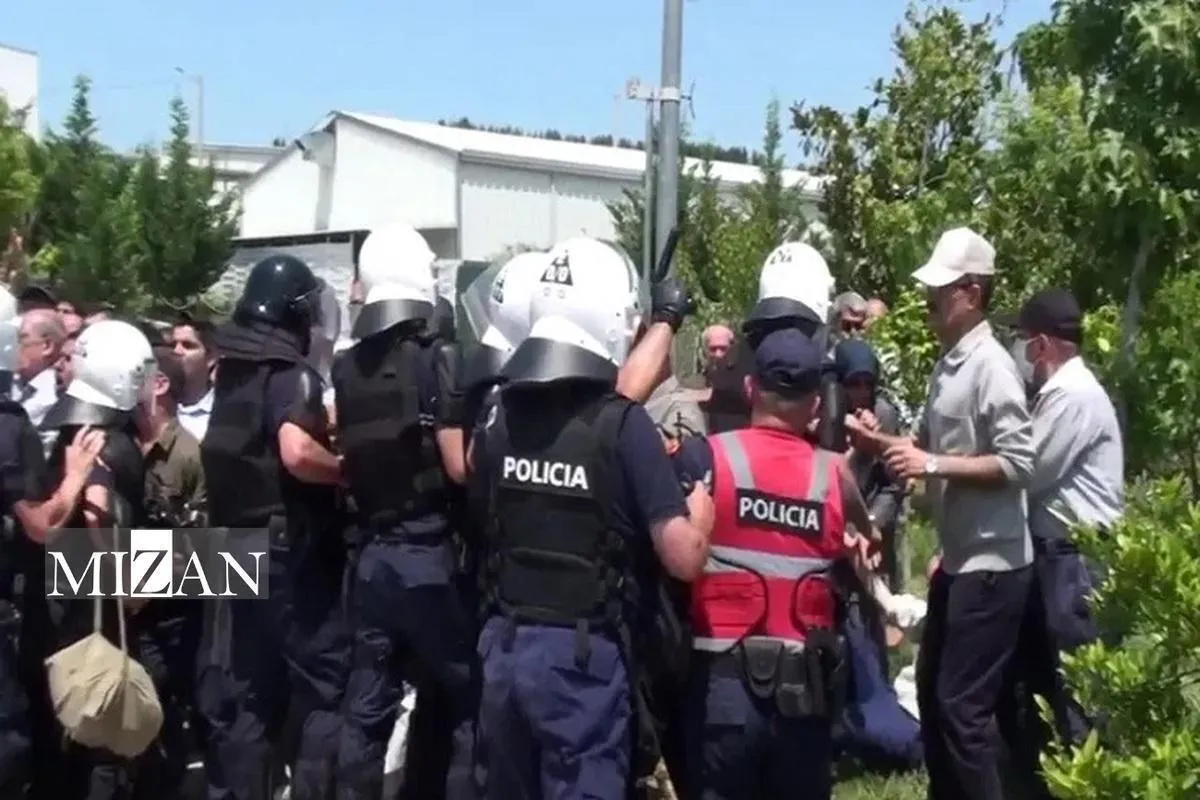
Hosting the Monafeghin has become a serious domestic security challenge for Albania. Albanian and Balkan media reports, focusing on the evolution of the Monafeghin’s relationship with the Albanian government, emphasize that the group has posed significant internal security issues for Tirana.
Balkan Insight, a regional news agency, reported that Albania’s criminal investigation into the Monafeghin continues. According to the report, while hosting the Monafeghin has never been easy, the situation has now escalated to formal criminal investigations. Albania claims that the Monafeghin violated its agreement to refrain from political activity, leading to the group being investigated on suspicion of cybercrimes and incitement to war.
Experts say this is not surprising and reflects Albania’s failure to monitor the Monafeghin’s activities effectively.
Albanian media outlet Balkan Web published a report titled “From Hosting to Criminal Investigations,” detailing the history of the Monafeghin in Albania and the challenges the country faces in enforcing the law and managing domestic security risks arising from the group’s illegal and criminal activities.
The report notes that Albania has hosted the Monafeghin since 2013. Over the past two years, Albanian law enforcement agencies have been involved in complex investigations into Monafeghin members accused of conducting cyberattacks against Iran, in violation of the humanitarian protection agreement granted to them in Albania.
In early 2023, Albania’s cybercrime and counterterrorism police launched joint investigations into Monafeghin members suspected of engaging in political activity and cyberattacks against Iran. These investigations initially involved monitoring social media and, by court order, led on June 20, 2023, to a search and inspection operation at Ashraf 3, the Monafeghin’s camp in Manza-Durrës.
The police operation at the Manza camp faced resistance and clashes from the Monafeghin, resulting in 15 police officers and 21 Monafeghin members being injured. By the end of the operation, 96 computers, dozens of laptops and tablets, and numerous documents were confiscated, some of which Monafeghin members attempted unsuccessfully to destroy by fire.
The police described the operation as a necessary measure to minimize the group’s threat to Albania’s national security.
According to the report, Albania’s Special Prosecutor’s Office is examining the Monafeghin members’ alleged criminal acts, including incitement to war, illegal interception of computer data, and interference with computer systems.
Vladimir Mara, the prosecutor handling the case, stated: “We are in the stage of continuing deep investigations, mainly reviewing hundreds of confiscated devices. I can confirm that international partners are also participating in these investigations.”
Currently, Albania hosts about 2,500 Monafeghin members—also referred to as a cult—at Ashraf 3. While their protection status remains unchanged, Albania’s Ministry of Interior has said that requests to extend their residency permits are being considered on a case-by-case basis, given the long-term security risks of hosting the group.
International relations analyst Andri Tefani noted that Albania was aware of the risks of the Monafeghin’s political activities from the outset but has been unable to keep them under control.
Lawyer and expert Redi Klici added that Albania accepted the Monafeghin mainly for humanitarian reasons, under pressure from the U.S. and the United Nations. However, the lack of advanced security infrastructure and monitoring capacity for the camp has created challenges. He emphasized that Albania cannot manage this sensitive situation alone, and any decisions require coordination with the U.S. and the UN.
Tefani further stressed that Albania lacks a clear strategy for handling the Monafeghin, especially after allowing the group to build a separate city, which complicates their integration into Albanian society. He concluded that Albania is now in a strategic deadlock regarding the group.