Head of the Judiciary: Officials must personally witness issues and challenges through field visits / We strongly need to expand the space for dialogue in our society / The Judiciary is open to criticism
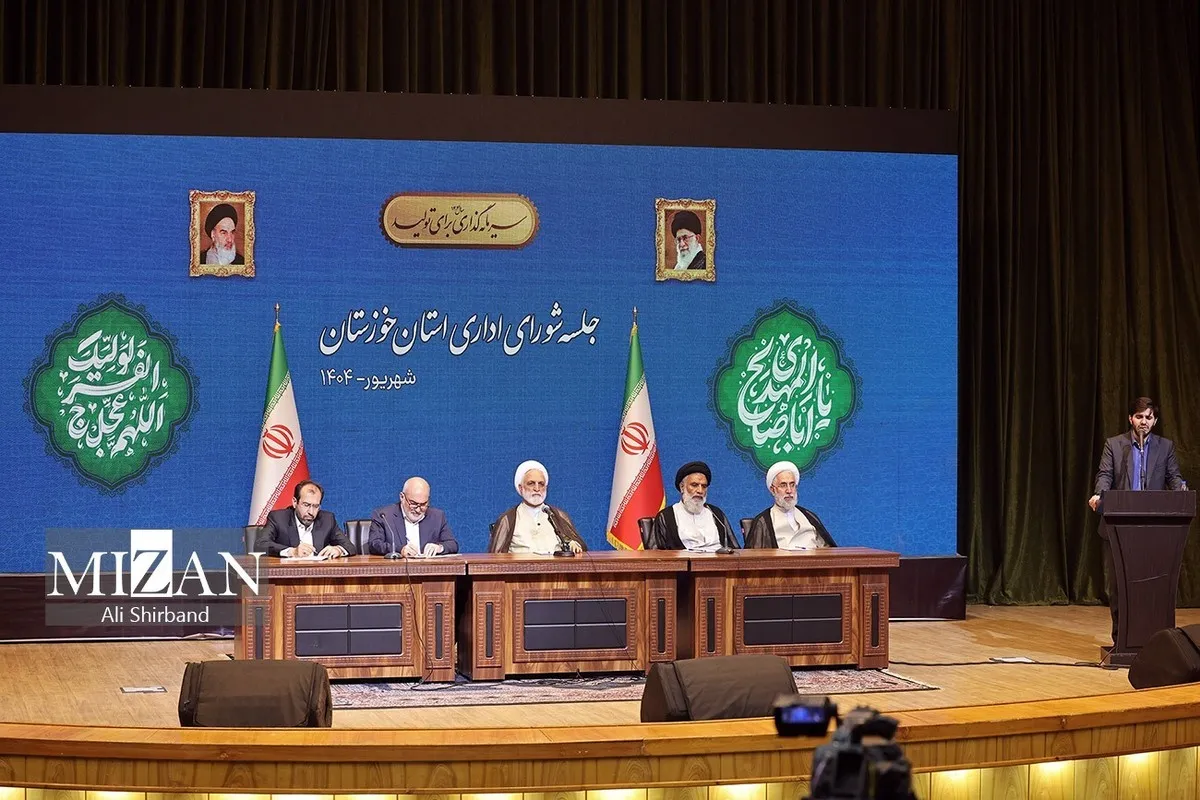
According to the Judiciary’s Media Center, on the morning of Tuesday, September 2, Gholamhossein Mohseni-Ejei, during his 43rd provincial trip since assuming office, made an unofficial and unannounced visit to Khuzestan Province accompanied by senior judicial officials.
During this trip, the Head of the Judiciary and other top judicial authorities will hold programs aimed at addressing the legal and judicial issues of the people of Khuzestan.
Meeting with judges, officials, and local elites, as well as following up on the implementation of resolutions from the previous visit of the high-ranking judicial delegation to Khuzestan, are among the scheduled plans of the Head of the Judiciary during this trip.
According to the Judiciary Media Center, during his trip to Ahvaz, Judiciary Chief Mohseni-Ejei visited the exhibition “Narrative of Transformation in the Judiciary of Khuzestan Province.”
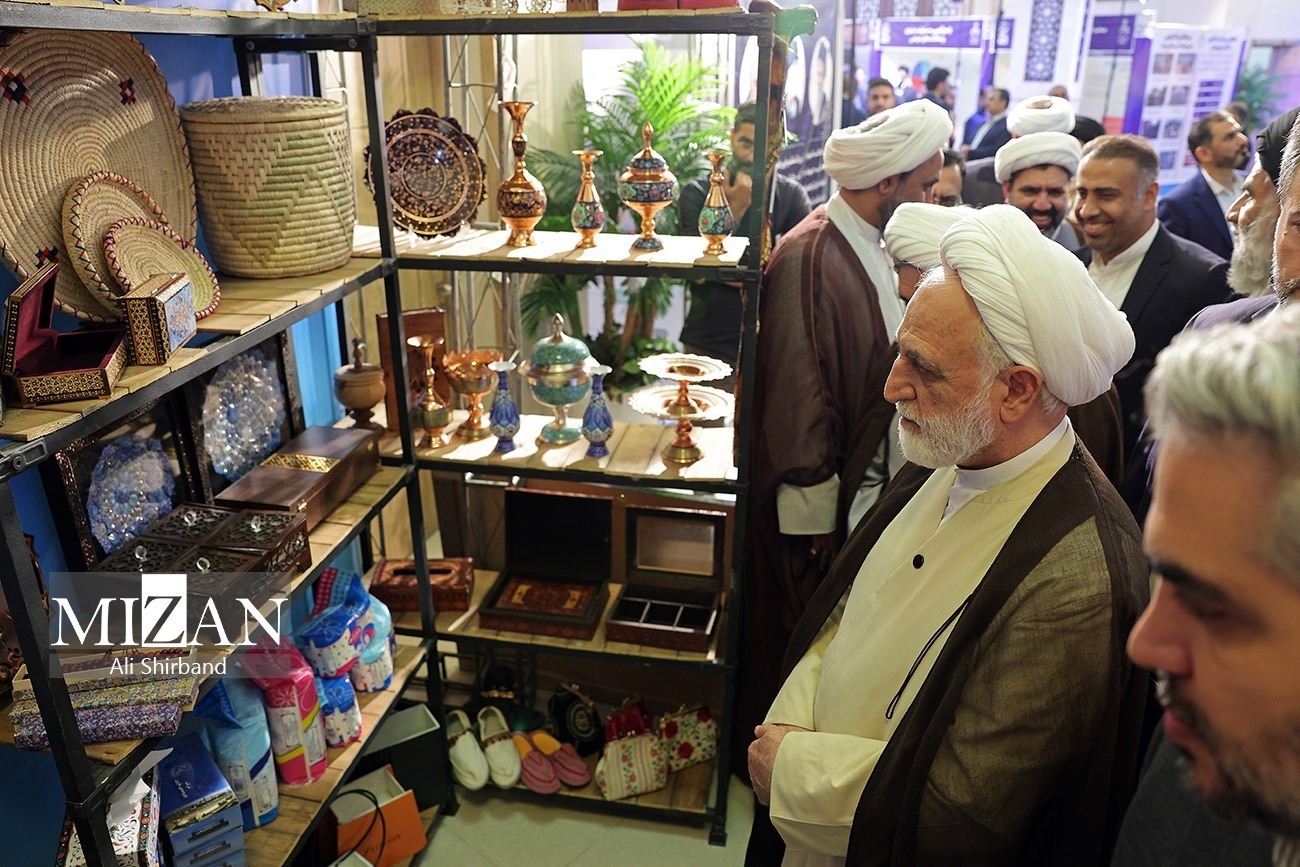
During this visit, the directors of three petrochemical companies—Abadan, Arvand, and Hegmataneh—expressed appreciation for the judiciary’s efforts in helping revive production in their enterprises.
Details were also provided on the collection of more than 270 trillion rials in pollution levies since the beginning of 2021, with the Judiciary Chief stressing that these funds must be spent in line with safeguarding public rights.
Speaking at a meeting of the Khuzestan Provincial Administrative Council, Mohseni-Ejei stated: “Officials must personally witness issues and challenges through on-the-ground visits. My emphasis on attending provincial administrative council meetings during our trips is precisely because it allows us to directly connect with provincial officials who are actively engaged in serving the people and addressing the country’s problems, and to listen to their viewpoints.”
The Judiciary Chief further noted: “Delegating applicable powers to provincial officials has significant benefits. Since the beginning of the administration, I have advised the president on this matter. I believe that provincial officials, due to their deep understanding of local issues and capacities, can provide more effective insights for resolving the problems of their provinces.”
He concluded by emphasizing: “We in the judiciary welcome the expansion of alternative sentences to imprisonment, and we have already devised plans and measures to achieve this.”
According to the Judiciary’s Media Center, Gholamhossein Mohseni-Ejei, during his visit to Ahvaz, met with various segments of the people of Khuzestan Province. In his remarks, he stated that a significant number of provincial managers are local to Khuzestan and emphasized: “Having local managers can positively impact the resolution of the province’s problems, as they have greater insight into the issues and challenges of their region. However, being local is not enough; these managers must also possess commitment and expertise. Additionally, a local manager should not show preferential treatment toward their own community or ethnic group.”
The Head of the Judiciary continued, with applause from the audience: “To address the legal and judicial issues of Khuzestan and other matters connected to legal and judicial concerns, I delegate my relevant authorities to the Chief Justice of Khuzestan Province.”
He added: “Provincial managers should strive to reach a consensus on the issues and challenges of the province. When managers are united on a matter, in over 80% of cases, central authorities respect that unified view and provide the necessary directives and funding. Conversely, when managers are divided, the central authorities rely on their own expertise.”
The Chief Justice stressed the importance of leveraging public capacities: “Using public capacities to resolve legal and judicial issues is essential. Both my belief and experience show that the more we involve the public, the more cost-effective and fruitful the outcomes. When a case goes to court, conflict arises and parties are reluctant to compromise. But when matters are resolved through reconciliation, animosities fade, and social harmony strengthens.”
He continued: “In every region and among all communities, elders and influential figures should commit to peace and mediation in sacred spaces such as mosques and religious gatherings. They can be confident that the Judiciary will fully support them.”
Mohseni-Ejei stated: “Today, we urgently need to expand the space for dialogue in our society. Enemies and malicious forces focus all their energy on creating divisions among us. Differences in taste, thought, and even belief do not contradict peaceful coexistence. Despite these differences, we can live together peacefully and frustrate the enemy’s objectives. From my legal position, I use every opportunity to promote dialogue in society, and I consider this a necessity.”
He emphasized: “We must strengthen the productive, industrial, and economic sectors in the country and work to remove obstacles to production. Prosperity and wealth creation in society make the enemy’s attacks ineffective. The Judiciary is determined to support economic growth and production, and within the framework of the law, we will assist the government, producers, businesspeople, industrialists, and farmers.”
The Chief Justice concluded: “All citizens are equal before the law. The Judiciary treats everyone equally and does not allow any discrimination. However, some people cannot afford a lawyer, cannot refer their case to an expert, or cannot personally appear in court or file petitions. These individuals will receive special support from the Judiciary, and we will do our utmost to resolve their legal and judicial issues.”
According to the Judiciary’s Media Center, Mohseni-Ejei, in a meeting with Khuzestan judicial staff in Ahvaz, stated: “Today, the enemies of the Islamic Republic have intensified their efforts to harm our country. They have witnessed the greatness of Islamic Iran and are angered by this strength and authority. The enemy has entered the field with all its tools and forces; therefore, we must be very cautious about hypocrisy, infiltration, and other schemes and plots of the enemy. We must seriously work on strengthening national unity and cohesion, and recall that it was precisely this unity and cohesion that played such a decisive role in our recent Sacred Defense.”
The Head of the Judiciary stressed: “We, as officials and servants of the system, must never become detached from the people and must never forget, under any circumstances, to serve them sincerely without expectation. The enemy has heavily invested in trying—falsely—to separate the people from the system, and we must foil this conspiracy.”
He continued: “Khuzestan is a province with an ancient history and a proud people. The people of Khuzestan deserve service without condition. If we fall short in serving these courageous people, we cannot forgive ourselves.”
The Chief Justice added: “In Khuzestan, as in other provinces, there are problems, some of which have unfortunately become chronic. But we must note that merely talking about problems without offering ways and solutions does not resolve anything. In the Judiciary, we welcome criticism, and at the same time, we ask critics to provide solutions as well. They can rest assured that the proposed solutions will be carefully examined and considered.”
He emphasized: “Judicial officials across the country should make the implementation of the ‘Document of Transformation and Excellence’ their priority. This document is not a divine revelation, but it has been formed based on expert consensus and efforts to make it as comprehensive and complete as possible. A follow-up committee has been established for its implementation, and the path for amending it is also open. Our focus is to fix any shortcomings in the Transformation and Excellence Document.”
Mohseni-Ejei further stated: “All judicial officials across the country, particularly in Khuzestan, must make special efforts to reduce the inflow of cases into the judiciary. Because no matter how much we increase the number of judges or improve the facilities and equipment of the Judiciary, if the current volume of incoming cases remains, we will still lag behind in timely handling of affairs. The current workload of our judges is very heavy, and special measures must be taken to reduce this burden.”
The Head of the Judiciary added: “I have repeatedly emphasized, and emphasize again, that all of us in the Judiciary must treat applicants and visitors with good manners and respect. This conduct undoubtedly has an educational impact, and at times, such respectful behavior has a greater effect than even our rulings and judgments.”
He continued: “Our constant effort has been to release convicts whose continued imprisonment is not necessary. At the same time, we insist that no criminals or individuals whose release would endanger the physical and psychological security of society be freed.”
The Chief Justice stated: “We also continuously stress to prosecutorial authorities that they must not issue bail and precautionary orders in such a way that defendants are unable to provide them, leading to their imprisonment in cases where incarceration is not necessary—even if only for one night.”