American Conservative: The E3 hypothesis to trigger the snapback mechanism is a distortion of history
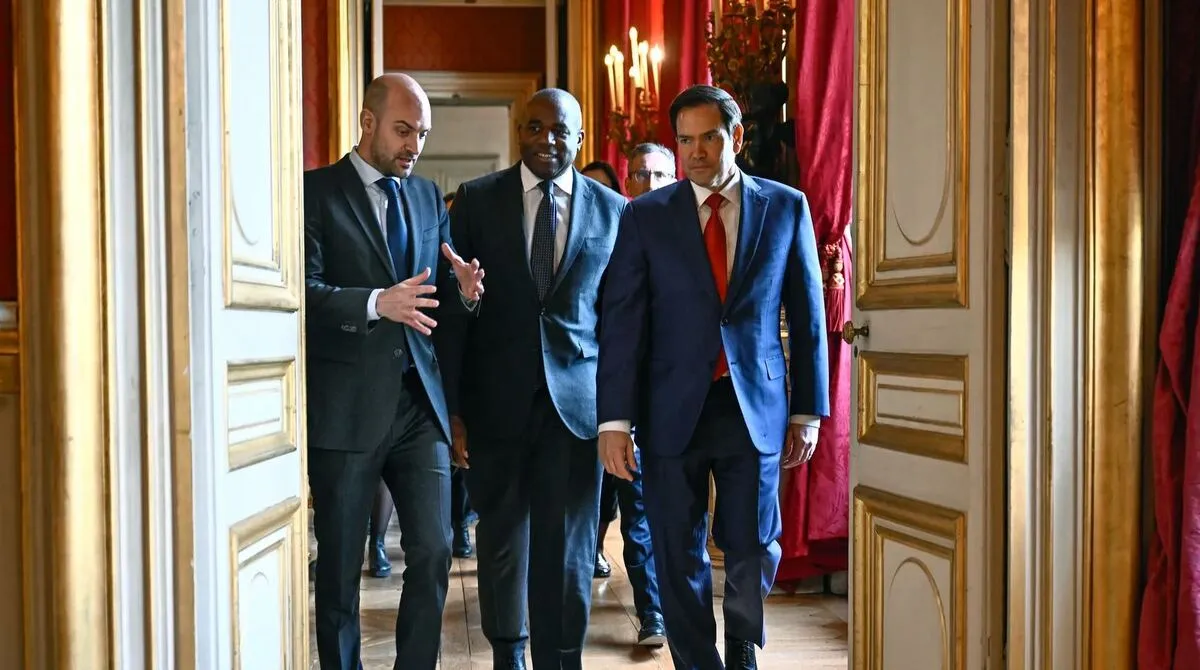
The European Troika, consisting of France, Germany, and the UK, triggered the snapback mechanism last Thursday, starting a 30-day countdown to automatically restore UN Security Council sanctions on Iran.
This action was immediately met with strong approval from Washington; US Secretary of State Marco Rubio stated that the three European countries have begun a process to reimpose UN sanctions on Iran.
Regardless of the US withdrawal from the nuclear deal, he claimed that the return of sanctions is a direct response to Iran's continued defiance of its nuclear commitments. The US supports the decision of the three European countries and calls on Iran to participate in serious diplomatic negotiations.
French Foreign Minister Jean-Noël Barrow also claimed that this action does not mean the “end of diplomacy,” but an attempt to force Iran to negotiate.
According to the American Conservative think tank, this is a dangerous fantasy; the main premise of the European 3’s action that Iran is the only violator of the agreement is a profound distortion of history.
It was the United States that first withdrew from the agreement in 2018 and inflicted economic damage on Iran through the maximum pressure campaign launched by the Trump administration; at that time, the European 3 (E3) countries issued political statements in support of the agreement, but did not back them up with actions that respected their own commitments, and instead effectively aligned themselves with Washington’s extraterritorial sanctions against Iran.
Faced with this failure of the Europeans to adhere to their commitments, Tehran took action of its own.
Russia, another signatory to the JCPOA, similarly believes that the three European countries have lost their legal right to use the trigger mechanism.
A senior Russian diplomat told The American Conservative that Moscow views some of the Europeans’ actions as unilateral violations of the agreement, such as the EU’s extension of an arms embargo on Iran, which was due to expire in October 2023.
The diplomat argued that such actions violate the terms of the JCPOA and UN Security Council Resolution 2231, which made it international law.
This criticism reflects a perception of the deep hypocrisy and illegality at the heart of the E3 action.
Of course, this is the latest Western move on Iran that is increasing tensions and undermining international law; the US and Israeli aggression against Iran during the 12-day war destroyed the last vestiges of trust and led to Tehran expelling the International Atomic Energy Agency inspectors.
However, the E3 move was not at all surprising; after all, the three European countries and the European Union blamed Iran for the attacks on the occupied territories; German Chancellor Friedrich Mertz even praised the Israeli regime for its aggression against Iran.