Special directives and recommendations of the Head of the Judiciary to prevent delays in court proceedings
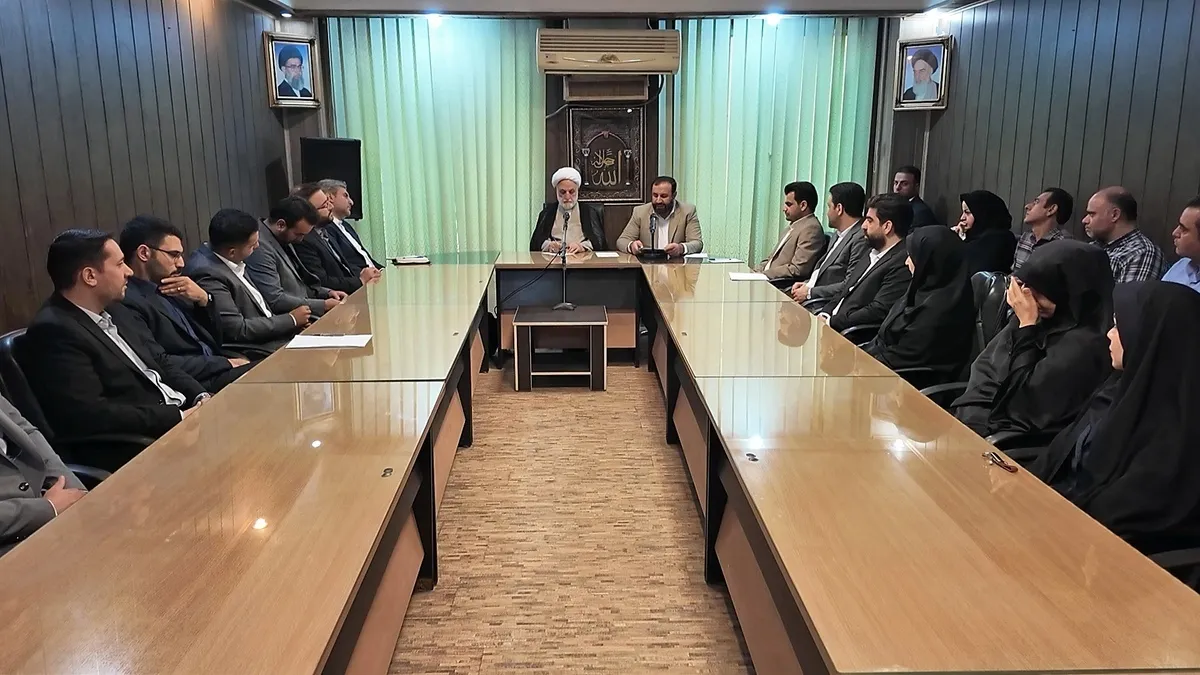
According to the Judiciary’s Media Center, Mohseni Ejei, continuing his on-site and problem-oriented visits to judicial bodies and institutions, attended one of Tehran’s prosecutor’s offices for the fourth time in the past 70 days. He visited the District 3 Prosecutor’s Office of Tehran, personally reviewed the handling of cases there, and examined in detail a number of files while giving specialized recommendations regarding their progress.
During his inspection of the branches of this prosecutor’s office, the Head of the Judiciary held close discussions with relevant judicial officials, studied several cases in detail, and provided expert guidance to improve the speed and quality of the proceedings.
Addressing the judges and staff of District 3 Prosecutor’s Office, Ejei stressed that final judicial rulings must always be executed. “It is unacceptable for even one final judgment to remain unenforced without valid justification,” he said.
The Chief Justice further emphasized that all responsible judicial authorities must give special attention to the resolution of old and pending cases that have remained open for a long time.
Referring to the role of expert opinions in judicial cases, Ejei stated: “We must eliminate all causes of delays in trials. One such cause is the late arrival of expert reports in some cases. Therefore, my firm instruction to judges is not to refer every case to an expert. First, they must carefully examine whether the referral is truly necessary. Even if one of the parties insists on such a referral, it should not be granted unless expert evaluation is essential to uncovering the truth.”
He also noted that when cases with political, social, or other public implications are being handled, the Judiciary’s Media Center must be kept informed not only at the stage of issuing verdicts but also before and after, in accordance with existing regulations. “This is necessary because some cases may attract controversy, and addressing those distractions could waste the time of judicial bodies and hinder the swift handling of other cases,” he added.
Ejei once again underlined the importance of respectful treatment of the public, saying: “I fully acknowledge the difficulty of working in prosecutor’s offices—I have myself served in various positions there, and I know that sometimes one must have the patience of Job. Yet despite all the challenges, it remains imperative to treat the people and all visitors to the judiciary with utmost courtesy and humility.”
The Head of the Judiciary also instructed judges to adopt measures that avoid unnecessary detention of suspects. “When it is possible to release a defendant on bail, why should we send them to a detention center, even for just one hour? Sometimes even a single night in prison can have serious negative consequences for a person’s life.”
He added that judges must guide law enforcement officers on how to properly arrest suspects. While in some cases handcuffing may be necessary, it is certainly not required in all situations, nor should it always be done in front of a suspect’s family or neighbors.
Regarding searches of suspects’ homes, Ejei emphasized strict respect for the rights of the suspect and family members. “During searches, data-x-items that are unnecessary for the case must not be confiscated. For example, if the charges do not justify it, a suspect’s personal computer should not be seized. And if personal or electronic data-x-items must be taken, they should be returned as soon as the investigative necessity ends.”
He also raised concerns over the seizure of vehicles: “While it is commendable that authorities are working to resolve the status of confiscated vehicles, we must ask whether such seizures were truly necessary in the first place. Why should vehicles that do not need to be impounded be seized, only to later declare that a certain number of cases have been settled? Our principle must be: if there is no necessity, no vehicle should be impounded; and if seized out of necessity, it must be released immediately once that necessity no longer exists. These matters carry responsibility for us both in this world and in the hereafter.”