Financial Times: Putin offers territorial deal to end war
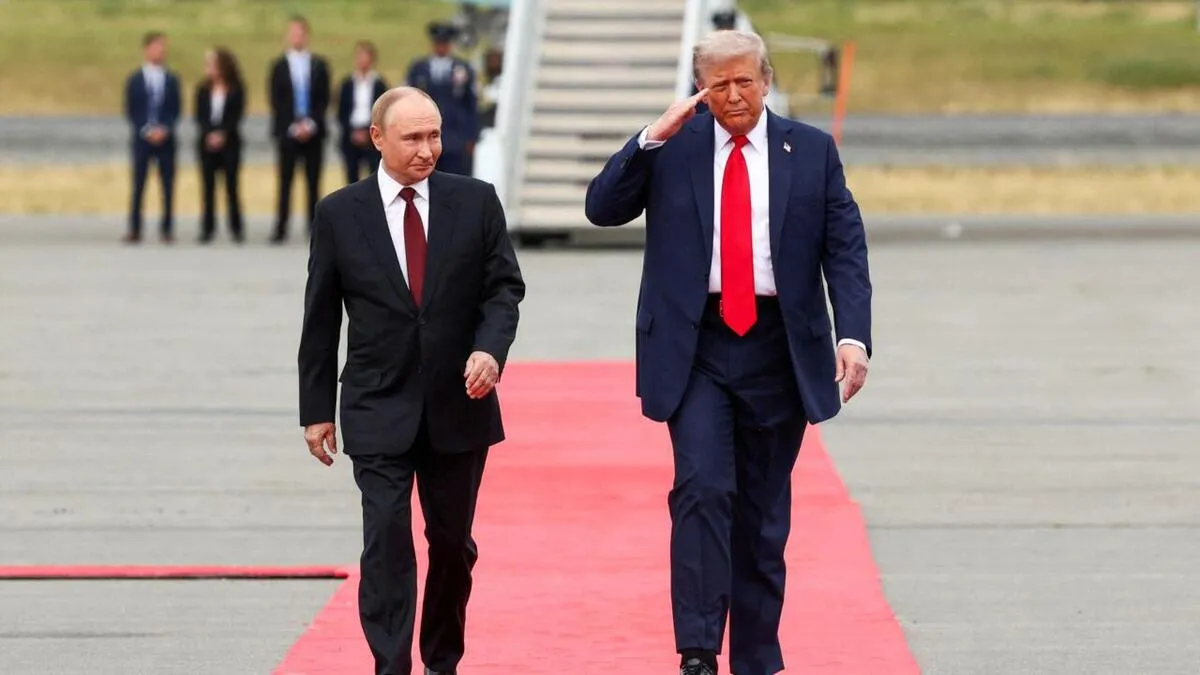
The UK-based Financial Times examined the outcomes and implications of the recent meeting between Russian President Vladimir Putin and U.S. President Donald Trump, reporting that during the talks Putin demanded Ukraine’s withdrawal from eastern Donetsk as a condition to end the war. However, he also showed limited signs of flexibility on other territorial issues.
Citing four informed sources, Financial Times wrote that Putin told Trump he was ready to freeze the frontline in other areas if his demand on Donetsk was met. Following the conversation, Trump relayed Putin’s message to Ukrainian President Volodymyr Zelensky and European leaders via a phone call, urging them to stop pressing Moscow for a ceasefire, arguing that only a peace agreement—not temporary truces—could end the conflict.
The paper noted that such a move would give Moscow full control over Donetsk, a region parts of which it has held for over a decade and where Russian forces are now advancing at unprecedented speed. In return, Putin reportedly said he would freeze the frontlines in Kherson and Zaporizhzhia and refrain from launching fresh offensives to seize additional territory.
The report stressed that Putin has not backed down from his broader demands of addressing the “root causes” of the conflict—demands which, according to Financial Times, would effectively mean the end of Ukraine’s current sovereignty and a rollback of NATO’s expansion. Still, the article added that Putin may be willing to compromise on certain territorial issues if these core demands are met.
The UK outlet also reported that Russian forces currently control about 70% of Donetsk, but western parts of the region remain under Ukrainian control and are vital for Kyiv’s defensive operations. Sources close to Zelensky said he is unwilling to surrender Donetsk but may be open to discussing territorial issues with Trump in Washington, and possibly even in a proposed trilateral summit with Putin.
According to the newspaper, the Alaska summit’s failure to achieve a ceasefire and Trump’s willingness to consider territorial concessions has reignited deep concern among European leaders, who were already alarmed when Trump first raised the possibility of a “land swap.”