Widespread impact of Iranian missiles: Education and security under pressure in Israel
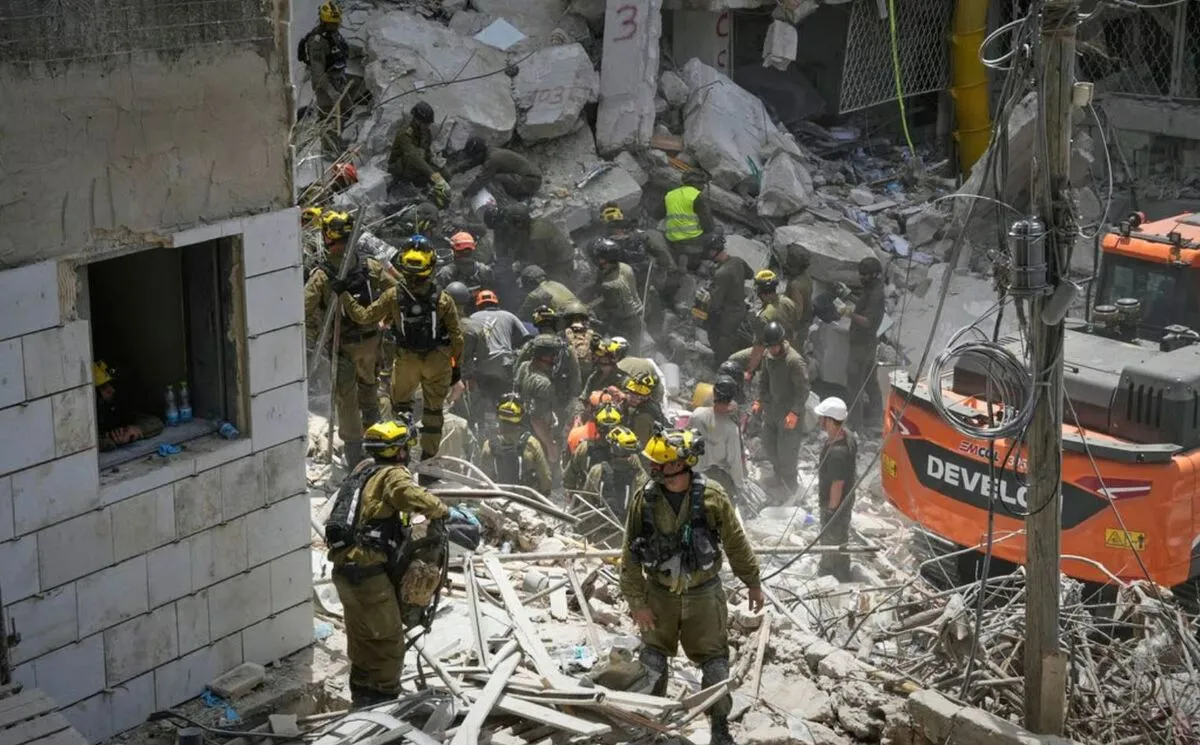
Despite efforts by the Israeli regime to conceal the impact of Iranian missile strikes, media outlets have gradually revealed the scope of the damage. Most recently, the Weizmann Institute of Science announced that due to the damage from Iranian missile attacks, it has reduced the number of medical students admitted to its first-year classes this year by 50 percent.
Previously, according to the Israeli news site Yedioth Ahronoth, the institute had planned to accept 40 students but has now admitted only 20. The Weizmann Institute stated: “There is no doubt that security events have affected us and compel us to act with caution and responsibility to maintain the very high academic and research standards.”
Meanwhile, media reports have also highlighted challenges faced by Israel and the United States in supplying interceptor missiles. The Wall Street Journal previously reported, citing a senior U.S. official, that Israel, amid intensified Iranian missile attacks, is facing a severe shortage of key interceptors, particularly the Arrow system.
This shortage has alarmed U.S. officials, who now believe Israel may need to segment its air defense. Furthermore, by transferring a significant portion of its regional interceptor stockpiles to Israel, the U.S. has largely depleted its reserves. The Wall Street Journal points to growing concerns in Washington that U.S. defense could soon be at risk.
CNN, citing informed sources, reported that during Israel’s 12-day war against Iran, the U.S. used about one-fourth of its advanced THAAD missile interceptors. The network noted in a report titled “U.S. Used One-Fourth of Its Missile Interceptors in Israel-Iran War, Exposing Supply Gap” that U.S. forces fired over 100 THAAD interceptors—possibly up to 150—against Tehran’s ballistic missiles, consuming a significant portion of the U.S. advanced air defense inventory.
According to the U.S. Department of Defense’s 2026 budget estimates, only 11 new THAAD interceptors were produced last year, with 12 more expected in the current fiscal year. Israel’s air defense system was already under pressure while continuing to intercept most incoming threats.
With much of their existing interceptors expended, both the U.S. and Israel now face an urgent need to replenish stockpiles and rapidly increase production rates. According to the Jewish Institute for National Security of America (JINSA), due to Israel’s limited Arrow missile capacity, THAAD accounted for roughly half of all interceptions. As a result, the U.S. used about 14 percent of its total THAAD interceptors—a figure that, at the current production rate, would take 3–8 years to replenish.
Iran’s extensive missile campaign may have revealed vulnerabilities in Israeli and U.S. air defense systems, offering lessons that Iran or other adversaries could exploit in the future. During periods when THAAD accounted for over 60 percent of interceptions, Iran increased its hit rate. At the same time, the U.S. decision to use a large number of critical air defense interceptors demonstrated strong support for Israel.