Tripled expansion, billions invested: inside Europe’s post-Ukraine arms race
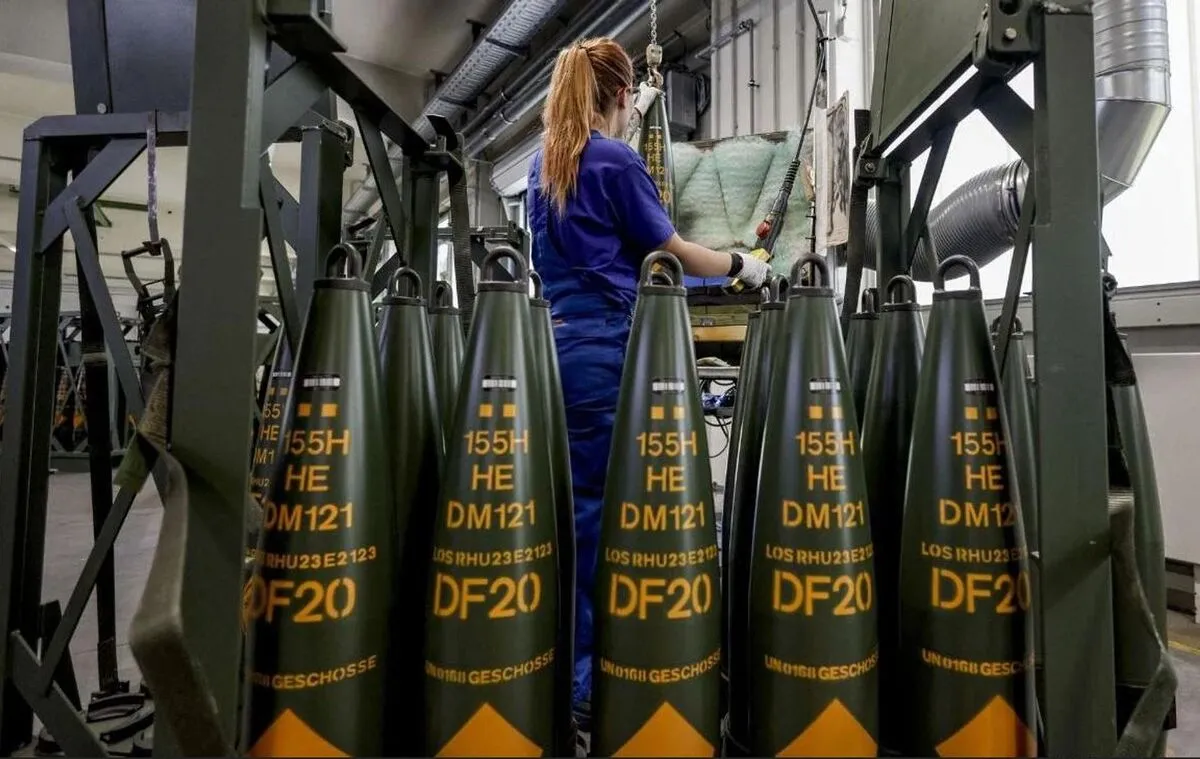
According to the Financial Times, analysis of radar satellite imagery covering 150 arms manufacturing facilities owned by 37 companies shows that since the start of the Ukraine war, construction and expansion activities have reached unprecedented levels.
The data indicate that Europe’s long-promised defense revival — now fueled by state subsidies — has moved beyond political rhetoric and budget commitments, manifesting instead in newly built concrete and steel infrastructure.
The Financial Times notes: “This is happening as EU governments debate how to continue supplying arms to Kyiv while simultaneously rebuilding their own stockpiles, in light of growing uncertainty over the United States’ commitment.”
Using over 1,000 passes of radar satellites, the British outlet tracked changes at European missile and munitions plants that play a key role in sustaining the West’s military support for Ukraine.
Surface-change data collected by the European Space Agency’s Sentinel-1 satellites show that roughly one-third of all observed plants have undergone construction or expansion projects.
The scope of these activities suggests a fundamental European rearmament program — pushing arms production far beyond peacetime levels, toward the capacity of an industrial base geared for sustained wartime output.
William Alberque, a senior expert at the Asia-Pacific Security Forum and former NATO arms control director, commented: “These are deep, structural changes that will reshape the defense industry in the medium to long term. When you start producing shells on a massive scale, flows of metal and explosive raw materials surge, reducing the cost and complexity of missile production.”
Most arms companies surveyed declined to comment, citing security concerns.
The Financial Times found that facilities under construction or expansion grew from a combined footprint of 790,000 square meters in 2020–2021 to 2.8 million square meters in 2024–2025. Satellite imagery confirms these changes include pre-construction excavation, new buildings, and new roads.
One of the largest expansion projects is a joint venture between German arms giant Rheinmetall and Hungary’s state-owned N7 Holding, building a major ammunition and explosives plant in Várpalota, western Hungary.
The first factory at the site opened in July 2024, producing 30mm ammunition for Rheinmetall’s KF41 Lynx infantry fighting vehicles. According to Rheinmetall, ongoing construction there will also support production of other munitions, including 155mm artillery shells and 120mm rounds for Leopard-2 Panther tanks, along with an explosives plant.
The analysis also examined 88 plants tied to the EU’s Act in Support of Ammunition Production (ASAP) program, which has allocated €500 million to boost munitions and missile manufacturing.
Of these, 20 plants showed clear physical expansion — such as new roads and entirely new factories; 14 others had smaller changes, like new vehicle parking areas; and the remainder showed no expansion. Facilities receiving ASAP funding expanded faster than those outside the program.
In some cases — such as a BAE Systems plant in northern England — expansion was not visible in satellite images, as the company repurposed existing buildings rather than constructing new ones.
EU Defense Commissioner Andrius Kubilius told the Financial Times that since the war began, Europe’s annual munitions production capacity has risen from 300,000 to around 2 million rounds — a target expected to be met by the end of this year.
Rheinmetall’s expansion accounts for a significant share of this growth, with the company projecting its annual 155mm shell output to rise from 70,000 in 2022 to 1.1 million by 2027.