Baghaei: We never trusted the United States, even during negotiations
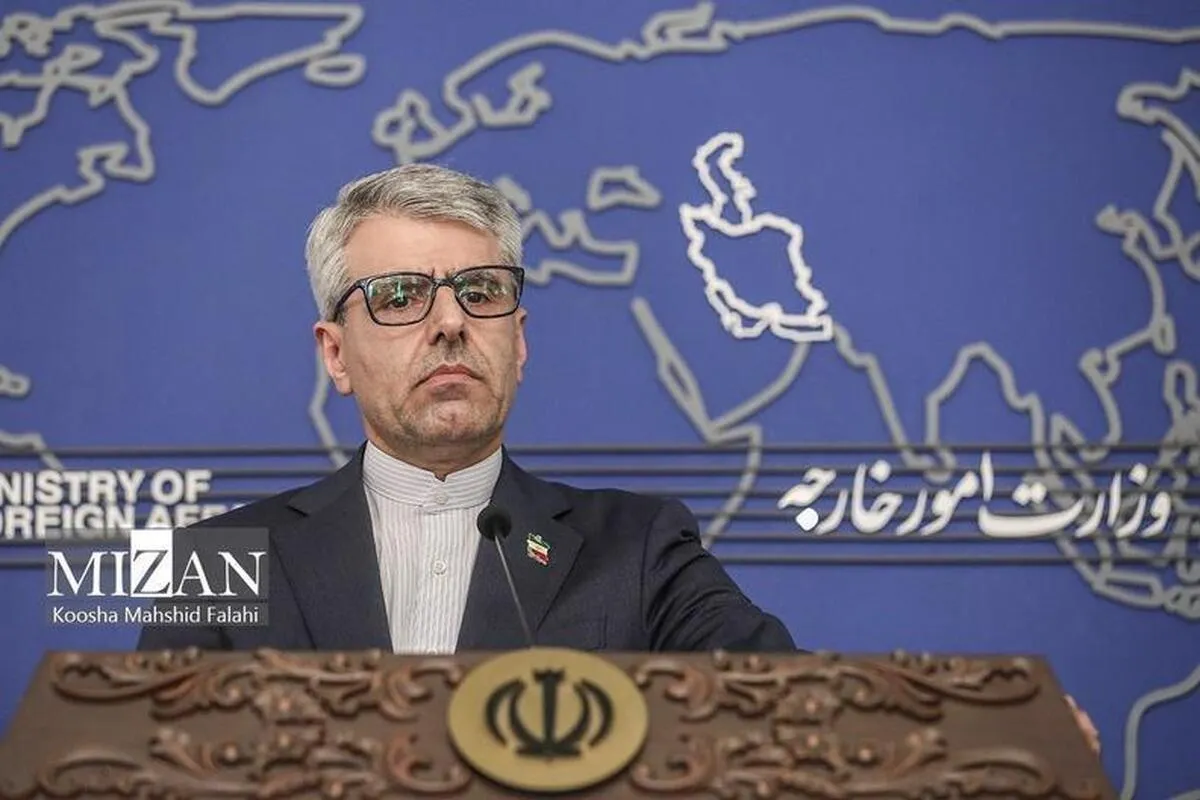
Baghaei opened the briefing by paying tribute to Iran’s martyred diplomats in Mazar Sharif, Afghanistan, who were killed alongside Iranian journalist Mahmoud Saremi. He said: “This year, we mark Journalist Day with sorrow. Just last night, several other reporters and cameramen in Gaza joined the ranks of the martyrs of truth.”
Quoting parts of the will of Anas al-Sharif, the martyred Gaza journalist, he strongly condemned this war crime: “Attacking journalists in wartime is clearly a war crime.” He called on the international community to take action to end the impunity surrounding the genocidal crimes of the Zionist regime in Gaza.
Regarding speculation about the next round of indirect negotiations between Iran and the United States, Baghaei said: “Norway will not host the next round of Iran-U.S. talks, and we do not confirm other speculations, including any change in the mediator.”
He added: “We have never trusted the United States under any circumstances, even during negotiations. The Zionist regime’s attack on Iran during the talks — with U.S. participation — left no room even for zero trust. What guarantees our security is our military capability. At the same time, the Foreign Ministry will continue to use all diplomatic tools to advance the interests of the Iranian people.”
On the exchange of messages with the United States, he explained: “Communications through intermediaries on various issues continue, including through the U.S. Interests Section in Iran and certain countries involved from the outset. However, no direct negotiations have taken place.”
Addressing claims of U.S. willingness for new talks, Baghaei stated: “Such claims contradict their actions. We must judge by actions, and U.S. behavior clearly shows there is no seriousness in Washington about negotiations.”
On Iran’s stance toward uranium enrichment, he reaffirmed: “Our position has been made clear: as long as we are a member of the Non-Proliferation Treaty, we must enjoy all its benefits and rights, including Article 4’s recognition of our right to enrich uranium.”
Regarding the so-called Zangezur Corridor, Baghaei said: “We have maintained close contact with neighboring countries in the South Caucasus and have good relations with both Azerbaijan and Armenia. We expect — and it has been the norm — to be consulted on developments that directly or indirectly affect Iran’s interests. The idea of a peace agreement is not new, and we have encouraged both sides toward such an accord. High-level consultations with Armenian officials will be held today and tomorrow.”
He stressed: “The South Caucasus holds high political and geopolitical value for Iran, and naturally, we are involved in developments there. The Armenian Deputy Foreign Minister will visit Tehran tomorrow for this reason. The Armenian Prime Minister will speak by phone with our President today, and Armenia’s Foreign Minister has assured us that Yerevan will take no action that would be a cause for concern for Iran. Out of our 6,000 km of borders, we share 40 km with Armenia — one of our most secure borders — and our relationship with this country is longstanding.”
On claims of a trilateral peace agreement, Baghaei said: “No such agreement exists. Review the documents carefully, as it is not surprising that some parties — such as the Zionist regime — might try to fish in troubled waters. We must safeguard our good relations with our neighbors.”
Regarding the visit of Massimo Aparo, Deputy Director General of the International Atomic Energy Agency (IAEA), Baghaei stated: “Talks with him began this morning, and he will also meet with the Foreign Ministry. It is too early to predict the outcome of these complex technical discussions. We have grievances with the IAEA. As there are no clear procedures for dialogue in situations where nuclear facilities under IAEA monitoring are targeted, we are discussing the future of our cooperation today.”
On talks with the European Troika, he said: “These negotiations have not stopped. In the Istanbul meeting, both sides agreed to continue discussions, and we are in contact to determine the date and location of the next round.”
In response to a Mizan’s question about documenting and pursuing the Zionist regime’s aggression against Iran, Baghaei said: “We have seriously pursued the legal case of the military aggression by the Zionist regime and the United States from the outset. A major part of this involves documentation. The Foreign Ministry has been compiling records since the beginning of this aggression, with our international department corresponding with the United Nations and other relevant bodies. English and Persian versions of the documentation have been prepared for media use as well.”
He added: “Part of this process involves the Foreign Ministry, and another part involves the Judiciary and the Presidential Legal Affairs Department. We are working closely with them to explore ways to file a case before competent international authorities. Domestically, criminal charges should be brought against those responsible for and complicit in the military aggression by the Zionist regime. Once court rulings are issued, we can use them to pursue the matter internationally.”
On the FATF issue, Baghaei said: “The most recent development — not necessarily related to the FATF — is the decision, based on the country’s national interests, to join the United Nations Convention against Transnational Organized Crime, known as the Palermo Convention. After approval by the relevant authorities, Iran’s instrument of accession was deposited with the UN Secretary-General on August 5, making Iran an official member. The Palermo Convention, in force since 2003, is one of the key international treaties for cooperation against transnational organized crime, and Iran was among its original signatories.”