Important calls by the Head of the Judiciary addressed to media professionals
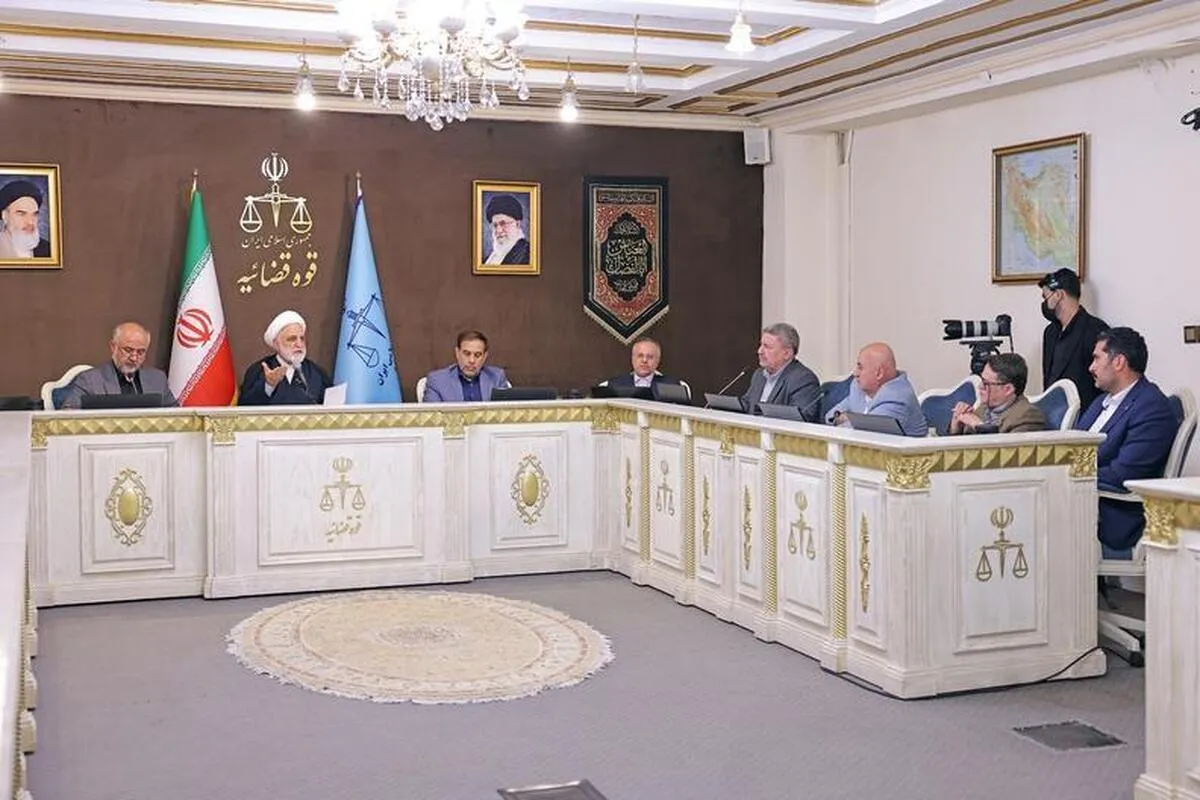
According to the Judiciary’s Media Center, in continuation of his series of meetings with the country’s elite communities, Mohseni Ejei met with a group of media professionals on the occasion of Journalist Day.
At the start of his remarks, the Head of the Judiciary, while offering condolences on the days of Arbaeen, said: “May God’s peace and blessings be upon the truthful, knowledgeable, and courageous narrators of Karbala who kept the Hosseini movement alive; had they not done so, it is likely the Yazids of history would have distorted reality. Without a doubt, today, in the Islamic Republic of Iran, we are the continuation of that sacred Hosseini movement.”
While honoring Journalist Day, he issued a call regarding media-related legislation: “The Press Law was drafted in 1985, and the last major amendments to this law were made in 2000. Based on this, I ask all media professionals to inform us, by September 5 at the latest, whether there is a need to revise and update the law governing the media. If the answer is yes, specify the areas where these changes should be made. These views will be received through the Judiciary’s Media Center.”
The Head of the Judiciary added: “We also ask all media professionals to submit at least five serious criticisms they have of the Judiciary—preferably with proposed solutions—to the Judiciary’s Media Center.”
The country’s top judge continued: “We also request that you specify at least five shortcomings or violations you believe exist in certain media outlets which the Judiciary is legally obliged to address. If you collectively believe that under no circumstances should any media outlet, be dealt with at any level, state this opinion as well—though it is highly unlikely that such consensus exists among you.
“We certainly do not wish to see an increase in the number of prisoners; we certainly do not want any media outlet to be shut down; we certainly do not want any media professional to spend even a single night in detention. But everyone should be aware that in the Judiciary, we consider ourselves more bound to the law than any other institution or body. We cannot act contrary to the law. You may say a law needs revision or amendment—that is perfectly acceptable and has a defined framework, and laws can be amended or supplemented under existing legal procedures. However, one cannot expect the Judiciary to carry out an action that is against the law.”
“You, the media professionals and elites of this field, who represent various views and inclinations, should tell us: when a media professional commits a violation or crime under the current laws, how should we deal with them in a way that is lawful, deterrent, and not harmful?”
The Judiciary chief went on: “A few days after the end of the recent imposed war, a number of political and media currents contacted me in various ways, asking that, for the sake of strengthening social unity and cohesion, those they referred to as ‘political prisoners’ be released. I in no way ignored their request or responded negatively. Instead, I told them to present a list of the prisoners they had in mind so we could examine and review their cases. Interestingly, none of these groups have, to this day, given me such a list. Some even said, when faced with my request, that they had ‘considerations’ in providing a list of political prisoners!
“During today’s meeting, two gentlemen (from key figures within the Reformist front) said that after much consideration and review, they could not count more than three to five individuals as political prisoners. I then emphasized to them: why don’t you publicly announce this? There is so much noise and propaganda against our system claiming we have a large number of political prisoners—so, state publicly that after your own review, the number of political prisoners does not even reach five. This would neutralize and undermine the malicious propaganda of the opponents.”
The Judiciary head added: “Here, I must emphasize that there are sometimes differences in interpreting the concept of ‘political crime’ and ‘political prisoner.’ Sometimes all security offenders and prisoners are labeled as political prisoners, and sometimes the reverse occurs.”
Continuing, he stressed the growing importance of media and media activism in governance: “The media has been called the fourth pillar of democracy. Indeed, media and media activism in governance are of increasing importance. The enemy, beyond hard warfare, is now focused on cognitive warfare and perception management. During the events related to the recent 12-day imposed war, we saw that some people, influenced by enemy propaganda, exaggerated the country’s weaknesses. We certainly do not deny the existence of some weaknesses, but they are not as significant and severe as the enemy and its media outlets portray. You, as active players in the media sphere, must be careful not to fall into the traps designed by the enemy.”
In conclusion, Mohseni Ejei explained the elements necessary for strengthening national cohesion: “After the recent imposed war, national unity and solidarity in the country have been strengthened. This unity must be preserved and protected. Explaining the importance of national cohesion, reaching a common definition of it, determining its indicators and examples, identifying its root causes and sustaining factors, and so on, are among the necessities that require skillful and frequent media engagement.”