Trump’s second hammer blow to Europe
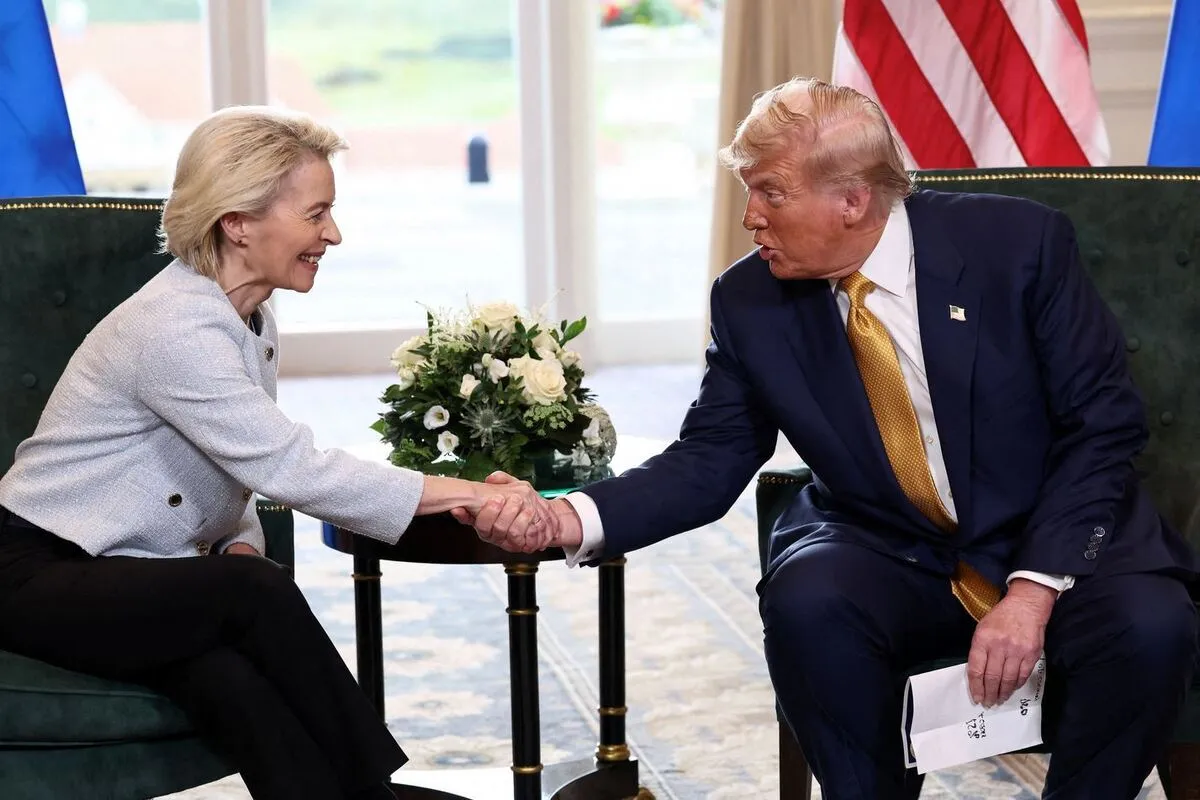
Recently, Ursula von der Leyen, President of the European Commission, announced that Brussels and Washington had reached an agreement to impose a 15% tariff on many European goods exported to the United States—calling it a “great achievement” for the European continent. However, after several days of silence, German and French officials finally admitted that the agreement is bitter, contrary to Europe’s interests, and yet unavoidable. The reality is clear: Trump has delivered his second economic hammer blow to a boastful but fragile Europe in less than a month.
About a month ago, during the NATO summit in The Hague, members of the North Atlantic Treaty Organization agreed to allocate 5% of their GDP to collective defense spending. In other words, despite knowing the severe economic consequences this would have on their public budgets, they meekly gave in to Trump’s demands.
One of the justifications offered by some European sources for conceding to Trump’s NATO demands was the hope that Washington might show more flexibility in tariff negotiations with Brussels. The 28 European NATO members assumed that by imposing austerity measures on their citizens and cutting public spending to meet Trump’s NATO requirements, the White House would soften its stance and agree to mutual zero-percent tariffs with Europe. But the agreement reached in recent days is nothing short of disastrous.
Under the announced terms, a 15% tariff will now be applied across the board to European products entering the U.S. market. Von der Leyen argues that this is better than the 20% or 30% tariffs Trump had initially threatened. Yet Europe’s actual goal had been zero tariffs. Meanwhile, most American goods exported to the EU will either be exempt from tariffs or face rates close to zero.
By accepting this deal, Europeans are not eliminating the tariff war with the U.S.—they are institutionalizing it into a humiliating economic pact. The deep structural dependence of European markets on the other side of the Atlantic is now showing itself in the worst possible way: Europeans are forced on the one hand to impose austerity on their own citizens to boost military spending within NATO, and on the other to endure the consequences of accepting official, U.S.-imposed tariffs against their own economies.
Europe has lost the game entirely. The second hammer blow from Trump to a union that still ties its survival to playing in Washington’s court carries a clear message to both experts and the general public in the realm of international relations: this message will soon be sent loud and clear by European citizens to their political leaders.