From blockade to bloodshed: The politics behind Gaza’s food crisis
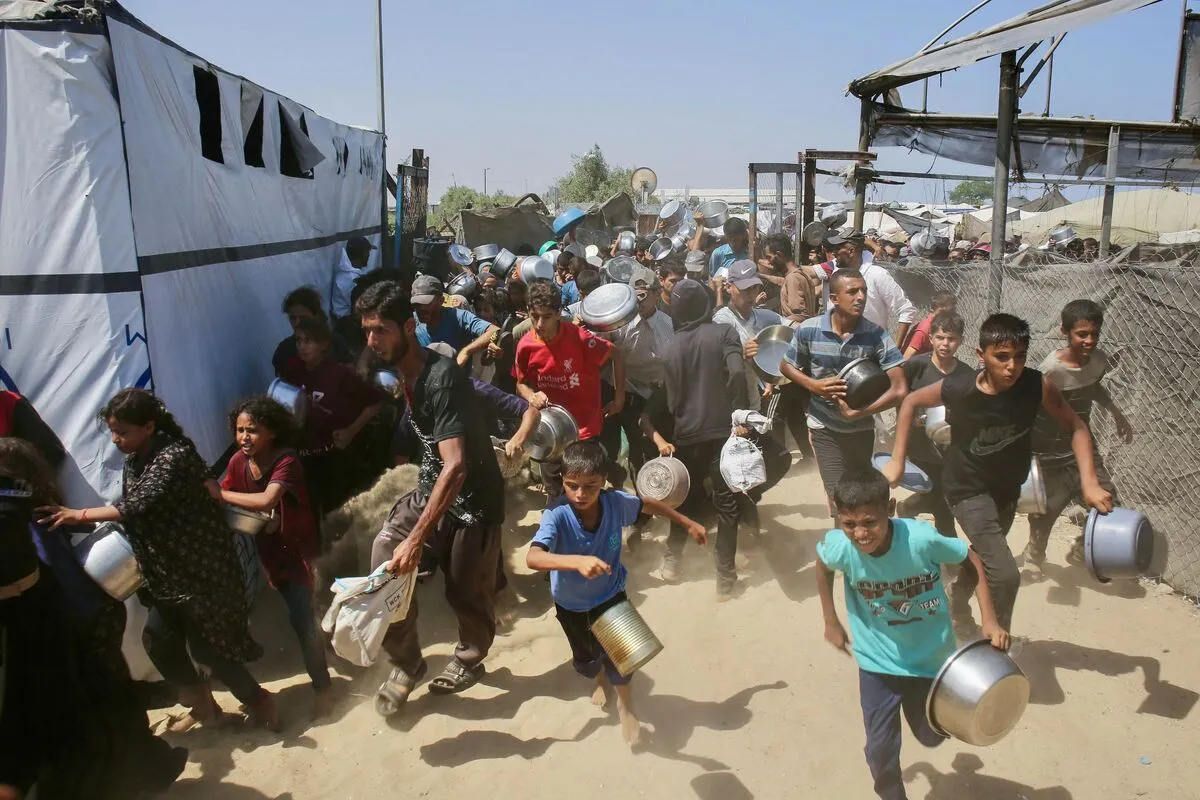
As global outrage over Israel’s blockade-induced famine intensifies, the Israeli regime—under mounting international pressure—claims it has eased restrictions on food distribution. However, while food shortages have persisted in Gaza since the Israeli military campaign began in October 2023, the current situation is more dire than ever.
The worsening crisis stems from Israel’s early March decision to completely cut off the entry of food and humanitarian supplies into Gaza based on unsubstantiated claims. When Israel partially eased the blockade in late May, it also changed the method of distribution: instead of relying on the UN, the new approach uses private contractors. This forces Palestinians to travel long distances through dangerous zones to reach aid centers, making access to food nearly impossible.
In response to criticism, Israel now claims the UN has full freedom to deliver aid and blames the UN’s lack of willingness for the ongoing food shortages. However, UN officials state that Israeli restrictions and ongoing military operations make it nearly impossible to coordinate safe humanitarian convoys.
In an attempt to deflect blame, Israel has also resumed limited airdrops and claimed daily “pauses” in its military operations to facilitate aid deliveries. But the UN’s World Food Programme (WFP) reported that nearly one-third of Gaza’s population has gone without food for days at a time, and that the current crisis is directly linked to Israel’s decision to block aid between March and May, and the flawed systems that replaced it.
Before March, food distribution was largely managed by the UN and conducted from hundreds of sites close to residential areas. Since late May, aid has mostly been distributed at a few sites run by private contractors, many of which require Gazans to walk for kilometers through Israeli military zones. UN reports say Israeli soldiers have shot and killed hundreds of people trying to reach these sites, turning daily food searches into deadly risks.
Starving Palestinians are now faced with two grim choices: risk death from hunger or risk being shot on the way to aid centers—which often run out of supplies before they arrive. These centers, located in Israeli-controlled areas of central and southern Gaza, are accessible only after long, dangerous journeys, often made at night to reach food before it runs out.
This has led to chaotic nighttime movements of large crowds across the devastated landscape. Witnesses say that fights sometimes break out or people stray from designated routes. In many such cases, Israeli troops have opened fire on crowds, killing hundreds over the past two months.
While Israel claims it fires warning shots when people approach military lines, international doctors treating the wounded report that injuries show deliberate targeting of upper bodies.
Undermining UN aid: The role of the Gaza humanitarian Foundation (GHF)
A new group overseeing aid centers, the so-called Gaza Humanitarian Foundation (GHF), was reportedly established by Israeli officials and business figures seeking to bypass the UN system. It is now operated by Americans, including a public relations expert with ties to the Trump administration.
The former head of GHF resigned after media outlets—including The New York Times—raised concerns about the group’s independence and its links to the Israeli regime. While the U.S. says it has contributed $30 million to the foundation, other sources of funding remain unclear.
GHF has outsourced logistics and security to contractors led by a former senior CIA officer. Israeli officials claim this setup prevents aid theft and preserves the “dignity” of Gazans.
However, human rights groups strongly dispute this. In a joint statement last month, 15 organizations from multiple countries warned that GHF’s militarized model and its close coordination with Israeli authorities undermine humanitarian principles of neutrality, impartiality, and independence.
On June 3, Israeli forces opened fire on a crowd of Palestinians heading to an aid site in southern Gaza. The Red Cross and Gaza’s Health Ministry confirmed at least 27 deaths in that incident.
What has changed in Gaza’s aid system?
In response to international criticism, Israel has recently claimed it is implementing short pauses in military operations and establishing “humanitarian corridors” for UN convoys. It also resumed controversial airdrops despite concerns about their cost, inaccuracy, and danger.
It remains unclear whether these measures will meaningfully improve the humanitarian crisis.
Antoine Renard, head of the WFP’s Gaza office, said Israel still needs to open more access routes for aid convoys.
Critics argue that the resumed airdrops are largely symbolic. Before they were halted last year, many airdrops failed to reach intended targets—sometimes hitting civilians or landing in the sea or Israeli-controlled areas.
The deadly cost of food aid in Gaza
According to the Armed Conflict Location and Event Data Project (ACLED), at least 800 Gazans died in June alone while trying to collect food.
These deaths occurred amid a worsening humanitarian disaster. The UN says every Gazan is food insecure, and one-third have gone days without eating. Palestinian health officials report that over 100 people have died from hunger in recent weeks.
Deaths at aid distribution sites increased more than eightfold between May and June—coinciding with the rise of GHF’s U.S.-backed operations in Gaza.