Germany’s role in Gaza: Silent partner to a War Crime
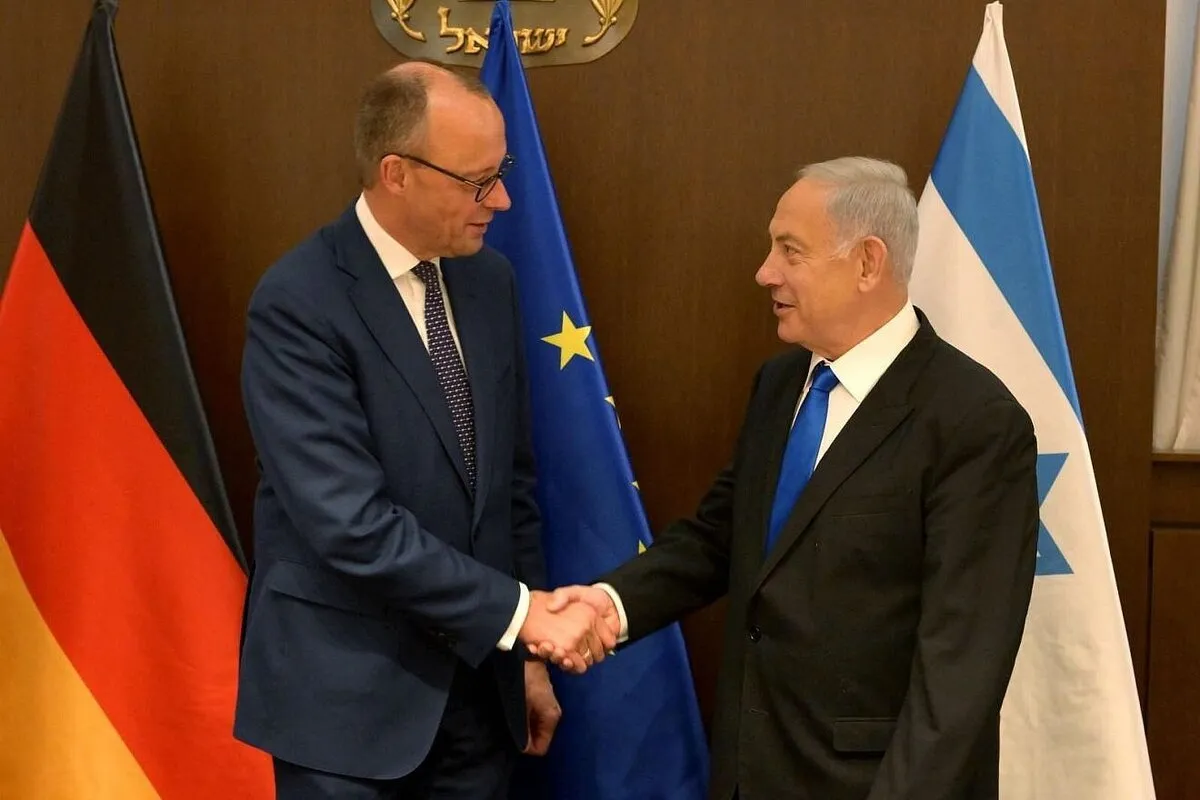
Despite Israel’s ongoing genocide in Gaza, Germany continues to support the regime—beyond temporary criticism—threatening the post–World War II international order.
During the most recent visit of Israeli Foreign Minister Gideon Sa’ar to Berlin in early June, Germany’s new Christian Democrat Foreign Minister, Johann Wadephul, openly reiterated the country's support for the Israeli regime, stating: “It is obvious that Israel has the right to defend itself against Hamas and other enemies.”
He also stressed that Germany will continue to support Israel through weapons supplies.
At the same time, Wadephul spoke out against recognizing a Palestinian state, claiming it would “send the wrong signal.”
In response to a vote regarding a potential review and suspension of the EU–Israel cooperation agreement, Wadephul also asserted that the agreement should remain intact.
Anyone who had recently hoped that Wadephul’s cautious criticism of Israeli actions signaled a shift in thinking was left disappointed. His remarks during Sa’ar’s visit effectively reversed everything he had previously indicated.
Contradictory statements, unchanged position
Nonetheless, it had appeared that Germany’s longstanding consensus on Israel was starting to fracture in recent weeks. For example, in an interview with Süddeutsche Zeitung, Wadephul questioned whether Israel’s actions in Gaza could still be consistent with international humanitarian law.
He also announced that German arms exports to Israel were under review. In late May, Chancellor Friedrich Merz told La Repubblica that he could no longer see any clear strategic objective in Israel’s continuation of the war.
These remarks, however, contradicted other public statements made by both politicians. During his visit to the occupied Palestinian territories in early May, Wadephul still seemed to endorse the blockade of Gaza—which is considered a war crime—justifying his position with unsubstantiated claims that Hamas misuses humanitarian supplies, a narrative pushed by Israel but never seriously investigated.
Germany’s clear policy path
In practical terms, Germany’s policy remains clear: the government continues to support Israel’s military presence through arms supplies and diplomatic cover.
Germany’s stance on the Israeli regime could perhaps be best described as a new form of “pragmatic realism.” The country can no longer remain fully silent in the face of Israel’s actions in Gaza, as they have become increasingly unacceptable on the international stage.
Yet, Germany also avoids any concrete consequences or follow-up to its belated criticisms—leaving it in a self-imposed deadlock.
This contradiction is most clearly illustrated by Nicaragua’s credible accusation at the International Court of Justice (ICJ), alleging Germany’s complicity in genocide in Gaza.
Germany’s damaged credibility
Germany’s credibility has long been compromised. Its defense of human rights appears conditional—only applied where it does not affect allies—and thus undermines the liberal international order.
Over the past 18 months, Berlin has sent a very clear message: systemic violence on a historic scale can continue without consequences—as long as the right allies are involved.
In contrast, several EU member states, including Spain, Ireland, and Norway, recognized Palestine as a state last year—a symbolic move in direct opposition to Israel’s expansionist path.
Merz, however, seems intent—at least rhetorically—on suppressing this growing diplomatic pressure on Israel and avoiding Germany’s increasing isolation.
Since former Chancellor Angela Merkel addressed Israel’s Knesset in 2008 and declared that Israel’s security is part of Germany’s national interest, that phrase has increasingly shaped German foreign policy. It has even influenced parts of the German political left, where unconditional solidarity with Israel continues—often regardless of the state’s actual actions or the realities on the ground.
In his June policy statement, Merz went even further than Merkel, declaring: “The goal of our government is to defend the State of Israel in the form in which it exists today.”