The dark years in the green continent
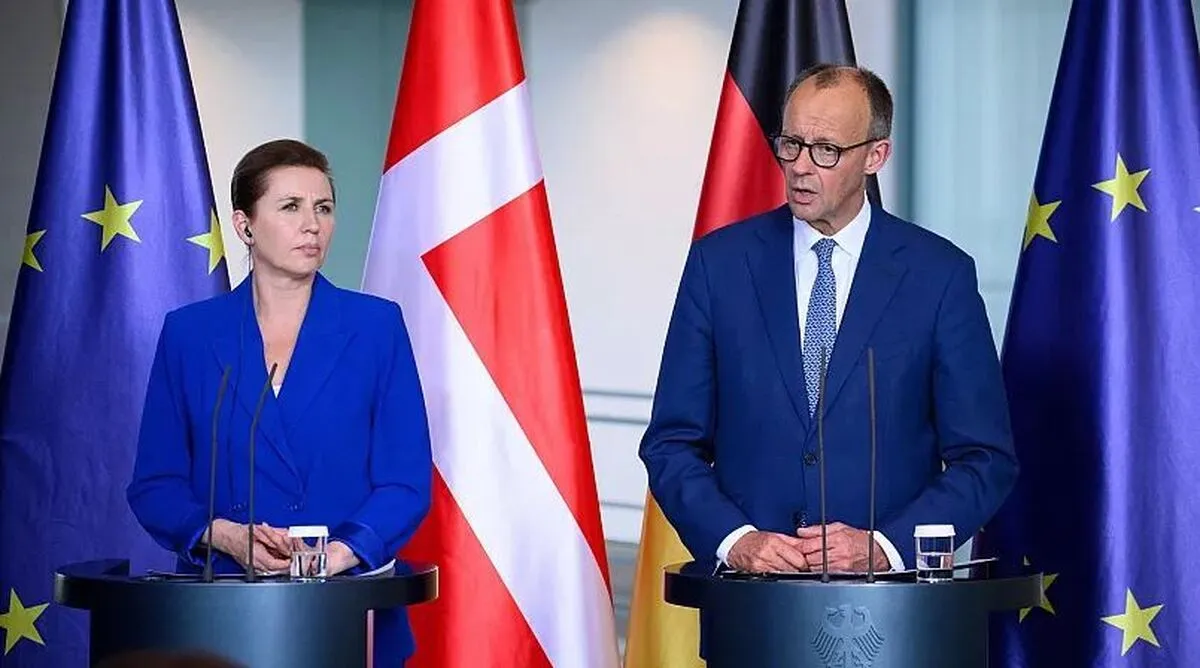
Few could have imagined at the dawn of the 21st century that the shadow of war would once again loom over the Nordic and Scandinavian regions. Yet this has happened much faster than expected. In recent days, signals have been sent to the international system indicating the growing consolidation of military-security deterrence components in Northern Europe. Countries that once regarded "the welfare state" and "decentralization from war" as two core pillars of their domestic and international governance are now entering a phase where "war-oriented deterrence" has taken center stage.
Denmark’s exit from the “Frugal Four”
Denmark’s departure from the so-called “Frugal Four” — the four welfare-state governments — is a clear example of the shift in military-security strategy among welfare states. Danish Prime Minister Mette Frederiksen, while emphasizing the need for Europe’s militarization, has called for defense spending to become the “number one priority” for European nations. Frederiksen stated:
“The immediate and urgent goal is to rearm the European bloc against Russia, and this must take precedence over all other priorities. We Danes will always be tough in budget negotiations. We don't want money spent on things that are not necessary for Europe. So yes, we will be tough — but remaining part of the Frugal Four is no longer suitable for us.”
What is the Frugal Four?
The Frugal Four was an informal coalition comprising the Netherlands, Austria, Sweden, and Denmark that emerged during the European Union’s budget negotiations in 2020. This alliance, marked by its fiscal conservatism, was often informally backed by Finland and sought to control joint EU expenditures while opposing the expansionary fiscal agendas promoted by Southern Europe and France.
Under the EU’s consensus-based decision-making, any single member’s objection could block proposals. This group played a pivotal role in reshaping the structure of the EU’s €750 billion COVID Recovery Fund, reducing the share of grants and increasing the portion of loans that had to be individually repaid.
Although Norway (despite not being an EU member) and Finland were not formal members of this group, they largely followed its policy line. As mentioned, the Nordic and Scandinavian welfare state model was deeply rooted in principles such as “decentralization from war” and “centrality of permanent stability.”
Both Social Democratic and Center-Right parties in the Nordic region shared a firm red line: the preservation of the welfare state. In other words, political conflicts and alliances within Scandinavia and the Nordics were always built on the underlying consensus of maintaining welfare state fundamentals. Yet, as of 2025, the long-standing equations that governed Northern Europe for decades have been upended. The welfare state may soon become the main casualty of these evolving dynamics.
The consequences of NATO’s expansion northwards
The issue is clear: Prior to the outbreak of the Ukraine war, only Denmark and Norway were NATO members. Even these countries sought to ensure their international missions respected the core principle of preserving their welfare systems.
However, with the onset of the war in Ukraine and the subsequent NATO membership of Finland and Sweden, a new security axis has emerged to Russia’s north — encompassing the entire Scandinavian region. Today, Russia can no longer distinguish between Stockholm and Oslo (or Helsinki and Copenhagen) in its foreign and security policies.
Most Scandinavian countries, until the Ukraine conflict, had prioritized welfare policies above all else. Now, military budgeting has replaced that focus. Brussels is currently preparing for a full-scale, protracted battle over the 2028–2034 joint budget, with the European Commission expected to present its first draft before the summer recess.
Prime Minister Frederiksen has openly stated that Denmark will now take a much bolder approach towards funding and increasing military expenditures. She asserts that other nations should no longer show stinginess when it comes to boosting their military and security budgets:
“Last time, we played a leading role in the Frugal Four. This time, we will lead in another group because circumstances have changed, and the world is changing rapidly. We must find the right answers to the challenges ahead.”
Frederiksen stresses that Russia’s war on Ukraine has irreversibly transformed Europe’s financial equations, and therefore “all other priorities and principles must be reconsidered only after securing the Union’s armament programs.”
Deterrence or War?
Once again, Europe faces the dilemma between “deterrence” and “war.” In practice, the boundaries between these concepts and their manifestations in Europe have eroded. Many developments in the North Sea, the Baltic, and even along Russia’s land borders with neighboring countries serve as precursors to conflict. Yet, European officials attempt to frame them within the doctrine of deterrence.
Just last month, EU member states agreed on a €150 billion low-interest loan package to dramatically increase military spending across the Union. This is part of a broader initiative called “Readiness 2030,” aimed at mobilizing €800 billion in capital.
As noted, Denmark is not the only country that has altered its tone. Finland and Sweden, having sought NATO membership after Russia’s aggression, have also softened their stances on the EU’s budgetary policies. These two Northern European nations have likewise emphasized the need to strengthen their military-security capacities in anticipation of possible confrontation with Russia.
From July 1st, Denmark will assume the six-month rotating presidency of the Council of Europe. Without doubt, the recent shifts and declarations by the Danish, Swedish, and Finnish leaderships will only extend the shadow of war over Scandinavia.