Seasonal performances of the director general; Grossi on the path to discrediting the IAEA
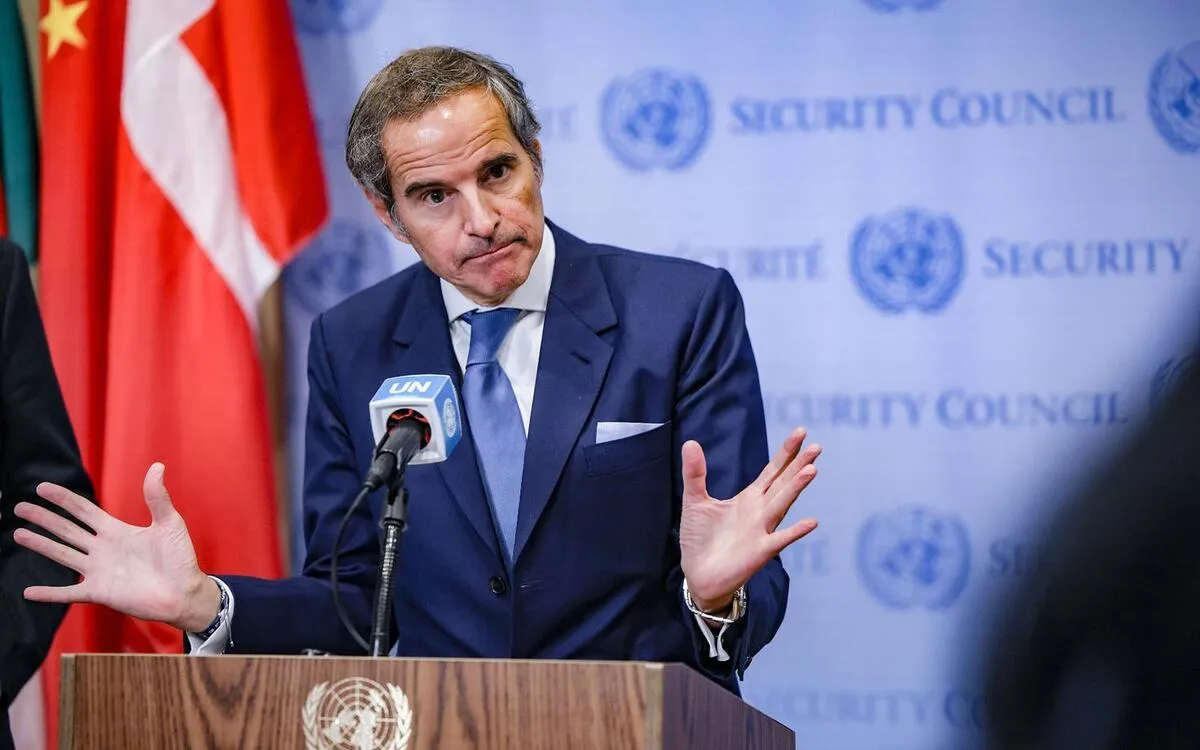
The June 2025 seasonal meeting of the IAEA Board of Governors once again turned into a stage for an anti-Iranian spectacle, with Rafael Grossi, the IAEA Director General, playing the lead role to push for an anti-Iranian resolution and exert further pressure.
By continuing a politicized and untechnical approach, Grossi became the actor in a narrative that presents a completely false depiction of Iran’s nuclear industry. In his press conference on the first day of the Board of Governors’ meeting, he claimed that the IAEA is unable to confirm the peaceful nature of Iran’s nuclear program and that Iran’s lack of cooperation hinders verification efforts.
Grossi’s narrative, like his other recent statements on Iran’s nuclear issue, is based on selectively chosen pieces, as this narrative must serve the interests and ambitions of the United States and the European troika (Germany, France, and the United Kingdom).
The U.S. withdrawal from the JCPOA in 2019, Europe’s failure to fulfill its economic commitments, and the Western signatories’ pursuit of pressure, threats, and sanctions instead of diplomacy are deliberately ignored links in the chain of reality surrounding Iran’s nuclear issue.
Grossi, who sees Western pressure as a path to his dream of becoming the UN Secretary-General, has increasingly steered the IAEA away from its technical track, adopting double standards and a politicized approach. This pressure has been so intense that Grossi has even abandoned any pretense of commitment to diplomacy on Iran’s nuclear issue, dedicating himself to drafting and passing an anti-Iranian resolution that refers Iran’s case to the UN Security Council.
The standards that require the IAEA to turn a blind eye to the growing nuclear arsenals, particularly of the Zionist regime, which is not even a member of the NPT, or to treat Iran’s reduction of voluntary cooperation with the IAEA—prompted by the U.S. unilateral withdrawal from the JCPOA—as a violation of the agreement, while holding the violating party entirely unaccountable, are telling.
A review of Grossi’s statements reveals that he is deliberately attempting, under the guise of impartiality, to dismiss Iran’s concerns and protests with indifference.
In the politicized approach of the IAEA Director General, the repeated threats by the Zionist regime to attack Iran’s nuclear facilities, the frequent leaks of confidential IAEA reports to Western media, and similar issues are deemed entirely unimportant and must remain unheard and ignored under the shadow of repetitive claims about resolved aspects of Iran’s nuclear file.
In his latest statement, in an interview with a Zionist media outlet, Grossi discussed certain specifications of Iran’s nuclear facilities, stating that he has seen these facilities and that significant force would be needed to destroy these heavily protected sites. This raises the question of what other information the Director General has leaked during his closed-door meetings and sessions.
The most significant consequences of the IAEA’s politicized and unprofessional approaches toward Iran are the obstruction of diplomatic pathways, the ineffectiveness of the Agency’s monitoring tools, and the erosion of trust in an institution established to ensure the peaceful nature of nuclear technology in various countries—consequences likely underestimated in the Director General’s calculations.
Meanwhile, the IAEA’s response to critical documents regarding the Zionist regime’s covert military nuclear program, transferred to Iran, will be a serious litmus test for Grossi’s claims of impartiality.
Grossi’s seasonal performance on Iran’s nuclear issue will conclude in a few days, but his role as part of the Western campaign to escalate pressure on Iran will persist. The IAEA, as part of the post-World War II order, will continue to serve as an invisible hand advancing Western interests.
Grossi’s politicization, bias, and unprofessionalism, which have clearly impacted the institution he leads, have been repeatedly criticized and protested by Iranian authorities.
Over the past four decades, Iran has demonstrated that it does not yield to pressure and remains steadfast in its principled stance on diplomacy. Iran’s response to the June 2025 Board of Governors’ meeting will also align with the principled position it has consistently emphasized.
Seyyed Abbas Araghchi, Iran’s Foreign Minister, referring to Iran’s principled stance of safeguarding the legitimate interests and inalienable rights of the Iranian people to fully benefit from peaceful nuclear energy, including enrichment, criticized the provocative and misguided action of the U.S. and the three European countries in proposing an anti-Iranian resolution at the Board of Governors amid indirect negotiations between Iran and the U.S.
He emphasized that any ill-considered and destructive decision against Iran at the Board of Governors will be met with an appropriate response from Iran, and the responsibility for the consequences lies with those who exploit the IAEA for political purposes.
Araghchi, underscoring Iran’s principled position that, based on Islamic teachings, it will never pursue nuclear weapons, stated: “We will not compromise on the Iranian nation’s right to use nuclear energy for peaceful purposes.”