Tear gas and troops: Los Angeles gripped by immigration protest crisis
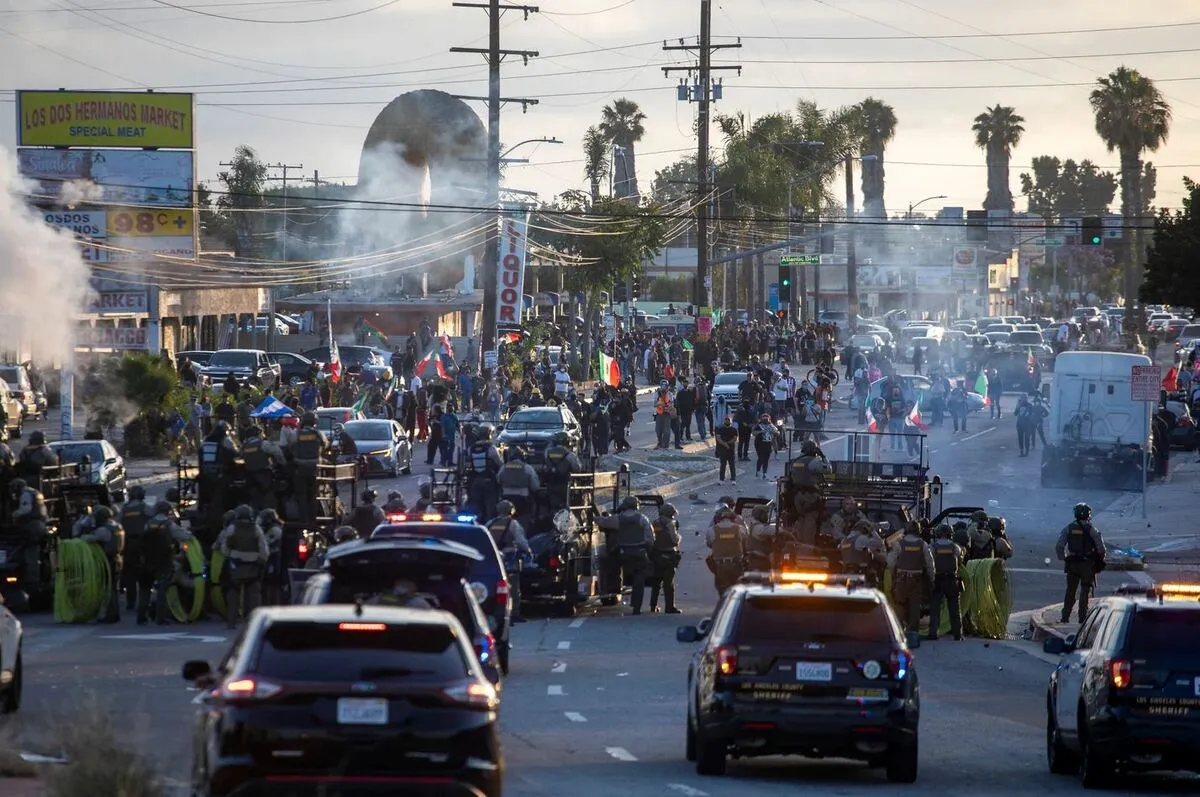
Demonstrations against President Donald Trump’s anti-immigration actions in Los Angeles escalated into violent confrontations.
Protests against anti-immigration policies and the violence of U.S. Immigration and Customs Enforcement (ICE) agents in Los Angeles began on Friday local time, resulting in tense confrontations between protesters and riot police.
On Saturday, after immigration crackdowns sparked widespread protests for the second day and riot police used tear gas against protesters and passersby, Trump authorized the deployment of 2,000 National Guard troops to Los Angeles.
Tensions began on Friday when protesters against violent anti-immigration policies clashed with ICE agents attacking migrants in several downtown locations. According to Reuters and The Guardian, U.S. immigration authorities expanded regional raids on Saturday to a predominantly Latino area in southeast Los Angeles, facing further protests outside an industrial park.
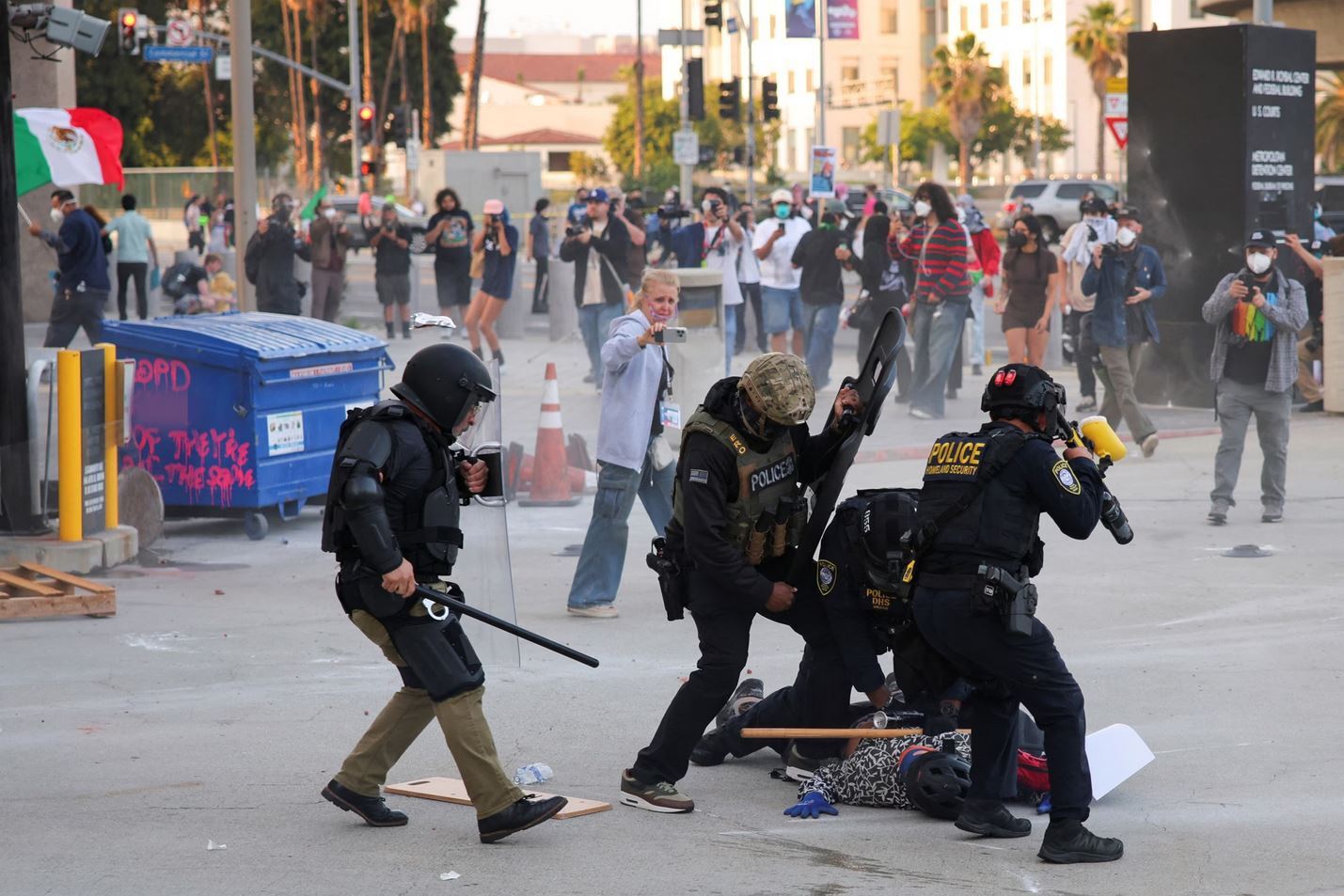
ICE raids to detain dozens of people sparked a citywide protest in Los Angeles, leading to the deployment of police officers with riot gear in the city’s streets. Reports indicate that ICE agents raided several locations, including a home appliance store and a clothing store.
Local media reported that dozens were detained in these raids, the latest in a series of operations carried out in some cities under anti-immigration policies. A Department of Homeland Security official stated that ICE agents arrested 121 migrants across Los Angeles on Friday.
The Los Angeles Police Department, which did not participate in the raids, used tear gas and pepper spray to disperse protesters, with officers also deploying flash-bang grenades.
The spontaneous protests began Friday morning in various parts of the city. Reports indicate that the president of the California Service Employees International Union was injured at one of the sites targeted by ICE raids. No further information is available on the status of those initially detained during the ICE operations.
An LAPD spokesperson announced that protesters who did not leave the gathering sites would be arrested. According to the Los Angeles Sheriff’s Department, two individuals have been detained so far.
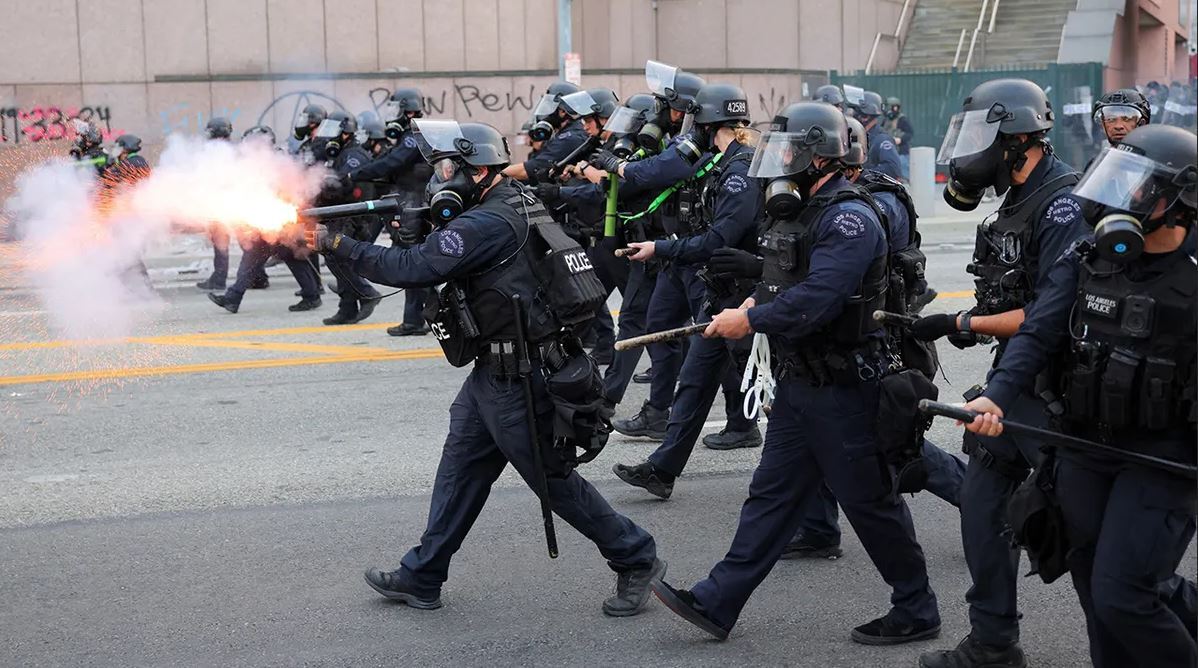
The department stated it is focused solely on traffic management and crowd control and is not involved in any federal law enforcement operations. Videos of the clashes show police officers lined up in the city, armed with batons and tear gas rifles. Images also emerged of unmarked vehicle convoys and cars filled with uniformed federal agents.
The New York Times reported that, as of Saturday evening, there were no signs of protesters backing down. Meanwhile, tensions escalated between the U.S. government and California state authorities.
California Democrats have been preparing for months for the possibility that Trump might deploy U.S. forces domestically, particularly in jurisdictions controlled by Democrats. Privately, they have stated that such a move, without state approval, would have profound consequences, though their legal options appear limited.
California Governor Gavin Newsom issued a statement on X, declaring that the federal government is attempting to take control of the California National Guard. He called the mobilization “deliberately provocative,” stating it only escalates tensions.
Hours later, Newsom announced that the federal government had taken control of the California National Guard and deployed 2,000 troops in Los Angeles, not due to a lack of law enforcement but to “put on a show.” U.S. Defense Secretary Pete Hegseth threatened to deploy active-duty Marines if unrest continued. White House spokesperson Karoline Leavitt accused California’s Democratic leaders of irresponsibility in protecting citizens.
Leavitt announced that Trump signed a memorandum authorizing the National Guard deployment, claiming the protests obstruct law enforcement and constitute “a form of insurrection against U.S. government authority.”
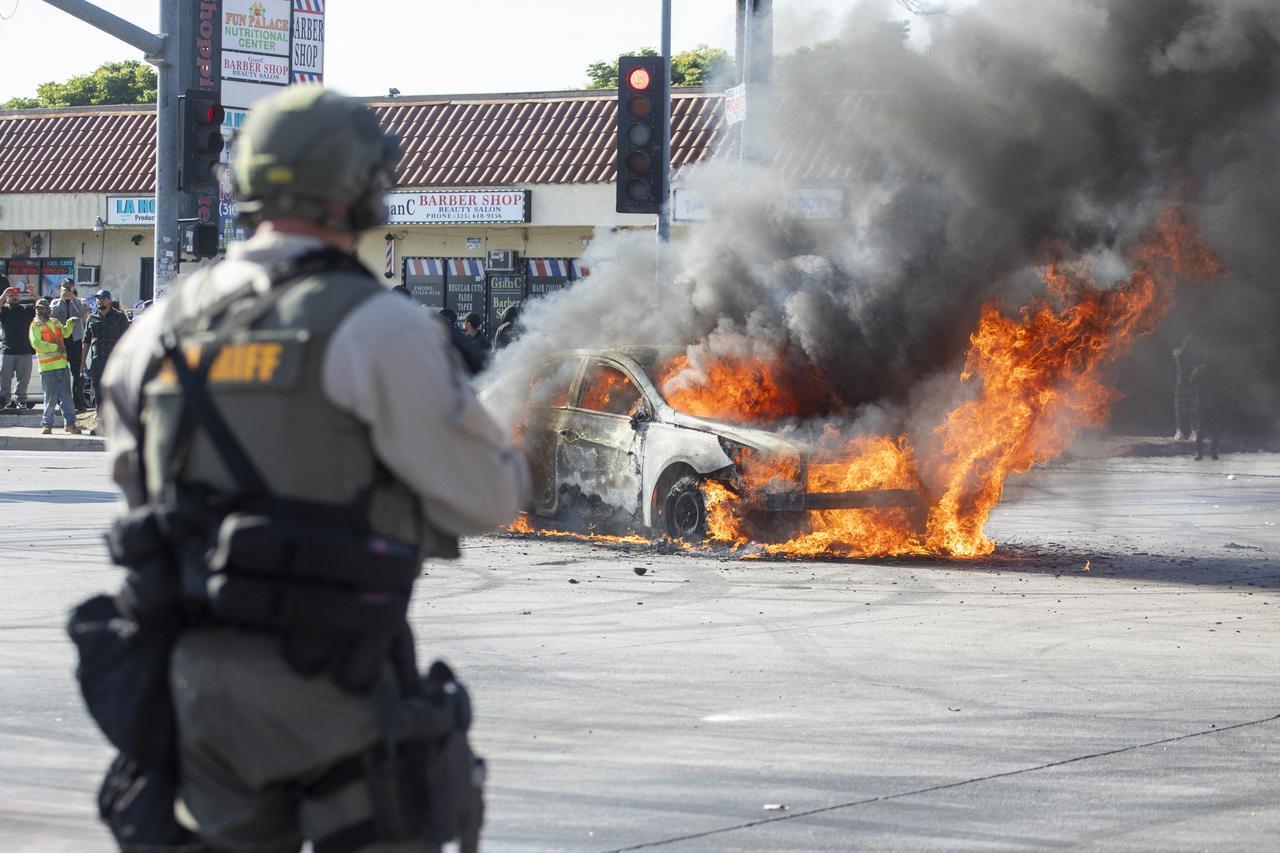
The memorandum places National Guard forces under federal “Title 10” authority, shifting control from the state to the federal government. Governor Newsom emphasized that no such action was needed, stating there is “no unmet need at this time.”
Trump, questioning the performance of California authorities, claimed the federal government “will step in and address the problem, the riots, and the looters in the way it needs to be addressed!” Earlier on Saturday, White House border czar Tom Homan was the first to announce the mobilization of the National Guard.
This is not the first time the National Guard has been deployed in Los Angeles; they were deployed during the 1992 Los Angeles riots at the request of the California governor, unlike this time, amid widespread unrest.
Erwin Chemerinsky, dean of the UC Berkeley School of Law, stated that the federal government’s seizure of the California National Guard to suppress protests without the governor’s request is “truly shocking” and represents the use of the military domestically to stifle dissent.